Options
Please can anyone help identify this OVERTON REVERSE … driving me crazy
 Watchbelieve
Posts: 527 ✭✭✭
Watchbelieve
Posts: 527 ✭✭✭
Here’s mine, notice the s in pluribus directly centered below the second s in States. 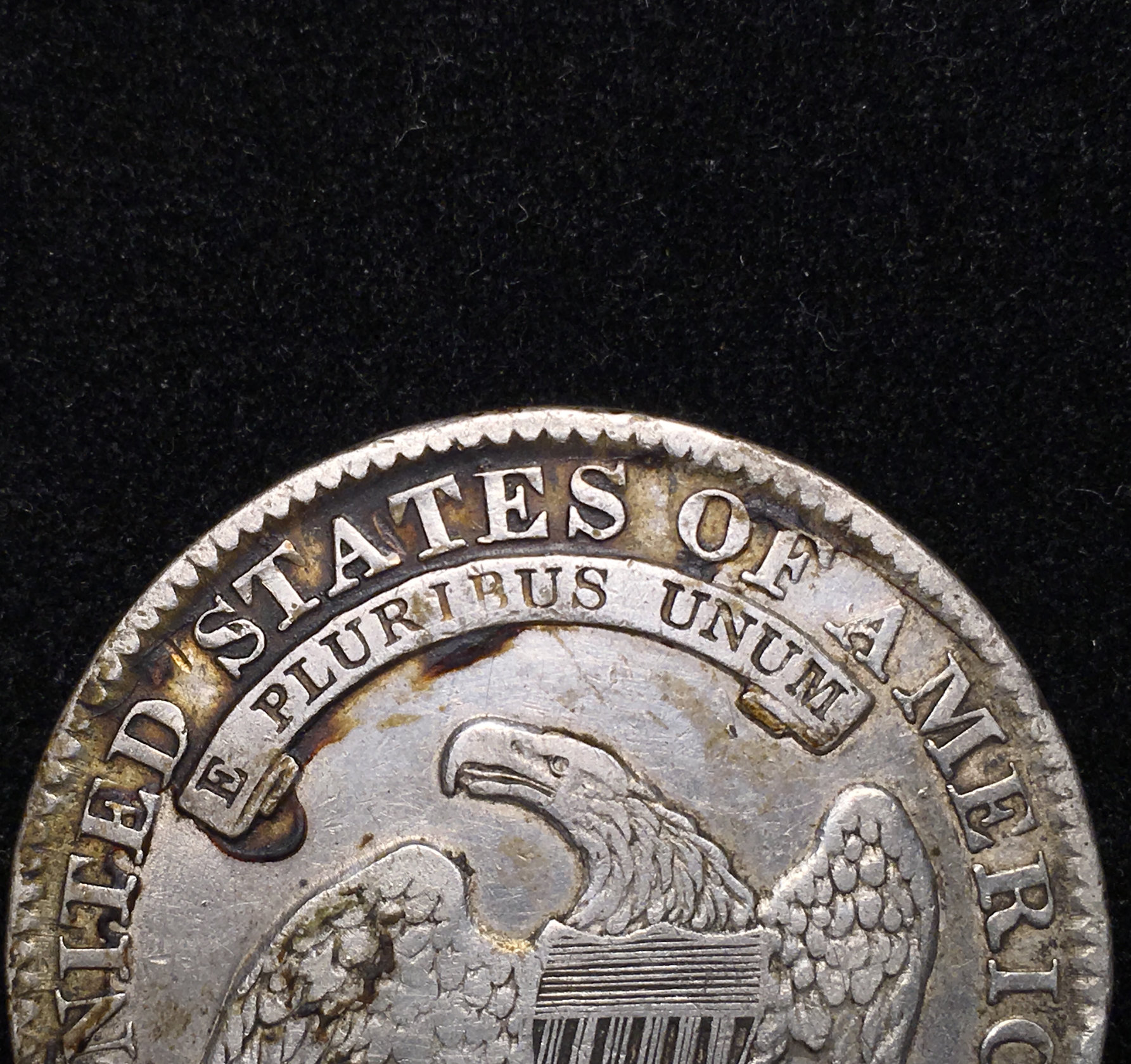
Now here’s what I could find on the net to compare it ... NO MATCHES 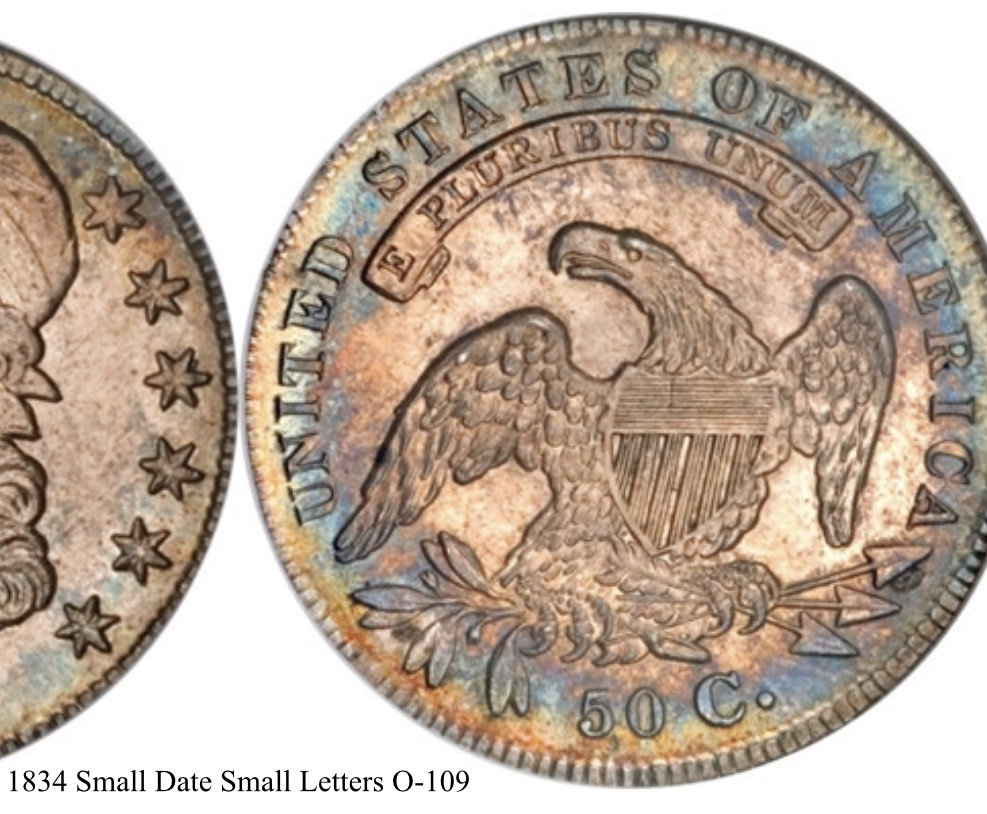
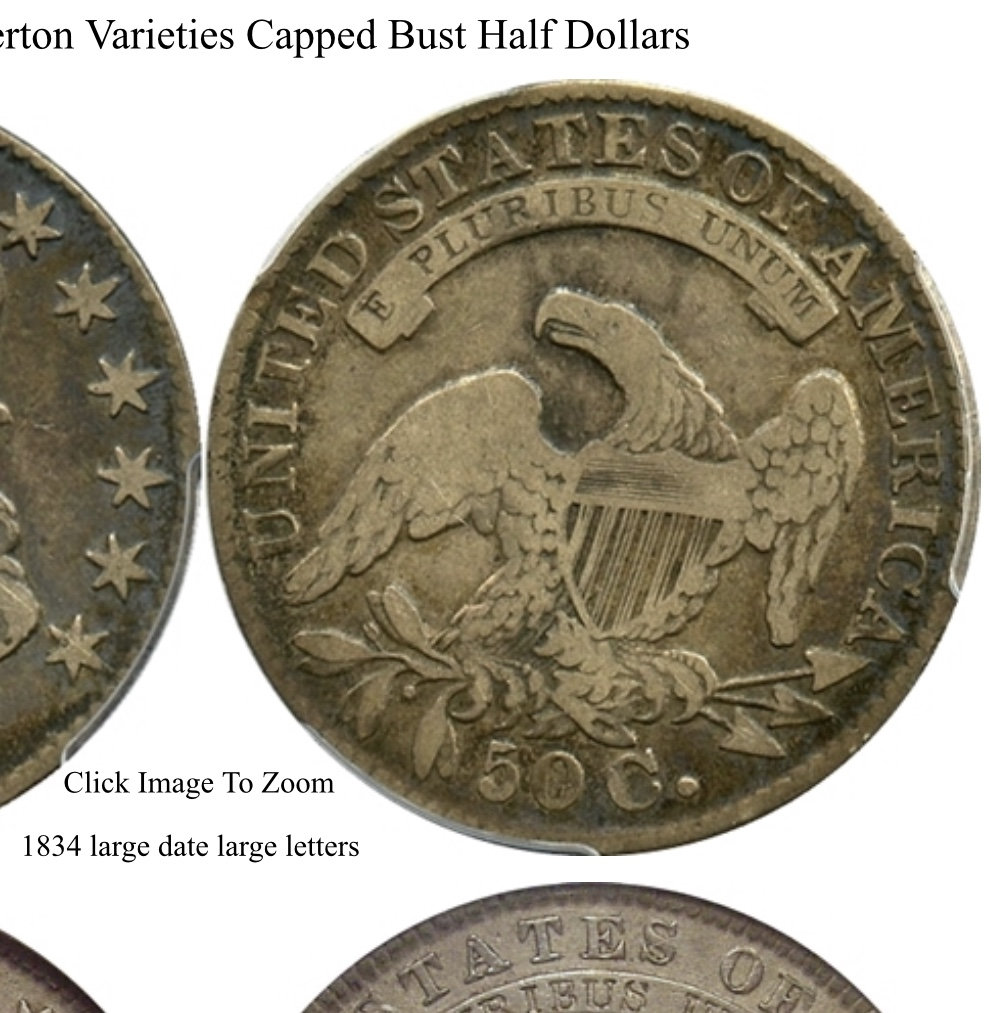
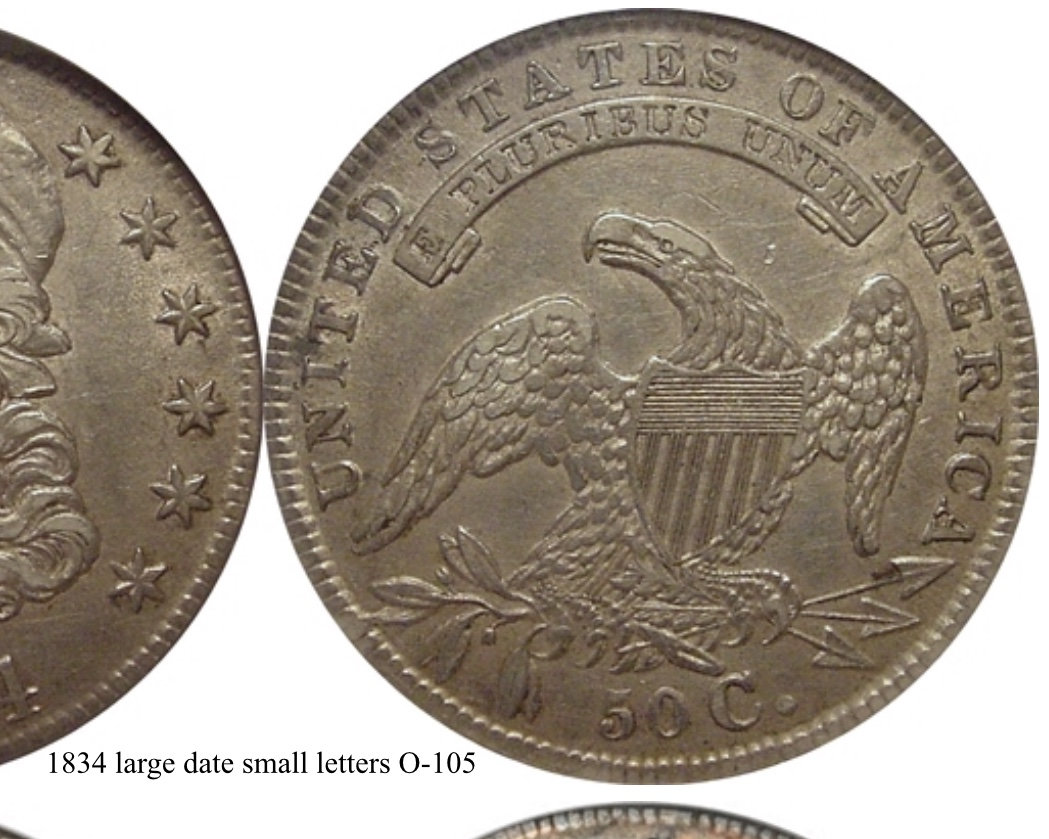
0
Comments
Counterfeit?
Looks like O-103 Large Date, Large Letters from what you’ve shown, but it would help if you show both the full obv and rev. Also, it’s best to look at the T-I relationship as a start with atrrributing Bust Halves.
In addition, because 1834 halves have a few varieties, namely small Date, small letters; Large date, Large Letters; and large date, small letters, it would help greatly if you look at the size of the date and letters first to narrow it down.
Dave
Large date? Large letters? is it this one?
https://ngccoin.com/coin-varieties/capped-bust-half-dollar-die-varieties-part-iii/1834-lg-date-lg-letters-50c-o-103-3002/
Based on the T-I locations, O-103, 104, 117 or 121 are possible.
bustieguide.com/overton.php?d=1834
The high 1 in the date and the tail feather diagnostic suggest O-103 as given in the above link.
This is consistent with @drddm's attribution of O-103 and the photo which @davewesen linked.
Thank you so much. Yosclimber could you please lead me in the right direction on the other 1834 as well. Here’s my pics. Seriously I’m not lazy I’ve just been trying to figure these out for 2 years and I’ve got a whole pile left. I get headaches non stop staring at these coins but my passion drives me.
I know it’s smalldate small letters
Dave is right (no surprise).
The 2nd one is an O.120.
Lance.
If you collect these coins you need to buy two books and forget the internet unless you want to verify what you find in the books.
Overton
Parsons (?) Too busy to look for full titles. I'll correct this or add to it tomorrow if no one else does.
@Watchbelieve, here are some simple match-ups to look for first. Don't get swallowed up by minutia, including Overton's anal caliper measurements between numerals and others sizing, and arcane die marks that might be hard to see on circulated coins. High vs low numerals can be hard to detect, depending on how the coin was positioned for the image. You will miss the big picture.
Start with the reverse by aligning letters in the scroll to the motto. The T/I relationship first. Then the U/O. Next look at where the scroll begins and ends, relative to the motto letters.
Check the numeral 5 in the denomination relative to the talons and arrow feathers. Finally, on the reverse, check out the arrow heads -- spacing and proximity to the 2nd A in AMERICA.
Sometimes a reverse die was used with more than one obverse. You can check the emission sequence here to see if you need to check out other obverses to nail the die marriage...
busthalfprices.com/emission.php
...or you can move on to the obverse. Note where star 7 points to relative to Liberty's cap/band/locks. Same for star 13 and her curls. Look at the stars and where they point. How close they are to each other, if they point to one another in unaligned (off kilter) ways.
Denticle positions can be final confirmations. Stars to dentils on the obverse. On the reverse, letter A is like a pointer. This really shouldn't be necessary in most cases but sometimes assurance is nice.
Lance.
Your photos are great, which make the attribution fairly simple.
As for leading you in the right direction, how do you classify the T to I positions, relative to the chart on the 1834 page?
bustieguide.com/overton.php?d=1834
To analyze the T to I positions, rotate the coin or photo so that the T is fully vertical. Then look at the relative position of the I below it. Is it fully centered? If so, that is position "0". If it's to the left or right, use the photos for each position to judge "how far" it is off center.
Once you have one or two best fit T-I positions, then click on each O- number listed below, to see which additional details will confirm or reject the O- attribution.
P.S. Getting headaches looking at your coins does not sound good. Your photos are plenty good enough, so you should not have to squint, etc. Once you have used the method above a few times, it will feel easier each time, and hopefully not stressful if that is a factor for your headaches.
Overton's book is the bible, but the images are horrible. His son-in-law, Donald Parsley (is that who you mean?) printed updates but he mostly ignored published errata from the Bust Half Nut Club and did nothing about the decades-old pictures.
There are other resources like Glenn Peterson's "Ultimate Guide to Attributing Bust Half Dollars". And the online resource, "Early Half Dollar Information Site": maibockaddict.com/capped-bust-half-dollars.shtml/. But I have found a set of good online images for every die marriage works best for me.
Lance.
Peterson is the name I wanted. Great aid.
I wrote somewhere that I taught myself how to attribute these coins and your post above is very close to what I do. I use Peterson to get either close or actual. I stick the coin under the scope first to see if there is a glaring characteristic such as a repunched letter. Then I look in Peterson to see if it is in the main drawing, If not, the "T/I" alignment is the most important first step. I always finish with Parsley and add notes. I find 90% of the images are all I need to confirm the attribution.
O-103
Look at the left (facing) tail feather) passes thru the olive stem.= Rev C.
R-2.
BHNC #203
O-120
Stair step date
Horn Top 5
R-4
BHNC #203
I want to say THANK YOU. Any help on these (2) 1835s ?
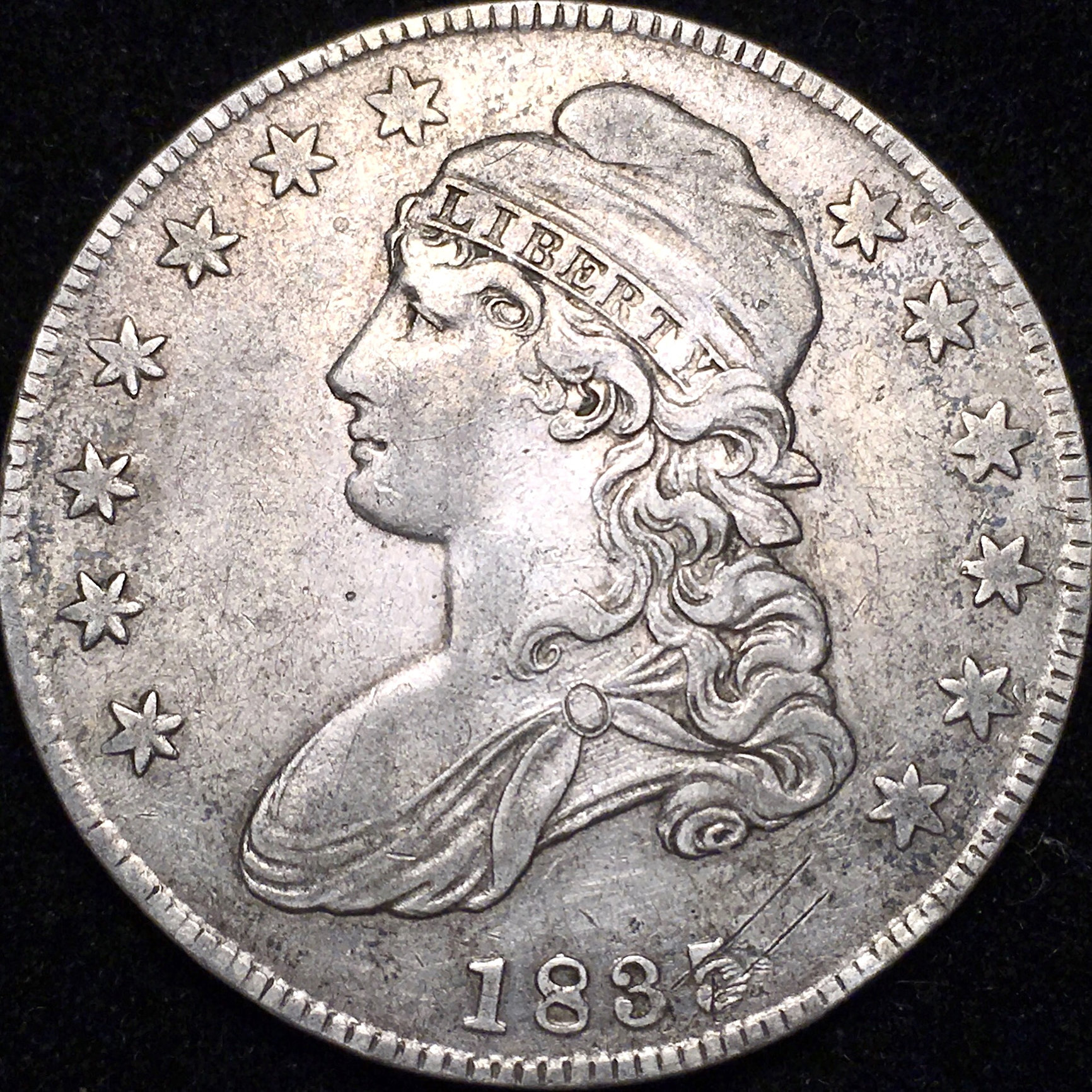
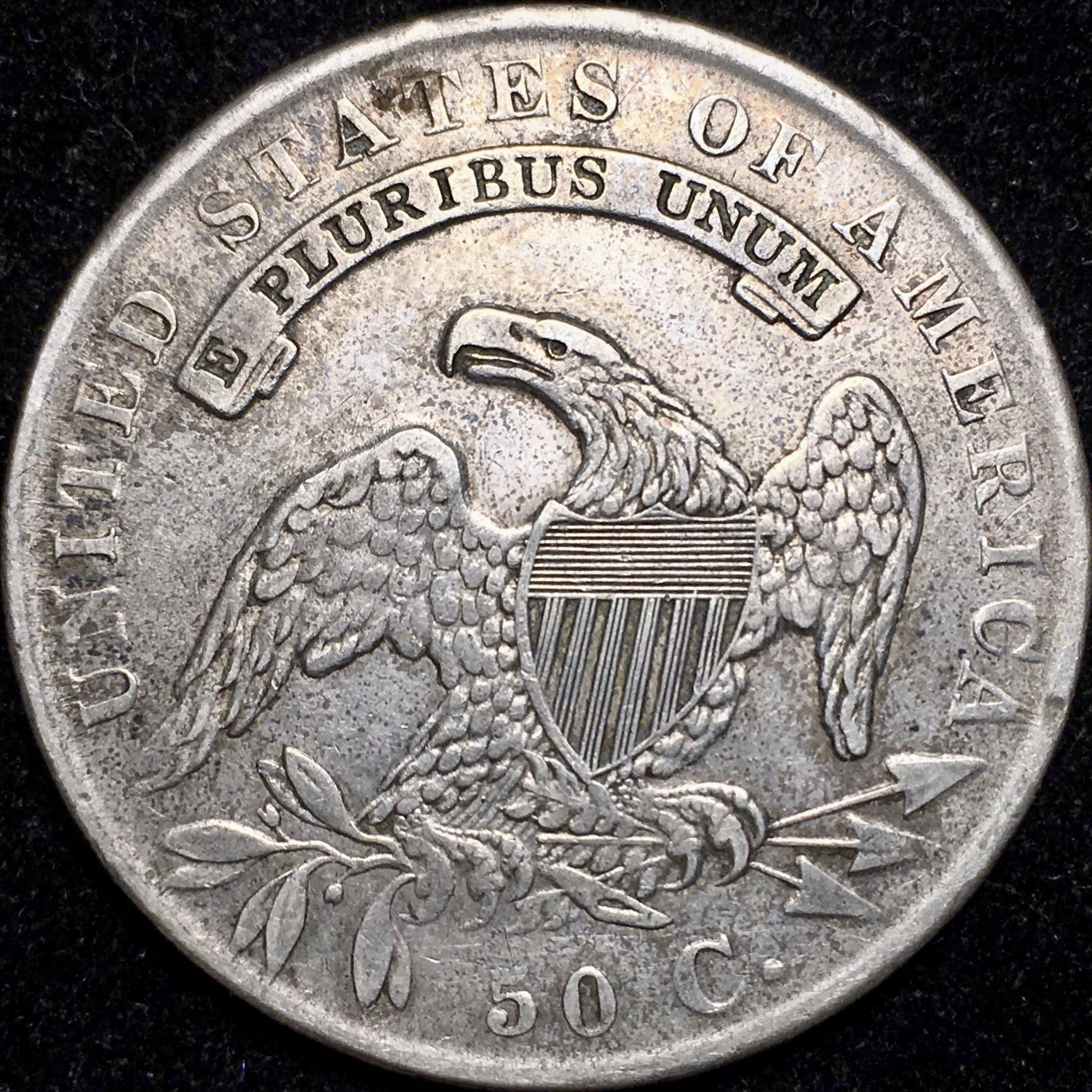
HERES #1