Options
GTG or am I missing something?
 Stork
Posts: 5,208 ✭✭✭✭✭
I generally don't play the crossing game but do admit to a registry set ATS for the Albanian coins (PCGS only has the gold coins, and I have more of the silvers and base metals, though considering my dupes I'd have a good start on a PCGS set too, but I digress).
Anyway, I bought this one awhile back via an online auction from overseas. It failed to cross, but I'm tempted to crack it and try it raw. Before I do that though I'd like to see if anyone sees an obvious reason that would impede things.
Here are two shots/different lighting. The slab is a bit scuffy, and grading off photos is never optimal, but I'm curious for opinions?
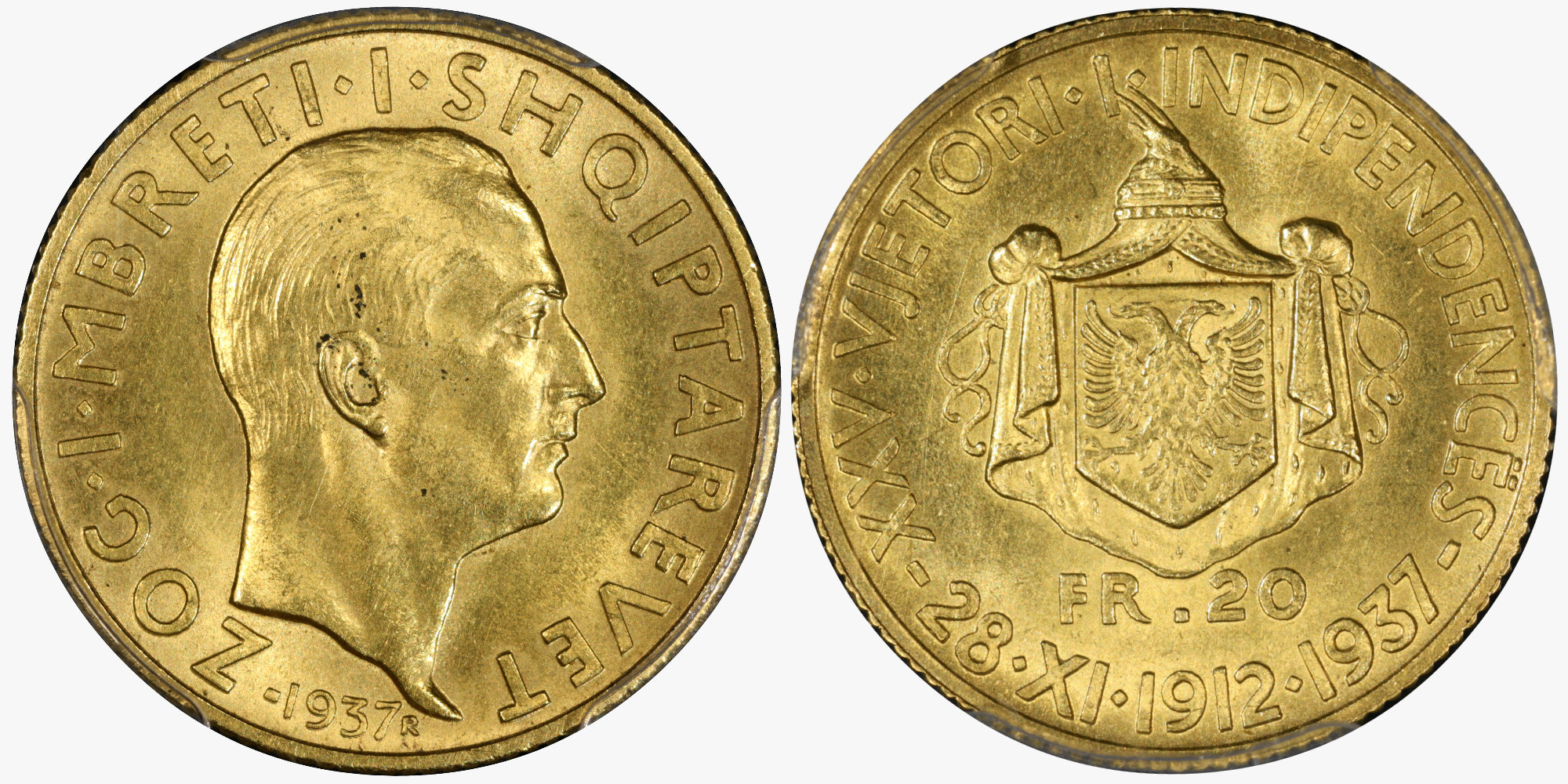
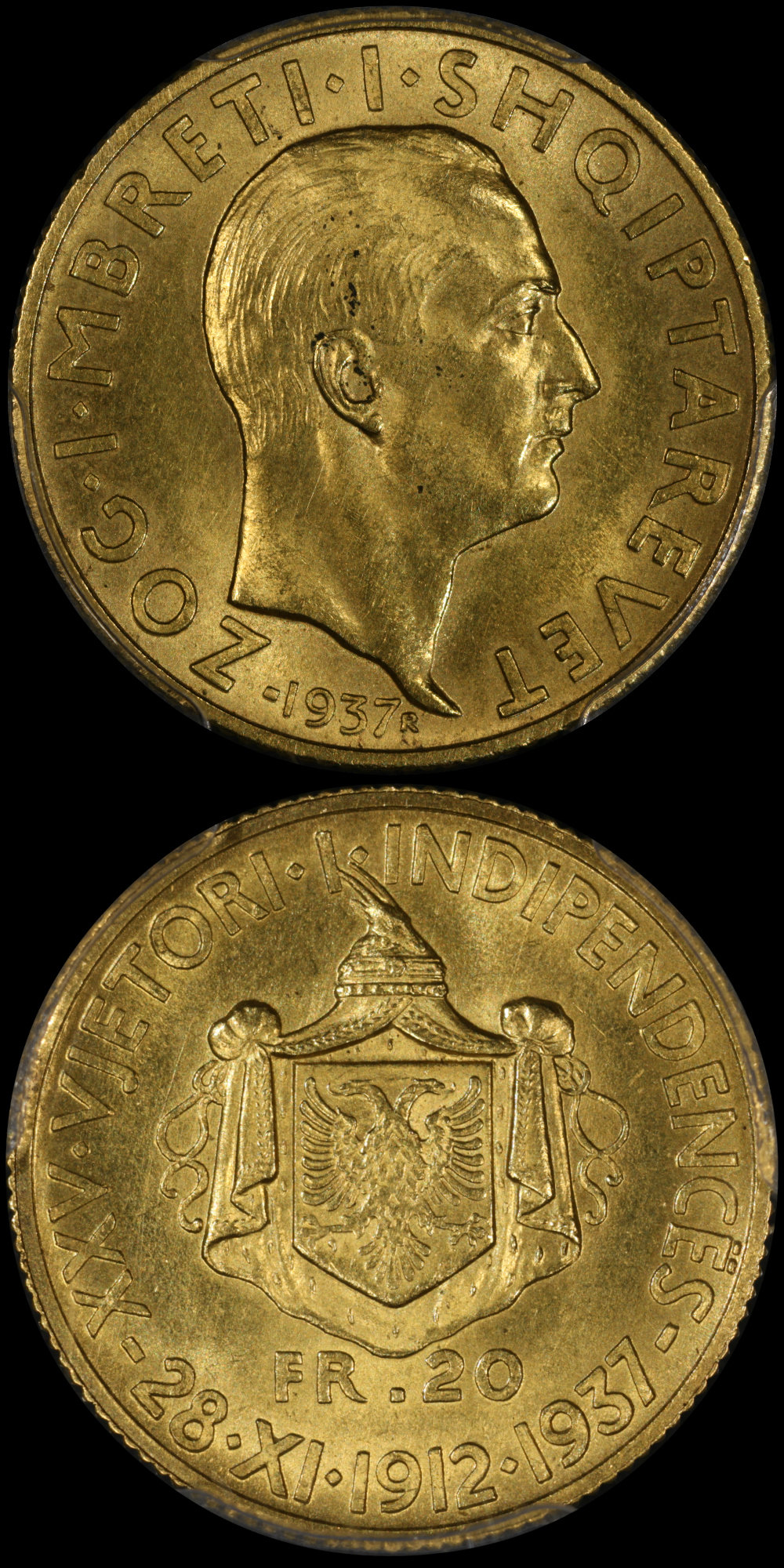
The flyspeck carbon spots are annoying, but not so obvious in life vs. photos.

1
Comments
MS61-62, leaning towards 61
Gobrecht's Engraved Mature Head Large Cent Model
https://www.instagram.com/rexrarities/?hl=en
At its worst I would call this AU 58
PCGS called it a 64, I was leaning towards 62-63, IIRC when I tried it I allowed for a point drop, so NGC was not willing to promise a 63 before it was out of the plastic. Both companies seem a bit lenient on the Albanian gold (or maybe it's gold in general). Owner bias made me want it to be no worse than a 63 I suppose, which is why I posted it. Poor Zog looks like he need's his ears washed though.
I think you did well. I was about to guess a lock 63..then I saw the grade...must look good in hand too.
_t=_The flyspeck carbon spots are annoying, but not so obvious in life vs. photos.
Agreed - that's why I thought 63 and not surprised it's 64.
I thought 63 as well
TalerUniverse.com is a curated numismatic project dedicated to the silver talers, crowns, and medals of the Habsburg Empire and the Holy Roman Empire, spanning the 16th–18th centuries. The collection emphasizes historically significant issues, rare mint varieties, and high-grade NGC/PCGS examples, presented with detailed historical context, scholarly references, and high-resolution photography. TalerUniverse aims to serve both as a private collection showcase and a growing reference resource for collectors, researchers, and students of early-modern European coinage.