Options
1811 Shilling token -- A shortage of change
 brg5658
Posts: 2,408 ✭✭✭✭✭
brg5658
Posts: 2,408 ✭✭✭✭✭
Many of you have heard of the Provincial Token Coinage ("Conder" tokens) privately issued mostly in copper from 1787 to about 1804 to help with a severe shortage of small change at the time. Well, not too long after that coin shortage, another shortage had reared its ugly head by around 1810.
This snippet from the Bristol Mirror in August of 1811 gives insight to the shortage of coinage during the period: "The total disappearance of Good Coin and the extreme difficulty of procuring Silver Change, continue to perplex, if not to alarm, every description of persons. The Bank [of England] Tokens have been so sparingly issued, that they have hitherto served rather to gratify curiosity than to administer to public convenience. In fact, unless some means are immediately adopted to remedy this daily . . .[increasing] evil, it will be impossible to execute the ordinary transactions of trade. The want of change is no longer merely an inconvenience, but a source of actual distress to thousands of traders and poor people; the former of whom are reduced to the alternative of giving credit, which they wish to avoid, or keeping their commodities in hand; and the latter are compelled to submit to purchases in which the liberty of choice is sacrificed to the necessity of the occasion. It is a serious fact, that several butchers and market people, on the last Taunton market day, declared their intention of withholding all supplies which were not indispensably required by their regular customers, while others avowed their determination to abstain from attending the market altogether."
To remedy this shortage, another wave of privately issued copper and silver coinage begun to show up in large quantities by 1811, some issued as late as 1814 or thereabouts. The copper and silver token coinage from 1811-1814 is exceedingly difficult to find in high grade, as most everything issued was circulated and heavily used.
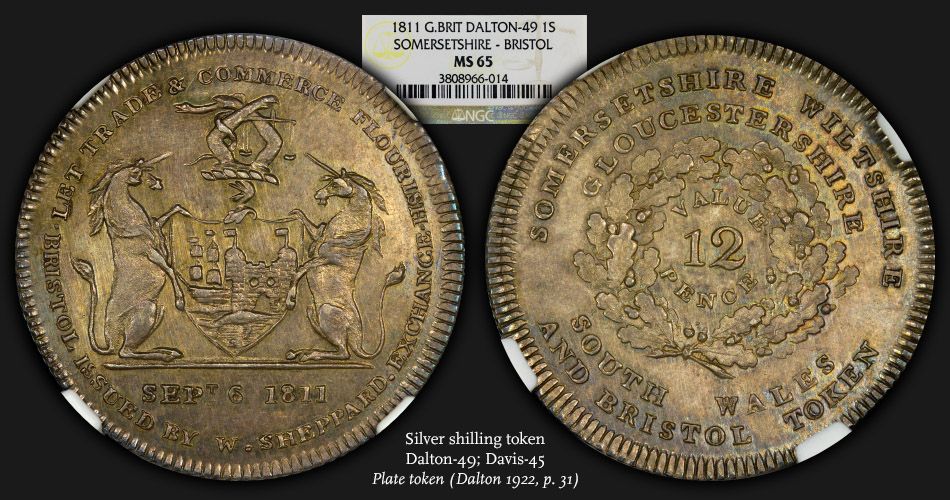
The token below is an example of a 12 pence (shilling) token issued in September of 1811 by one William Sheppard. From James O'Donald Mays' BNJ Article (Silver Tokens and Bristol, 1978), "William Sheppard was one of those enterprising Bristolians who conducted a wide range of business activities. The 1815 city guide lists him as being a stationer, bookseller, lottery operator, and owner of a patent medicine warehouse. His place of business was near the Exchange, thus assuring him a steady procession of prosperous clients. His own guide of Bristol, published a few years before his tokens were issued, carries a full page of patent medicines available from his shop: his cures bear such intriguing names as Balm of Mecca, Iceland Liverwort, Senate's Embrocation for Worms, and Sicilian Bloom of Youth and Beauty. Sheppard issued shillings (Dalton 49-50) and sixpences (Dalton 65); both denominations would have been useful in purchasing volumes from his bookshop, many of which sold for a shilling or one shilling and sixpence."
I was happy to acquire this token in a recent Heritage auction, and have since traced it as the plate coin from the 1922 Dalton reference (The silver token-coinage mainly issued between 1811 and 1812 described and illustrated; R. Dalton, 1922). Below the token I also show the Bristol City Arms from a publication in 1673.
Thanks for reading, Brandon


This snippet from the Bristol Mirror in August of 1811 gives insight to the shortage of coinage during the period: "The total disappearance of Good Coin and the extreme difficulty of procuring Silver Change, continue to perplex, if not to alarm, every description of persons. The Bank [of England] Tokens have been so sparingly issued, that they have hitherto served rather to gratify curiosity than to administer to public convenience. In fact, unless some means are immediately adopted to remedy this daily . . .[increasing] evil, it will be impossible to execute the ordinary transactions of trade. The want of change is no longer merely an inconvenience, but a source of actual distress to thousands of traders and poor people; the former of whom are reduced to the alternative of giving credit, which they wish to avoid, or keeping their commodities in hand; and the latter are compelled to submit to purchases in which the liberty of choice is sacrificed to the necessity of the occasion. It is a serious fact, that several butchers and market people, on the last Taunton market day, declared their intention of withholding all supplies which were not indispensably required by their regular customers, while others avowed their determination to abstain from attending the market altogether."
To remedy this shortage, another wave of privately issued copper and silver coinage begun to show up in large quantities by 1811, some issued as late as 1814 or thereabouts. The copper and silver token coinage from 1811-1814 is exceedingly difficult to find in high grade, as most everything issued was circulated and heavily used.
The token below is an example of a 12 pence (shilling) token issued in September of 1811 by one William Sheppard. From James O'Donald Mays' BNJ Article (Silver Tokens and Bristol, 1978), "William Sheppard was one of those enterprising Bristolians who conducted a wide range of business activities. The 1815 city guide lists him as being a stationer, bookseller, lottery operator, and owner of a patent medicine warehouse. His place of business was near the Exchange, thus assuring him a steady procession of prosperous clients. His own guide of Bristol, published a few years before his tokens were issued, carries a full page of patent medicines available from his shop: his cures bear such intriguing names as Balm of Mecca, Iceland Liverwort, Senate's Embrocation for Worms, and Sicilian Bloom of Youth and Beauty. Sheppard issued shillings (Dalton 49-50) and sixpences (Dalton 65); both denominations would have been useful in purchasing volumes from his bookshop, many of which sold for a shilling or one shilling and sixpence."
I was happy to acquire this token in a recent Heritage auction, and have since traced it as the plate coin from the 1922 Dalton reference (The silver token-coinage mainly issued between 1811 and 1812 described and illustrated; R. Dalton, 1922). Below the token I also show the Bristol City Arms from a publication in 1673.
Thanks for reading, Brandon
-Brandon
-~-~-~-~-~-~-~-~-~-~-~-~-~-~-~-~-~-~-~-~-~-~-~-~-~-~-~-~-~-~-~-~-~-~-~-~-~-~-~-~-~-~-~-~-~-~-~-~-~-~-~-~-
My sets: [290+ horse coins] :: [France Sowers] :: [Colorful world copper] :: [Beautiful world coins]
-~-~-~-~-~-~-~-~-~-~-~-~-~-~-~-~-~-~-~-~-~-~-~-~-~-~-~-~-~-~-~-~-~-~-~-~-~-~-~-~-~-~-~-~-~-~-~-~-~-~-~-~-
-~-~-~-~-~-~-~-~-~-~-~-~-~-~-~-~-~-~-~-~-~-~-~-~-~-~-~-~-~-~-~-~-~-~-~-~-~-~-~-~-~-~-~-~-~-~-~-~-~-~-~-~-
My sets: [290+ horse coins] :: [France Sowers] :: [Colorful world copper] :: [Beautiful world coins]
-~-~-~-~-~-~-~-~-~-~-~-~-~-~-~-~-~-~-~-~-~-~-~-~-~-~-~-~-~-~-~-~-~-~-~-~-~-~-~-~-~-~-~-~-~-~-~-~-~-~-~-~-
0
Comments
TalerUniverse.com is a curated numismatic project dedicated to the silver talers, crowns, and medals of the Habsburg Empire and the Holy Roman Empire, spanning the 16th–18th centuries. The collection emphasizes historically significant issues, rare mint varieties, and high-grade NGC/PCGS examples, presented with detailed historical context, scholarly references, and high-resolution photography. TalerUniverse aims to serve both as a private collection showcase and a growing reference resource for collectors, researchers, and students of early-modern European coinage.
World Collection
British Collection
German States Collection
FOR SALE Items
Like VOC Numismatics on facebook
<< <i>Very interesting and a great coin. Care to post an image of the same coin in the 1922 reference? >>
Sure, it's not a very high quality scan, but the markers are there (noted in red)...you can imagine the ability to image coins and tokens in the 1920s was less than optimal, but I'm quite certain this is the plate example of Dalton-49.
1. Obverse: Flan anomaly over the I in "FLOURISH".
2. Obverse: Same slight off-centering of strike left of center.
3. Reverse: Same "pinching" on left dentil detail.
4. Reverse: Small flan crack anomaly above the L of "WILTSHIRE".
-~-~-~-~-~-~-~-~-~-~-~-~-~-~-~-~-~-~-~-~-~-~-~-~-~-~-~-~-~-~-~-~-~-~-~-~-~-~-~-~-~-~-~-~-~-~-~-~-~-~-~-~-
My sets: [290+ horse coins] :: [France Sowers] :: [Colorful world copper] :: [Beautiful world coins]
-~-~-~-~-~-~-~-~-~-~-~-~-~-~-~-~-~-~-~-~-~-~-~-~-~-~-~-~-~-~-~-~-~-~-~-~-~-~-~-~-~-~-~-~-~-~-~-~-~-~-~-~-
--Severian the Lame
We'll use our hands and hearts and if we must we'll use our heads.
The oldest coin I have that I can trace goes back to 1903 (1st issue of British Numismatic Journal)