Options
Question about and Indian Cent Variety
 sellitstore
Posts: 3,102 ✭✭✭✭✭
Hi folks on the coin boards. I usually post in the paper money forum but have a coin question. I would appreciate any help that you can offer. Thanks in advance to all.
I have a question about the below Indian Head Cent. Please excuse the picture which isn't big enough but I will describe it as best as I can. Is this variety listed in Snow or anywhere else? It has a distinct die crack die crack from the rim up through the right side of the "6" in date. It also displays what looks like heavily clashed dies most visible above the date, between the headdress and neck and in front of face. Also some signs of clashing on back under shield and on left inside of wreath. The "LI" of "LIBERTY" is obliterated but apparently not after striking. I think it's a result of the clash and die wear. The depression on the obv by the "D&S" also looks like a planchet flaw rather than a contact mark. Is there any premium for this variety? Any idea of rarity? It's a fairly nice uncirculated coin.
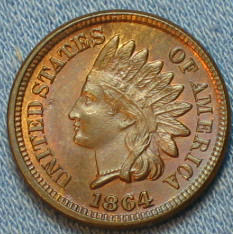
I have a question about the below Indian Head Cent. Please excuse the picture which isn't big enough but I will describe it as best as I can. Is this variety listed in Snow or anywhere else? It has a distinct die crack die crack from the rim up through the right side of the "6" in date. It also displays what looks like heavily clashed dies most visible above the date, between the headdress and neck and in front of face. Also some signs of clashing on back under shield and on left inside of wreath. The "LI" of "LIBERTY" is obliterated but apparently not after striking. I think it's a result of the clash and die wear. The depression on the obv by the "D&S" also looks like a planchet flaw rather than a contact mark. Is there any premium for this variety? Any idea of rarity? It's a fairly nice uncirculated coin.
Collector and dealer in obsolete currency. Always buying all obsolete bank notes and scrip.
0
Comments
I just checked my copy of The Flying Eagle and Indian Cent Attribution Guide, 2nd Edition, Vol. 2, 1859-1869 by Rick Snow. Nothing in the book matched up with with the coin you have. Maybe you could PM Rick Snow (EagleEye) and ask him if he has seen anything like it. It looks like a really nice piece with great eye appeal, and I'm willing to bet that an Indian Cent specialist would be willing to pay a premium for it.
Hope this helps a little...
The key to the 1864 No L is finding a specimen that was made from a fresh die - i.e. strong, sharp strike with full feather definition, and that can be as tough a challange as looking for the 1869/69.