Options
A doctor and, his cadavers..
 Glavin
Posts: 235
Glavin
Posts: 235
This is not a AT or NA post. Its a what the hell are they doing to these coins question.
If you think you know what they are dipping these into or, painting them with post.
We can all learn a little more about these type of AT coins, and why they look this way.
If you Dont know the answer to the question dont post!!!
This is so we can learn how and, why to avoid these coins.
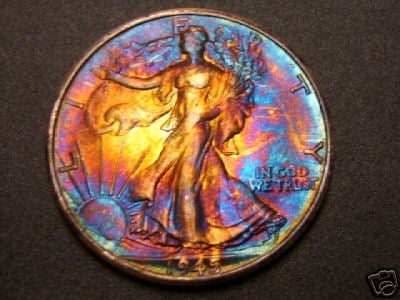
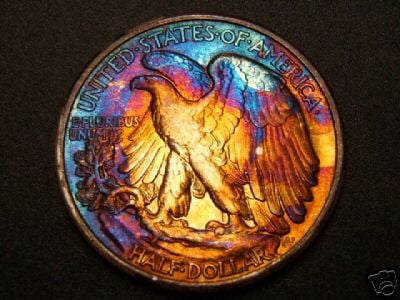
RAINBOW ?
one response to private buyer.
<< <i> what do you dip your coins in the get them to tone like this coin? good coin >>
Reply by assets4less: Thanks, They're never dipped, bad pictures, but great coins :-)
This is what many buyers think:
(1)this seller sells real toned coins!!!!!..no artificials here!!!!
(2)recommend!!!super toned coins from this seller!!!nothing artificial here!!
(3)NICE RAINBOW,THANKS
(4)Cool coins..
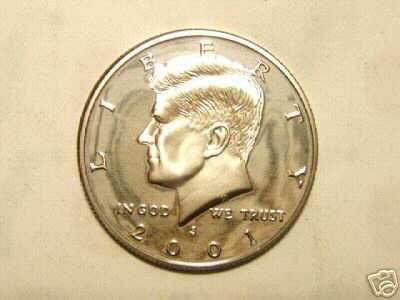
Picture of a coin he sold that showes chemical residue.
Cleaned to the point of no return...
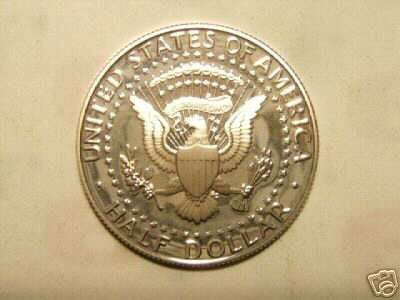
the lines are in the same place he paints the coins with chemicals.
noted on the side and reverse along the stars
If you think you know what they are dipping these into or, painting them with post.
We can all learn a little more about these type of AT coins, and why they look this way.
If you Dont know the answer to the question dont post!!!
This is so we can learn how and, why to avoid these coins.
RAINBOW ?
one response to private buyer.
<< <i> what do you dip your coins in the get them to tone like this coin? good coin >>
Reply by assets4less: Thanks, They're never dipped, bad pictures, but great coins :-)
This is what many buyers think:
(1)this seller sells real toned coins!!!!!..no artificials here!!!!
(2)recommend!!!super toned coins from this seller!!!nothing artificial here!!
(3)NICE RAINBOW,THANKS
(4)Cool coins..
Picture of a coin he sold that showes chemical residue.
Cleaned to the point of no return...
the lines are in the same place he paints the coins with chemicals.
noted on the side and reverse along the stars
0
Comments
<< <i>Picture of a coin he sold that showes chemical residue.
Cleaned to the point of no return.. >>
There is no chemical residue on that proof Kennedy. What you're seeing is reflections off the mirrors.
Russ, NCNE
<< <i>
<< <i>Picture of a coin he sold that showes chemical residue.
Cleaned to the point of no return.. >>
There is no chemical residue on that proof Kennedy. What you're seeing is reflections off the mirrors.
Russ, NCNE >>
I agree.......
not to mention poor lighting, poor image, improper whitebalance..
"Senorita HepKitty"
"I want a real cool Kitty from Hepcat City, to stay in step with me" - Bill Carter
<< <i>
<< <i>
<< <i>Picture of a coin he sold that showes chemical residue.
Cleaned to the point of no return.. >>
There is no chemical residue on that proof Kennedy. What you're seeing is reflections off the mirrors.
Russ, NCNE >>
I agree.......
not to mention poor lighting, poor image, improper whitebalance.. >>
But other than that, it's perfect
Check out my current listings: https://ebay.com/sch/khunt/m.html?_ipg=200&_sop=12&_rdc=1
Andrew
Russ, NCNE
what did you do to that coin Russ?
Its no secret but, if you choose not to post I will be forced to
call you out!!
Dear Lucy Bop you took chem 101, what do you know that some of us noobs dont.
thank you.. Is there a doctor in the house..
doctors uncovered...
"Senorita HepKitty"
"I want a real cool Kitty from Hepcat City, to stay in step with me" - Bill Carter
Most of the tarnished coins I have seen are not beautifully toned. For every piece with dazzling rainbow colors there are thousands, which have acquired toning ranging from typical golden brown to dirty looking gray and black. What constitutes beautiful toning seems to vary from one collector to the next, but I think most of us would agree that a pleasant, light colored toning, which hides nothing, can make a coin more desirable and thus often worth more. Just as each coin is unique because of the arrangement of marks, degree of strike, and other factors, no two coins ever acquire exactly the same type of toning. This includes coins of the same type stored for long periods of time in the same environment. Attractive toning adds to a coin’s distinctiveness. .
WHAT’S REAL TONING?
I once worked in a coin shop where the sun shone into our display area for the majority of the day. In one display we decided to show off a group of loose Morgan dollars. These coins were placed on a velvet pad. After several weeks we noticed the obverse of each coin was beginning to acquire some light golden color. The coin nearest the light fixture inside the case seemed to be gaining color fastest. In less than two months, most of the coins had turned an attractive blue-green and rose-gold color. We turned the coins over and allowed the reverse to acquire the same pleasant patina. Could we be accused of artificially toning coins, or had we just given nature a helping hand? Should beautifully toned coins only be considered original if it happens entirely by accident?
I would suggest the majority of beautifully toned modern coins, that being pieces less than 200 years old, got that way after they were in the possession of collectors. I have purchased a number of collections stored in brown paper envelopes. Many of the coins had very similar toning. Careful examination of the coins indicated they had been brilliant when first put in the paper pouches. The laminated paper in another popular type of coin storage system would often produce halo toning in a rainbow of colors on coins that were obviously brilliant when first placed in the albums. I have seldom seen coins gain beautiful toning when stored for long periods of time in a leather purse, tobacco tin, or behind a rock in the cellar. Most beautifully toned Morgan dollars have quite the same type of coloration and appear to have been stored for long periods of time in original mint bags. I would bet more than one collector has placed a few coins on a sunny windowsill or wrapped pieces in cheap paper hoping the coins would take on some attractive toning.
Perhaps deciding if toning is genuine or artificial depends on how long it took for the coin to acquire the tarnish? Few of us would consider a coin dipped in or sprayed with chemicals to be naturally toned. Baking or frying a coin in oil or inside a vegetable for several hours is not how coins naturally tone. What if a coin "accidentally" got placed on some damp cardboard and sat next to a radiator or wood stove for three or four months? Should the coins pleasant steel blue and rose toning be considered true or false?
Is it possible for an experienced numismatist to be fooled by artificial toning? The answer is yes. One of the major faults I find with the grading services is their occasional inability to detect original toning. Having submitted coins from old time collections, I know the pieces toned naturally, but the grading services called the coloration artificial. I guess they figure it is better to be conservative in this regard because they get to keep the grading fee even if they chose not to grade and encapsulate the coin.
My comments to this point have to do with what might be termed "good toning" be it original or artificial. Like cleaning, if the toning is attractive perhaps it really doesn’t matter how it got on the coin? In other cases, coins have been heavily treated with photographic developing chemicals and the like. Household liquid bleach can turn coins vivid shades of blue and green, but a coin treated in this manner is often blue-black in color. All three of the methods I have mentioned do permanent damage to the surface of a coin.
Artificial toning may not be added to the surface of a coin to make it more attractive and desirable, but rather to hide defects on the surface. Medium to deep toning can hide hairline scratches or worse. Artificial toning can also be used to hide that a coin has been cleaned. When unexpected faults are found, adding color after cleaning is quite a common practice.
The only way I know to learn about artificial toning is to examine many toned coins. Certain types and denominations of coins tend to have a typical type of toning. While I have seen Bust half dollars with light golden or rainbow coloration, the typical color for these pieces tends to be somewhat gray. When I see examples, which vary from this color, I spend more time studying them. Modern Government Issue mint sets from the forties and fifties were shipped to collectors in cheap cardboard holders with a green paper flap. Because of the packaging, the coins from these sets often have deep golden and mottled toning that is generally considered unattractive. Proof Trade dollars often have deep blue-gray toning, sometimes mixed with iridescent highlights. Proof Morgan dollars are often deeply toned with a gray to black coloration. Matte proof Lincoln cents can, many times, be found with vivid violet and blue-green hues. Buffalo nickels can come in lots of different colors, but light to medium gold toning seems to be the dominant hue. Because of the way they were stored, or shipped to collectors, Silver Commemoratives of each type tend to have the same sort of toning. I won’t continue with this list because, as I mentioned, the best way to learn to recognize genuine toning is to examine many coins first hand. As a general rule, when I see a coin with unusual coloration for the issue I become suspicious, while keeping in mind there can be exceptions to most every rule. When toning appears too good to be true, chances are good it is false.
Apropos of the coin posse/aka caca: "The longer he spoke of his honor, the tighter I held to my purse."
<< <i>Well said, Glavin. Didn't know you had it in you
uhhhh, that came from this link:
http://coins.heritagegalleries.com/features/numisarticles.php?id=122
"Senorita HepKitty"
"I want a real cool Kitty from Hepcat City, to stay in step with me" - Bill Carter
Apropos of the coin posse/aka caca: "The longer he spoke of his honor, the tighter I held to my purse."
<< <i>uhhhhh, right back atcha. Please don't step on my sarcasm. Now Glavin won't respond, or try to own it. Geez. >>
oppppssss.... I thought jou was bein' serious G Money.........
"Senorita HepKitty"
"I want a real cool Kitty from Hepcat City, to stay in step with me" - Bill Carter
copper coins.
Silver on the other hand does dip very well.The higher % of silver,the better the results.
Yours being 80% silver have probably 18% copper,so dipping them may get the copper to leach out so to
speak and show up as surface toneing.
Dipping clad(everyday coins) has disasterous results as well as due to high copper content.
Russ
I dipped about 50 1964 Kennedy business strikes for practice a couple weeks ago. 50/50 eZest/distilled water,
15 seconds or so. I decided that if it took more time then that, it probably wasn't going to work anyway. After
practicing, I dipped some '64 proofs that are now in at PCGS for grading. I'll soon know how well I did.
Russ, NCNE
clackamas
Anyone know where to buy Jewel luster or MS70 online that does not charge a bazillion dollars for shipping?
Thanks! No Wal-Mart near here so I will buy online.
jamesfsm
The house brand jewelry dip at WalMart is the same chemically as Jeweluster. I dipped two coins in that (for
about 5 seconds) and both graded out fine at PCGS. Don't forget to rinse well with distilled water/acetone and
dry with a hairdryer.
Russ
clackamas,