Options
Zincoin curse
 Carpenter440
Posts: 16 ✭
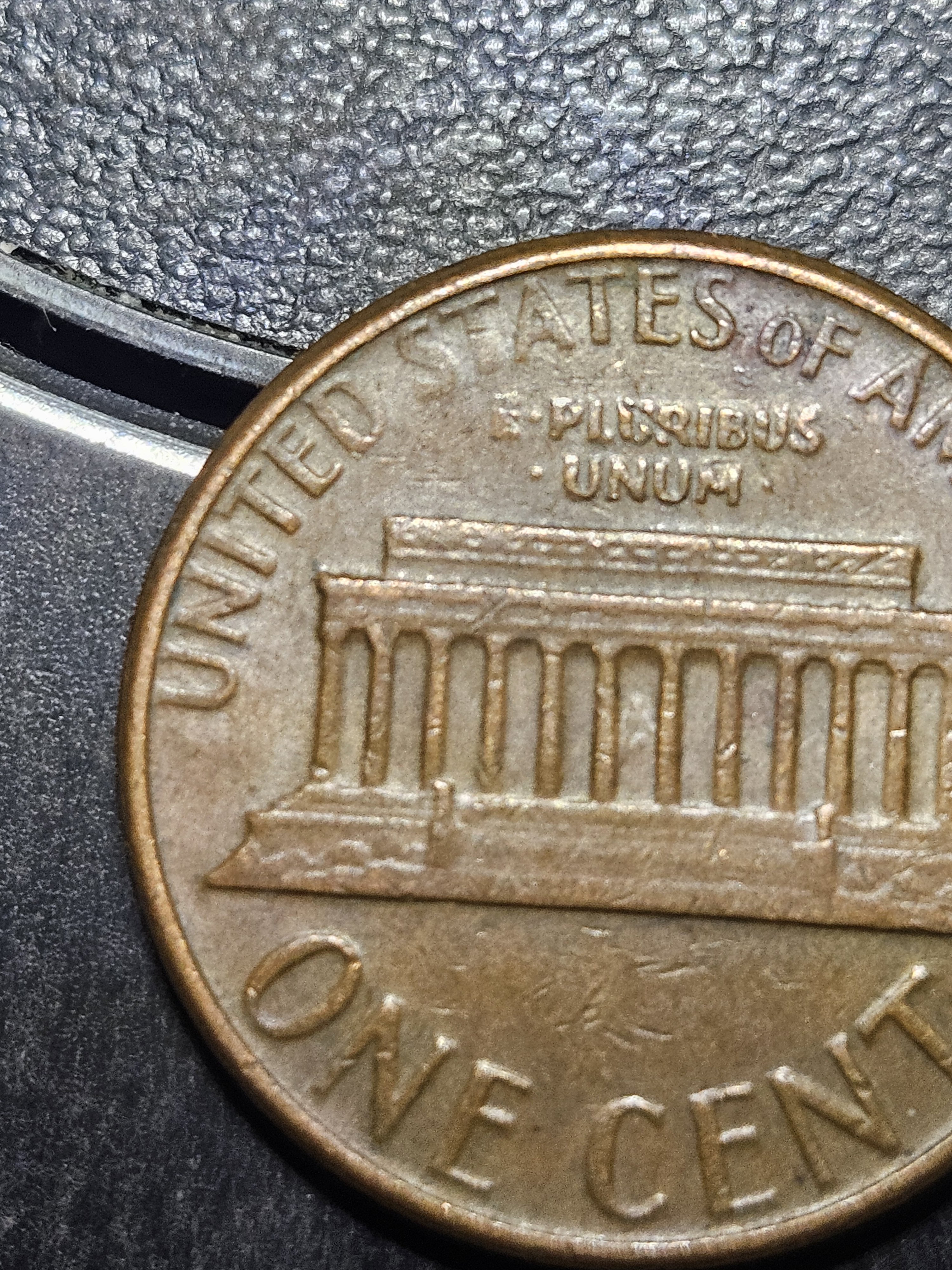
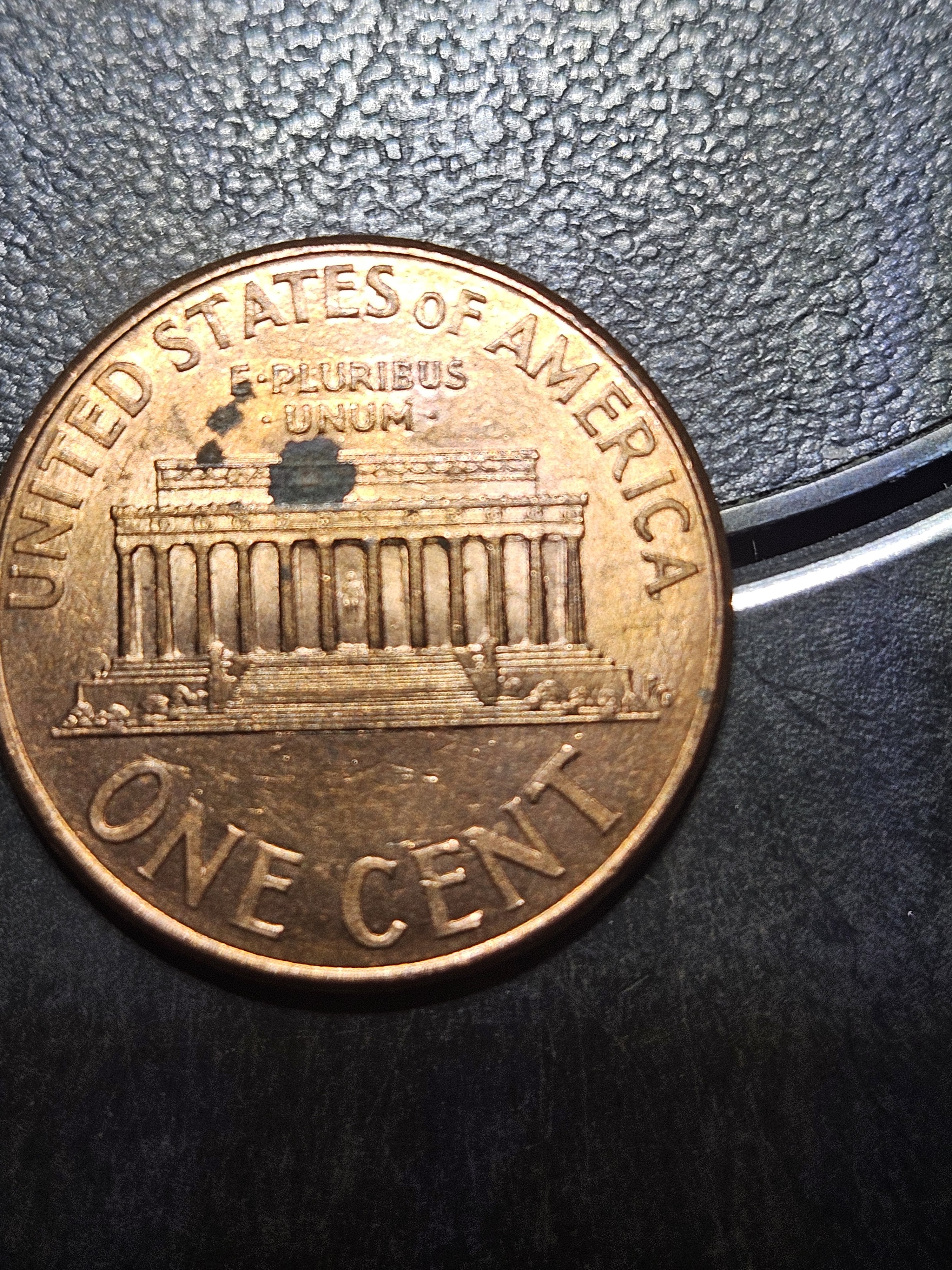
These 2 pennies are examples. After looking at many pennies it seems that zinc pennies have the curse of black spots. Why do these spots happen? Do they grow larger? Is it safe to assume this greatly affects the condition? Another question is when grease gets between the die and planchet. Is that what causes that flat look in some areas of the letters?
1
Comments
Aren't you getting ahead of yourself?
What is the date on that first cent?
i've never noticed the relative number of black spots on otherwise normal cents between the zinc and bronze.
the plating on zincolns is pure copper and would be more reactive than the bronze
looking at the flattened S in comparison to the unflattened S i would say there was something that mashed the letters flat and fat
often stunted lettering can be partially filled dies
Most of us realized the inadequacy of the Zincoln penny soon after they started being made in 1982. Metal detectorists leave them in place in the ground when detected. Zincolns don't even make good plant fertilizer. Zincolns are a sorry excuse for a penny.
A few years back ('21?) there was a year where every single brand new penny I saw was tarnished and/or carbon spotted. There were dozens and dozens of them and they were in circulation so they came from numerous sources over the course of a couple years.
They decompose as fast as the mint can make them.
Older zincolns didn't do this and I'd see a few really nice Gems in circulation every years. Once in circulation they began spotting and rotting but they started out OK.
A lot of moderns arte struck under low pressure with poor, over used, and worn dies. They don't need a reason to lack detail. Yours looks like some dirt in a tipped die. Note the "OF" is sharp.
When you have questions about a coin you need to show full obv and rev photos as there may be markers or other information needed to answer your questions. Yes it is possible that the flattened letters of the memorial cent may have been the result of a partially filled die. However, when dealing with circulated coins it is also just as possible to be damage. This is where seeing the obv might provide some additional clues. But even if this was caused from a partial clogged die this is far too minor and insignificant to be of any value or interest to a knowledgeable collector.
Depending on the date (we don't know as you did not provide an obv photo) that could be zinc rot not a carbon spot, a very common problem for the zinc cents. The copper layer over the zinc core is very thin once compromised the zinc is exposed to the elements, degrades very quickly and turns black. This can be the result of damage to the copper layer or even a minor defect like a pinhole in the copper. Yes zinc rot or carbon spots on the pre 82 cents will for most common date coins reduce the value, often to simple face value. For key dates it will also reduce the value just not to face value in most cases.
My Collection of Old Holders
Never a slave to one plastic brand will I ever be.
They will be like the British Tin Farthings. A poster child for “bad choice for a coin metal “. The only ones that survive in really nice shape were preserved as a collectors piece OR recovered from the thick gooey anerobic mud of the Thames River A group of a dozen or so once was found “together “. It’s thought a ferryman lost his purse!
On 95% coppers that area on the reverse sometimes strikes up weak because most of the metal is being drawn up into the obverse (hammer) die to form the lower bust of Lincoln. So usually not a "greaser".
"When they can't find anything wrong with you, they create it!"
When these black spots are small and round, they're called "carbon spots". Carbon spots aren't actually caused by or made of carbon, they're called that because of the colour. When they're large and irregular like this, they're usually just called "ick".
Their cause is some kind of foreign contaminant reacting with the bright shiny copper metal. The small round cute ones are usually caused by saliva drops - someone coughing, sneezing or talking over the coin. Human saliva is both wet and full of sulfur, so will readily turn copper dark brown or black as a result. Larger ones could also be spit, or some other substance that reacted with the copper, such as spilled soda, a glob of high-sulfur food, or even just perfectly normal water if left there for long enough.
Will it spread all by itself? Not usually. The damage was caused by the now-removed foreign contaminant. If however the corrosion has gone so deep it's penetrated right through the copper and exposed the zinc core, that can readily get worse if left exposed to open air.
Does it affect grade, collector appeal and market value? Absolutely. It is, fundamentally, corrosion. It cannot be removed or undone without destroying the coin entirely.
This has been addressed by other posters, but as a general rule, yes, grease-filled dies can cause areas that are normally prominent to fade away or even disappear entirely. The famous "1922-plain" is almost certainly caused by grease filling-in the mintmark.
It's perhaps pertinent to point out that while we call it "grease", it's not entirely the same as the stuff you might find underneath your car or inside your oven. Modern high-speed coin presses cannot use "regular" grease, as it would simply burn or evaporate away at the speeds and temperatures usually reached. Mints around the world normally use high-temperature industrial grease, which is a solid at room temperature and needs to be applied by a hot grease gun (or is injected automatically into the machinery).
Over time, this grease tends to accumulate tiny bits of metal, which turns the grease rock-hard when it cools; it also looks metallic, making this "old grease" effectively invisible when sitting on the surface of a die, which is why it can readily be missed when visually inspecting a die. This also explains why it's not too hard to find multiple examples of exactly the same grease pattern; once a blob of old mint grease cools and hardens, it's not coming off; the blob of grease effectively becomes part of the die.
Roman emperor Marcus Aurelius, "Meditations"
Apparently I have been awarded the DPOTD twice.
{The famous "1922-plain" is almost certainly caused by grease filling-in the mintmark.}
.
Interesting: From The Lincoln Cent Resource: https://www.lincolncentresource.com/1922Ddievarieties.html
Die Pairs #1, #3 and #4 were the result of “mint grease”, which is a combination of dirt, metal, and oil, filling the
area of the mintmark. Mint grease would fill the mintmark gradually, resulting in different levels of “weakness”. It
is believed that the mint grease would fall out, then refill creating a cycle of normal D’s, broken D’s, weak D’s, and
no D’s. When looking at circulated examples of 1922 D’s, keep in mind that the mintmark could have simply be
worn from use. Die Pairs #1, #3 and #4 have “weak reverses” because they were struck with worn reverse dies.
Die Pair #2 is not believed to be the result of “mint grease”. One theory is a pair of dies that were creating 1922 D’s clashed together. The clash resulted in damage to both the obverse and reverse die. The reverse die was badly damaged, and replaced with a newer less worn die. The obverse die was reworked by a mint employee who erased all traces of the D mintmark while repairing and polishing the die. The result is a worn obverse die with no
trace of a mintmark and a strong reverse die.
Another theory by A.D. Craig in 1967, is the "true" 1922P die was actually made in Philadelphia and shipped to Denver, no D was applied to the working die.
"When they can't find anything wrong with you, they create it!"