question about "wavy" 1955 Topps Hank Aaron

Options

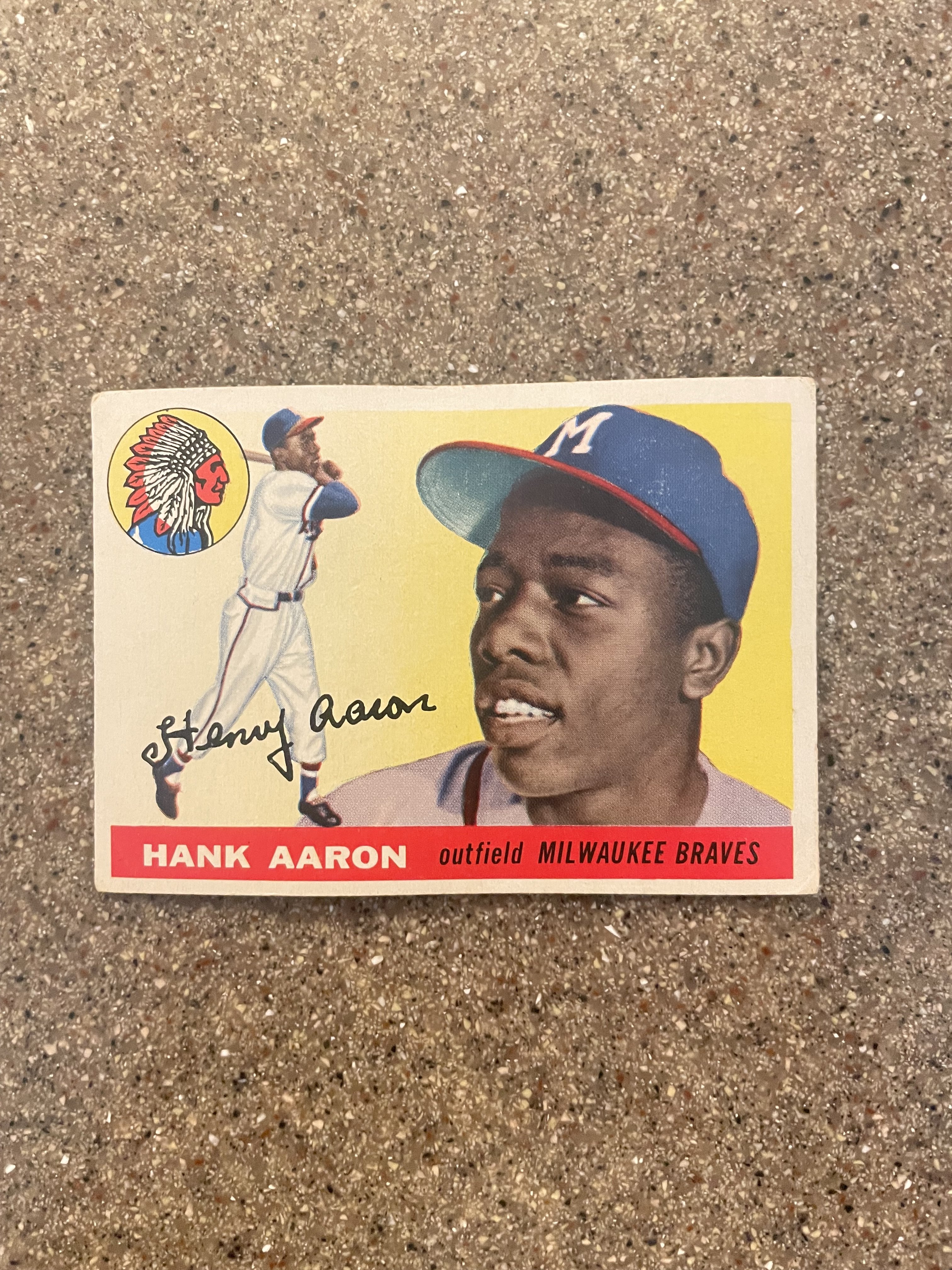
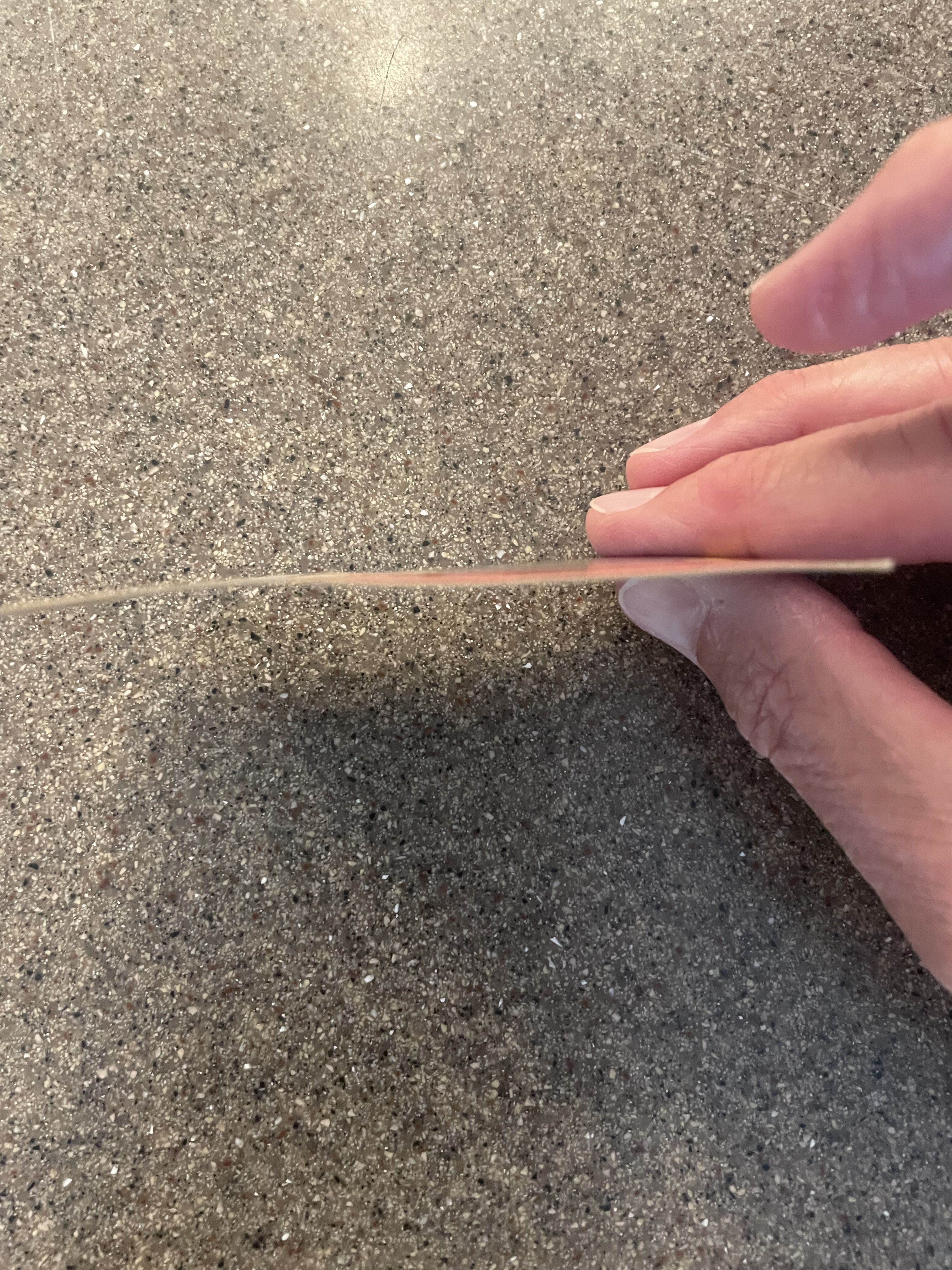
I've got this fairly nice 1955 Topps Aaron that is "wavy."

Any suggestions on flattening it out?

David
Always looking for Mantle cards such as Stahl Meyer, 1954 Dan Dee, 1959 Bazooka, 1960 Post, 1952 Star Cal Decal, 1952 Tip Top Bread Labels, 1953-54 Briggs Meat, and other Topps, Bowman, and oddball Mantles.

Comments

  • Ahmanfan
    Ahmanfan Posts: 4,513 ✭✭✭✭
    Options

    Not sure but I’d like to know myself.

    Collecting
    HOF SIGNED FOOTBALL RCS
  • Stone193
    Stone193 Posts: 24,833 ✭✭✭✭✭
    edited August 31, 2026 1:50PM
    Options

    Why not just place it on a hard surface and put a heavy book on top and leave for a long time and see what happens?

    Really nice card BTW David.

    Mike
  • bgr
    bgr Posts: 4,985 ✭✭✭✭✭
    Options

    Seems reasonable.

    Since you're submitting to PSA, the important thing up front: pressing a card is legal in the hobby and won't get it rejected, but heat and moisture are what damage surfaces and gloss — and PSA graders will catch a card that's been cooked.

    The safe method (slow press):

    Put the card in a fresh penny sleeve — no top loader.
    Sandwich it between two pieces of clean, smooth cardboard or two thin flat plates (glass, acrylic, granite tile). Card stock on both sides prevents point pressure.
    Weight it evenly — a stack of heavy books, or a few hardcovers plus something flat on top. Even, distributed pressure, not a clamp.
    Leave it 3–7 days. Check at day 2. Vintage cards often take longer.

    That handles most wave from humidity or storage. It's slow because slow is what avoids new dents, and it changes nothing a grader would flag.

    For stubborn wave, the humidity-cycle trick: put the sleeved card in a sealed container with a slightly damp (not wet) paper towel that isn't touching it, for a few hours — just enough to relax the fibers — then press it dry under weight for several days. This is where people ruin cards, so err short on the humidity step.

    What to avoid:

    Irons, hair dryers, heat presses, laminators — gloss haze, bubbling, and "altered" territory.
    Microwaving or dishwasher-style tricks you'll see on YouTube. No.
    Pressing directly against bare glass with no sleeve — surface transfer.
    Pressing a card with existing surface creases, hoping to hide them. That's the line where it stops being conditioning and starts being alteration, and PSA is good at spotting it.

    Realistically: wave from card stock (a lot of modern Topps, including Heritage) often comes back partially. Chrome and thicker stock hold flat better than paper-stock base cards. If a Heritage card is waved from the pack, a week under weight usually gets it flat enough that it's no longer a centering/surface distraction to the grader — and honestly, mild wave rarely costs you a grade point on its own. Corners and surface do.

  • ElMagoStrikeZone
    ElMagoStrikeZone Posts: 2,235 ✭✭✭✭✭
    edited August 31, 2026 1:55PM
    Options

    Easier said than done. Warped cards are difficult to fix. I've had a little success with a few by inserting them into a Card Saver then wedging the card between many others in a very tight fitting box, like so tight you'll need a shoehorn to get them out. After several months they may flatten out a bit, but usually you can tell by looking at the card from the sideways perspective, it will still look warped.

  • vols1
    vols1 Posts: 872 ✭✭✭
    edited August 31, 2026 4:47PM
    Options
  • judgebuck
    judgebuck Posts: 1,058 ✭✭✭
    Options

    Interesting video. Thanks!!

    I don't know if I would have the nerve to spray water on the card.

    Always looking for Mantle cards such as Stahl Meyer, 1954 Dan Dee, 1959 Bazooka, 1960 Post, 1952 Star Cal Decal, 1952 Tip Top Bread Labels, 1953-54 Briggs Meat, and other Topps, Bowman, and oddball Mantles.

  • RonSportscards
    RonSportscards Posts: 1,227 ✭✭✭✭✭
    Options

    You would have to have the card sit in a really humid place to "plump up" and soften the fibers of the cardboard.
    Then put it in a press set in a drier environment for a good amount of time. It's not easy.