My third example of a 1795 Cohen2-b Half Cent Discovered
 coinloverjon
Posts: 103 ✭✭✭
coinloverjon
Posts: 103 ✭✭✭
From my article in "THE RARE BUT NOT VERY PRETTY CORNER" EAC July 2026 Publication Penny-Wise by Jon Truskey
In the April 2025 issue of Penny-Wise, I shared pictures of a second example I acquired of a rarer 1795 half cent variety; a Cohen-3, Rarity: 5+ (40 specimens estimated). Finding even one such example for sale at a price I could afford in my relatively short half cent collecting career beginning in 2014 was a wonderful surprise. Cherry picking a second was an amazing bit of good fortune!
I recently acquired my third example of an even rarer variety, a 1795 Cohen 2-b. This one was a cherry pick also, like my second C-3. The C2-b is a Rarity: 5+ (35 estimated by Bill Eckberg) or a Rarity: 6 (30 estimated by Ed Fuhrman). I hope these two latest finds indicate an emerging pattern in my collecting career!
Ed Fuhrman in his book, The Half Cent Handbook Liberty Cap Varieties 1793-1797, on page 194 commented, “This is a tough variety to find in any grade. They just don’t come up for sale very often as advanced collectors know how hard these are to get. Typically when they do sell they go into strong collections and are held for decades at a time. Even a low grade example will be in the mid-four figures range.”
Walter Breen in his book, Encyclopedia of United States Half Cents, on page 142 stated: “Rarity of this variety is almost certainly attributable to the early discard of the reverse die.”
Assuming there are at least several hundred or more half cent collectors worldwide, and only 30 to 35 examples in total to be had, the chance of your average collector ever owning one of these appears to be slim. This latest acquisition is pictured below. It is a late die state with the die bulge through “AMER” pronounced and worn. There is a die clash at the F in “OF” that extends down from that F into the base of the leaf below it. Its weight is 78.5 grains, a thin planchet, with no edge lettering. It has good detail but has some verdigris and some edge modification that is sometimes referred to as a “hammered edge.”
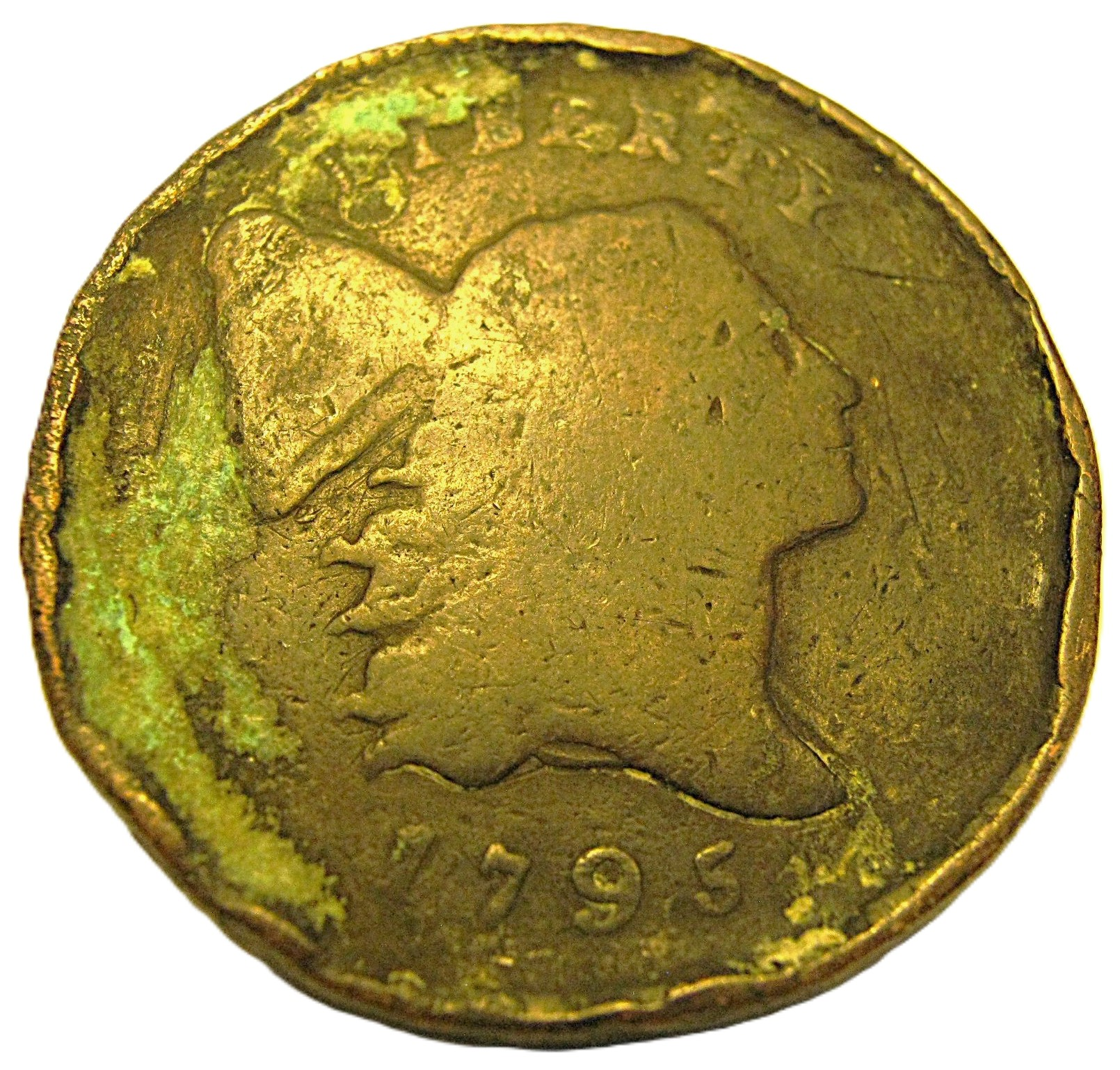
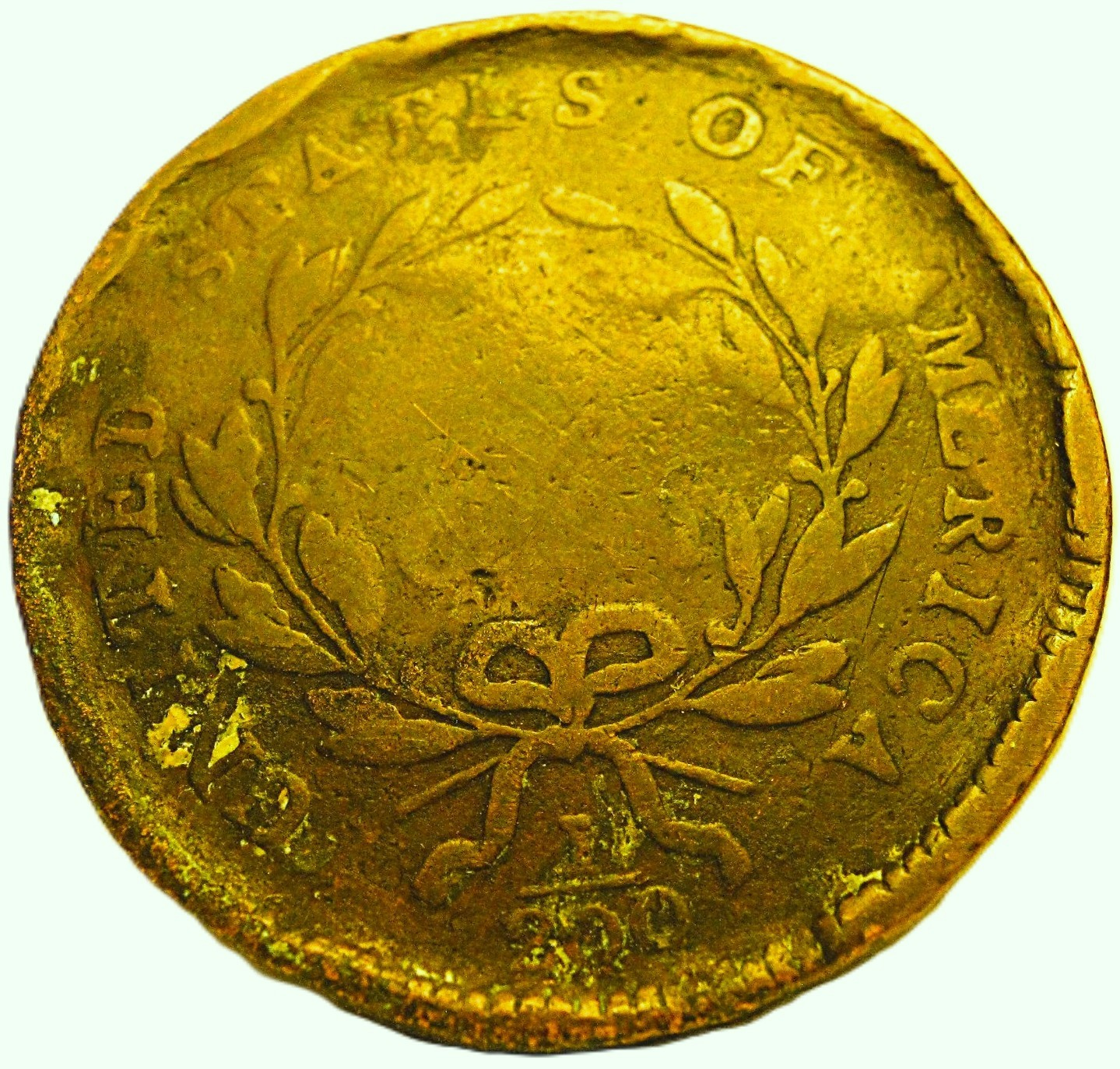
I wondered why someone would do this to an otherwise nice example. A fellow collector suggested that perhaps some kid with a hammer, and too much time on his hands, decided to have some fun.
After a bit of internet research, including some at the Numismatic Guaranty Company (NGC) Ancients site, I found that some old Roman coins from the first, second and third centuries with images, typically of emperors or empresses, would have their edges hammered in a fashion similar to my coin. This raised edge gave them a distinctive look. They called this style “Protocontorniate” www.ngccoin.com/news/article/4629/ancient-coin-grading/ (accessed 5/31/26).
Here is an example below with an Emperor Nero coin.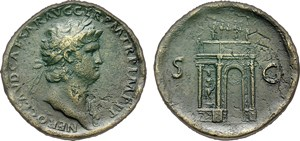
In contrast, here is an actual contorniate medallion, below. This contorniate, a bronze medallion struck in the late 4th century A.D., shows a chariot racer on the obverse, while the reverse shows a quadriga, a chariot of four horses. www.ngccoin.com/news/article/13035/ancients-sports/ (accessed 05.31.26).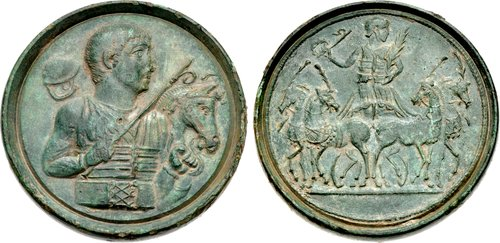
According to Wikipedia, these contorniate medallions have a deep furrow on the contour or edge, as if the object had been turned in a lathe. https://en.wikipedia.org/wiki/Contorniate (accessed 05/31/26).
According to NumisWiki – The Collaborative Numismatics Project, “A protocontorniate is a normal, usually large-module bronze coin, typically a sestertius, which at some point was later altered by hammering the edges of the coin so that it could serve some other use. A common assumption is that protocontorniates functioned as game counters since the rim created through hammering could protect the designs. Andreas Alföldi believed protocontorniates to be forerunners of the contorniates of the fourth and fifth centuries. He argued that protocontorniates were New Year’s gifts and that the older coins were actually hammered in the fourth century before the contorniates proper came into being.” www.forumancientcoins.com/numiswiki/view.asp?key=protocontorniate (accessed 5/28/2026).
A Repurposed Liberty Cap?
Perhaps a modern collector decided to attempt to mimic this style of gift creation with Lady Liberty. Was this a fad at some point in the last two hundred or so years, imitating an ancient tradition? I don’t know. I do know that I have two Liberty Cap large cents with the same style of alteration and have seen others for sale.
Here is one of mine, a 1795 Sheldon 74, lettered edge, Rarity: 4, with otherwise good detail, and most of the edge lettering hammered away. Pictures were previously color-enhanced an resized to help show detail.
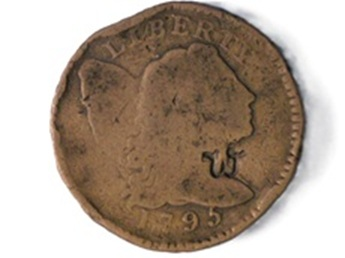
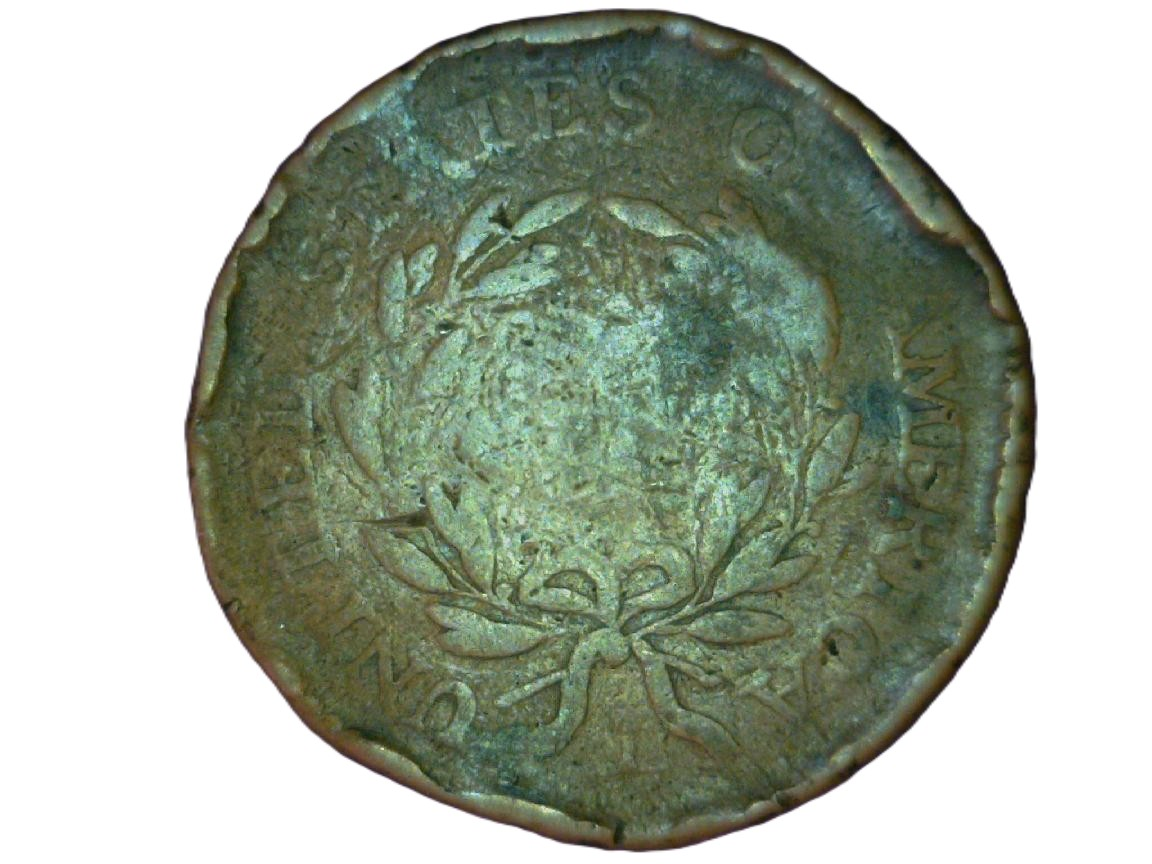
The obverse on this one had also been counter stamped with a letter “W.” A personalized touch, perhaps? A Roman coin seller I saw on eBay thought his similarly modified example was altered in this way to be used as a gaming piece, as mentioned above. In any case, my latest find is an interesting addition, not to mention a rare to very rare example in my “not very pretty” collection.