Polished Planchets on Early Proof Coinage?
 jacrispies
Posts: 1,658 ✭✭✭✭✭
jacrispies
Posts: 1,658 ✭✭✭✭✭
On the recent topic of classic 1817-1836 proof coinage, the determinations for these early proof designations can be seemingly ambiguous. However, I see often mentioned on catalog descriptions for these issues is that the planchets were polished before being struck. If this was true, it would greatly aid in the determination of proof status. Polishing planchets is an established practice in the modern era. But, we also know the early production proofs were not created the same as they are today. Considering the extreme pressures that squeeze the original planchet texture between the dies, how can one tell if a planchet was polished pre-strike on classic proof coinage?
We can observe that Prooflike surfaces can occur without a polished planchet. Most often seen, San Francisco Mint Morgan silver dollars can be found with deep mirror surfaces, yet the planchets were never formally polished. Rare gold, early die state bust coinage, and many other series can be discovered with prooflike surfaces. Even bust halves.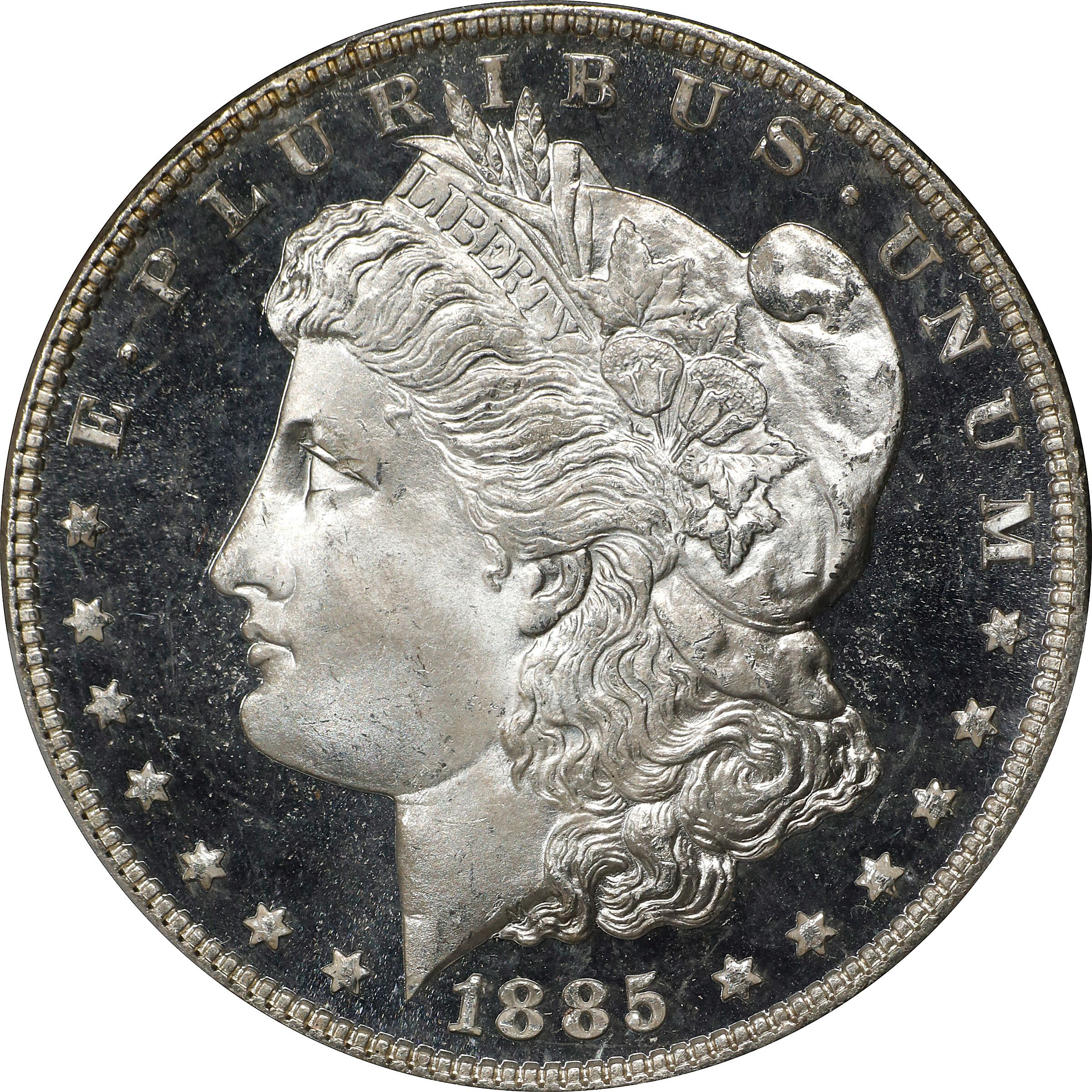
From my observations, we have prime real estate: Strike Weakness. The concentrated areas of strike weakness will greatly show virgin planchet texture. That is because the pressures of the die could not fully press the planchet fully into the design crevices, therefore leaving untouched areas on the high points. So, theoretically, polishing would show preserved shiny areas on the frosted device tips.
Below are a couple photos of strike weakness on certified "proof" bust halves. Does these planchets look polished to you?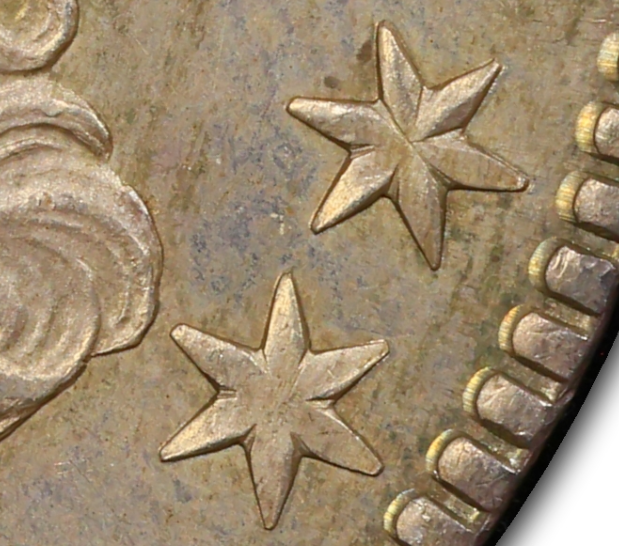
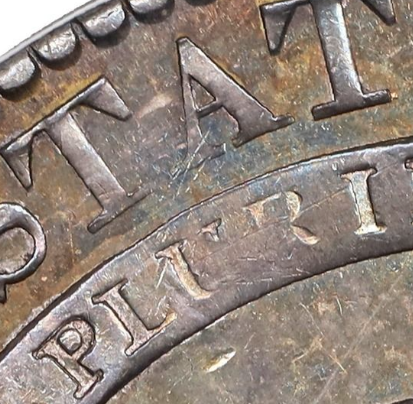
1823 Below. Here are fine planchet roller lines, confirmed by the existence of parallel lines across the other obverse and reverse devices. Would these still be observable if the planchet was polished?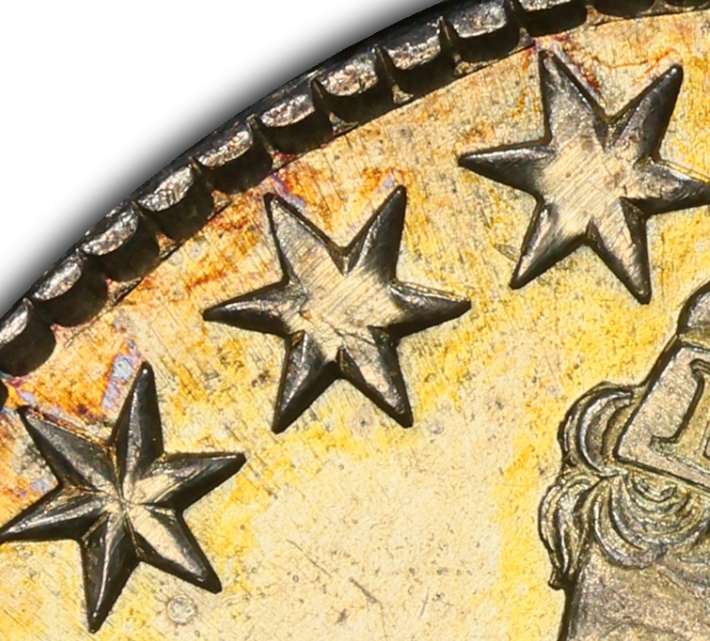
If this fact was true and observable, I believe that would greatly aid in determining the proof status for classic coinage. Any evidence, observations, or refutations would be greatly appreciated to the thread. Thanks.
"But seek ye first the kingdom of God and His righteousness and all these things shall be added unto you" Matthew 6:33. Young fellow suffering from Bust Half fever.
BHNC #AN-10
JRCS #1606
Comments
Neither look polished to me, nor is that surprising.
For Bust Halves, should being struck on a polished blank be a requirement for proof designation?
30+ years coin shop experience (ret.) Coins, bullion, currency, scrap & interesting folks. Loved every minute!
A good place to study how striking transforms planchet luster is on off center errors. I saw an early 1880’s S-Mint Morgan Dollar with typical almost Prooflike struck fields and strongly frosted unstruck fields on the planchet.
Here are some descriptions from three major auction houses for proof bust halves that mention the polishing:
1. "This planchet endured extensive polishing not only to create an exquisite product, but also to efface any evidence of the light inborn striations that were on its surface."
2. "...it is possible that while being polished and prepared to receive an impression, the flan was thinned slightly in this area."
3. "They are, instead, indicia of a freshly polished planchet, yet another indicator of the proof striking."
So, did planchet polishing actually exist, or is this theory actually wrong information that has been historically assumed?
"But seek ye first the kingdom of God and His righteousness and all these things shall be added unto you" Matthew 6:33. Young fellow suffering from Bust Half fever.
BHNC #AN-10
JRCS #1606
We have yet to define "proof" in this thread. The modern definition of proof is simple, especially with the variance of production methods from circulation and business strikes. But, early proofs definition and determination is often foggy. PCGS/NGC seemingly define 1817-1836 proofs by the simple definition, "it looks good enough". Unfortunately, early die state examples have similar qualities like mirrored fields and sharp strikes. That doesn't necessarily make them a proof by the definition that we assume.
To assist constructing an explicit, clear-cut definition for these proofs, we can ascertain whether or not planchet polishing exists on these early coins. That would greatly build the case, for it would be an observable production difference from proofs and circulation strikes. For now, this theory isn't supported, fails to secure the case for determining proof status.
If this thread ends up debunking the planchet polish theory, that would be great as well.
"But seek ye first the kingdom of God and His righteousness and all these things shall be added unto you" Matthew 6:33. Young fellow suffering from Bust Half fever.
BHNC #AN-10
JRCS #1606
I agree, it would most helpful to on concentrate on the most ‘difficult to determine’ era for proofs, 1817- 1836.
After steam powered coinage became the norm in 1836/37, the Mint’s capabilities greatly expanded.
30+ years coin shop experience (ret.) Coins, bullion, currency, scrap & interesting folks. Loved every minute!