Home U.S. Coin Forum
Options

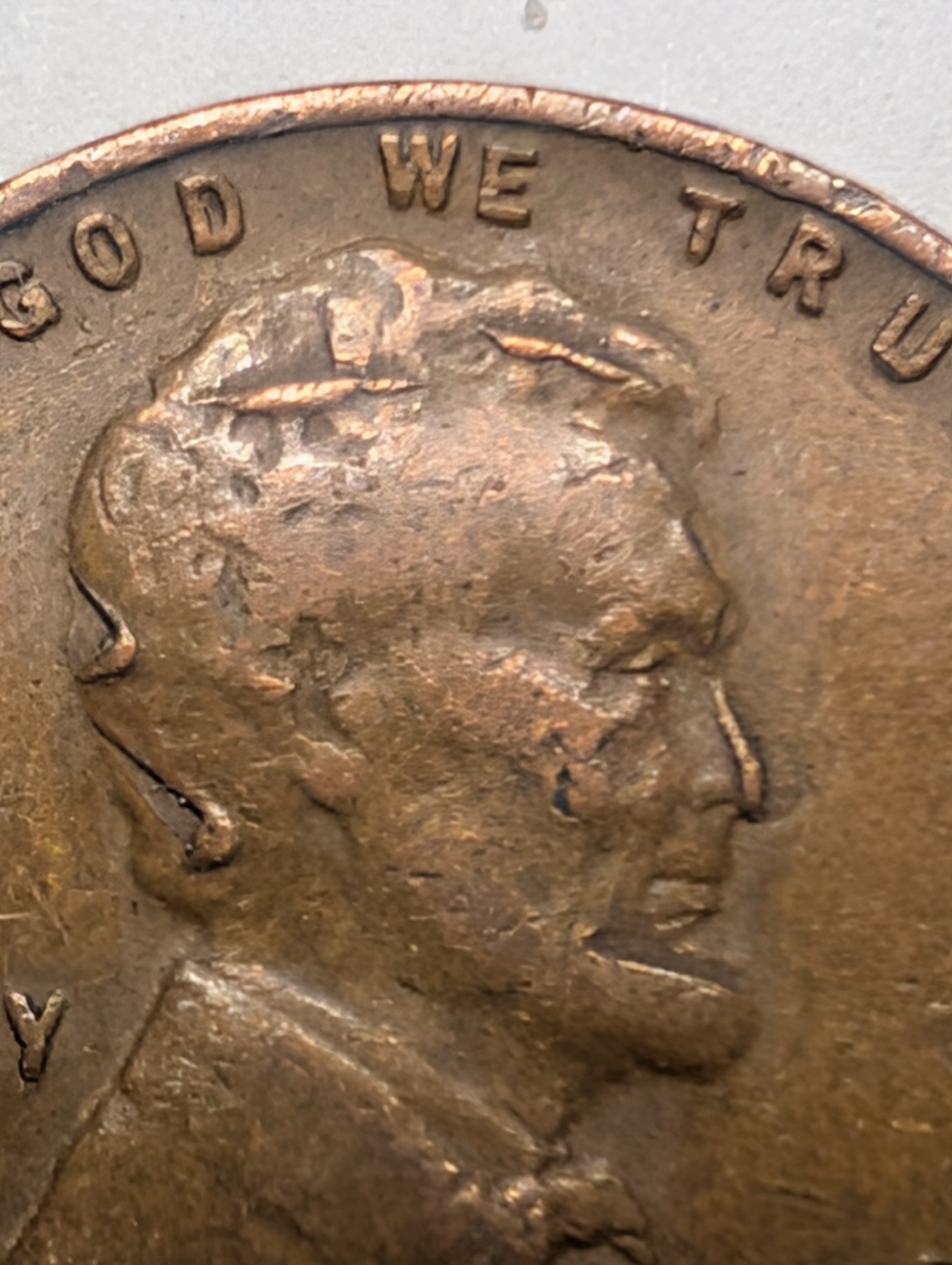
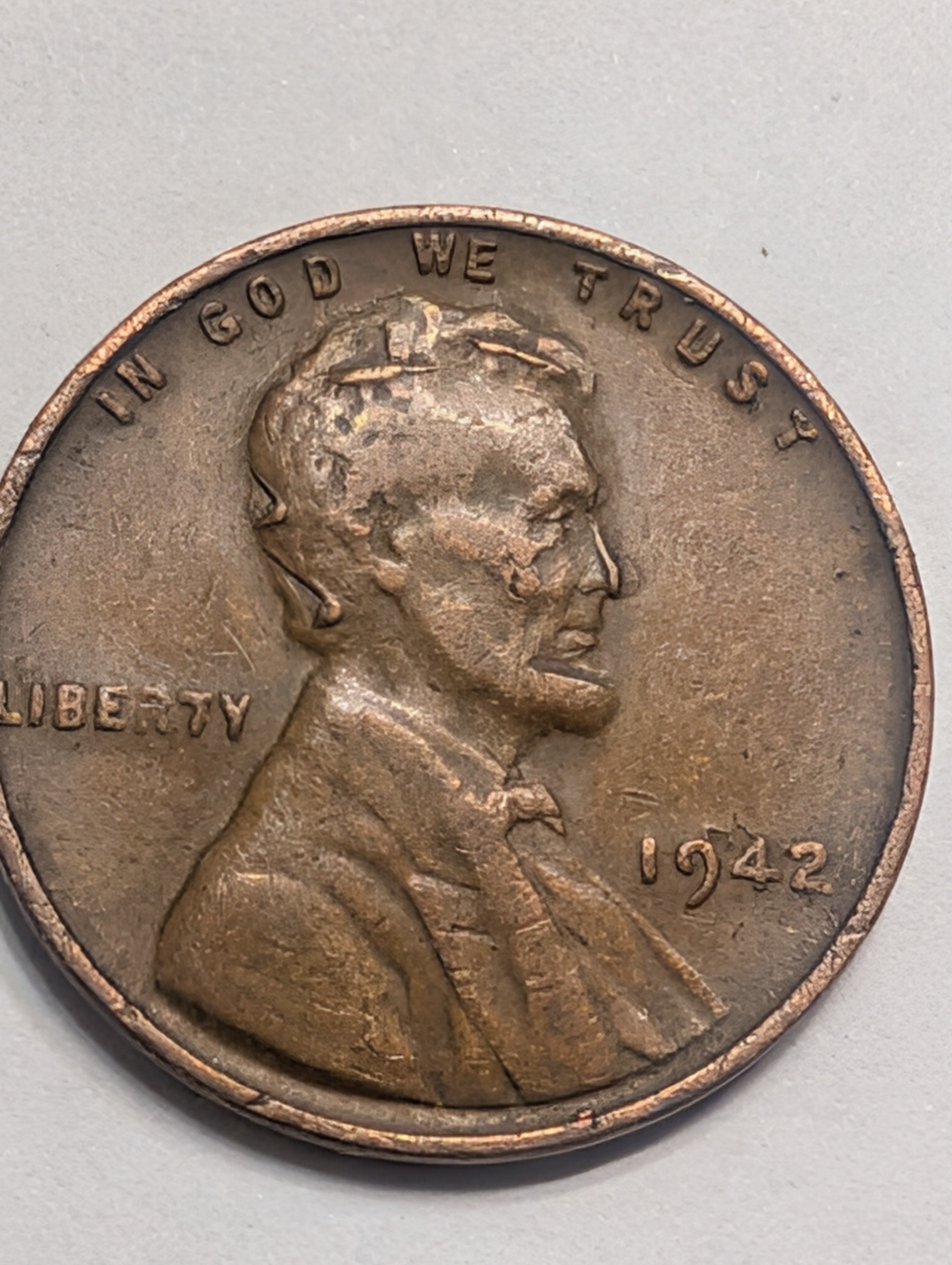
1942 wheat penny

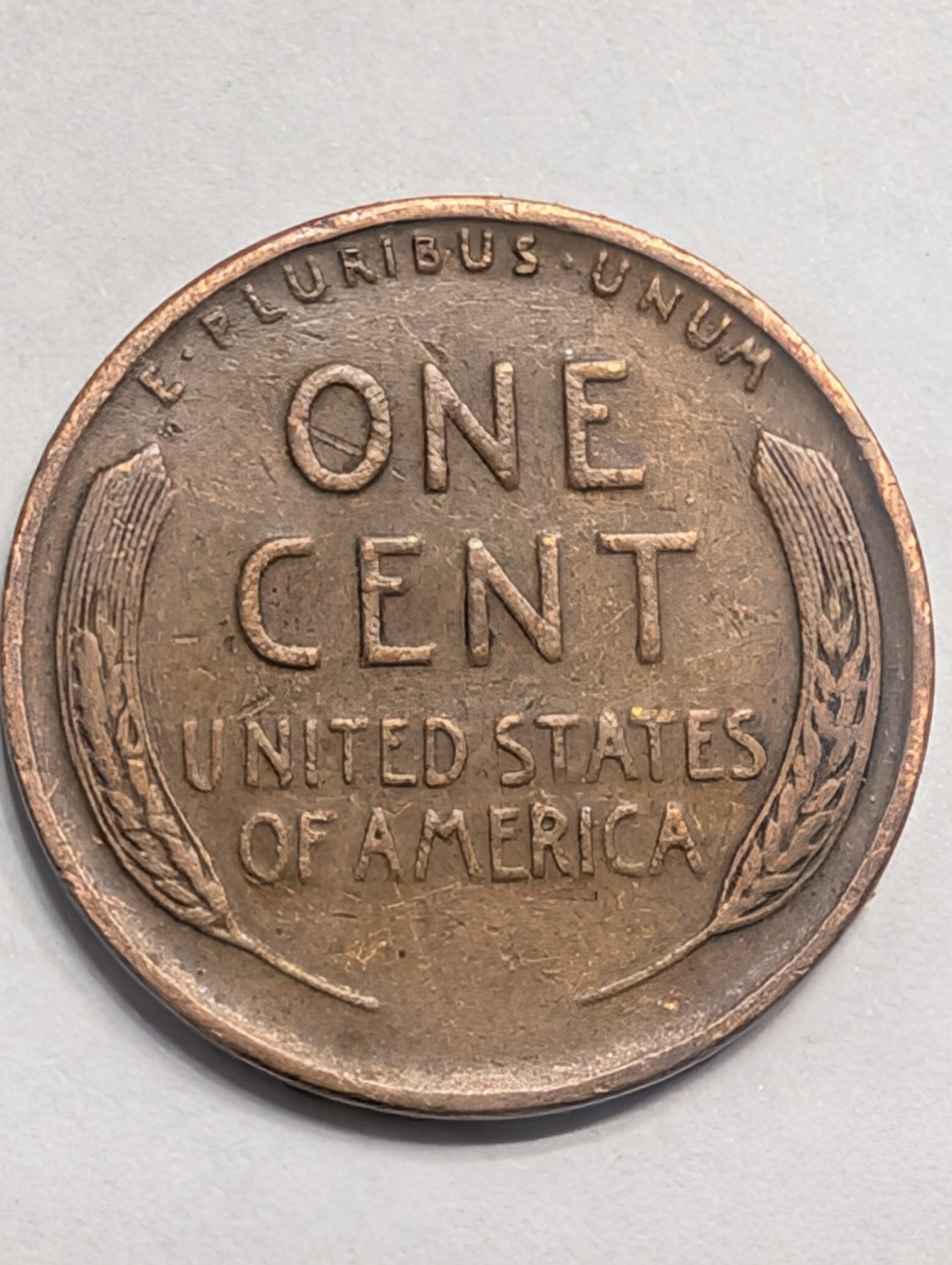
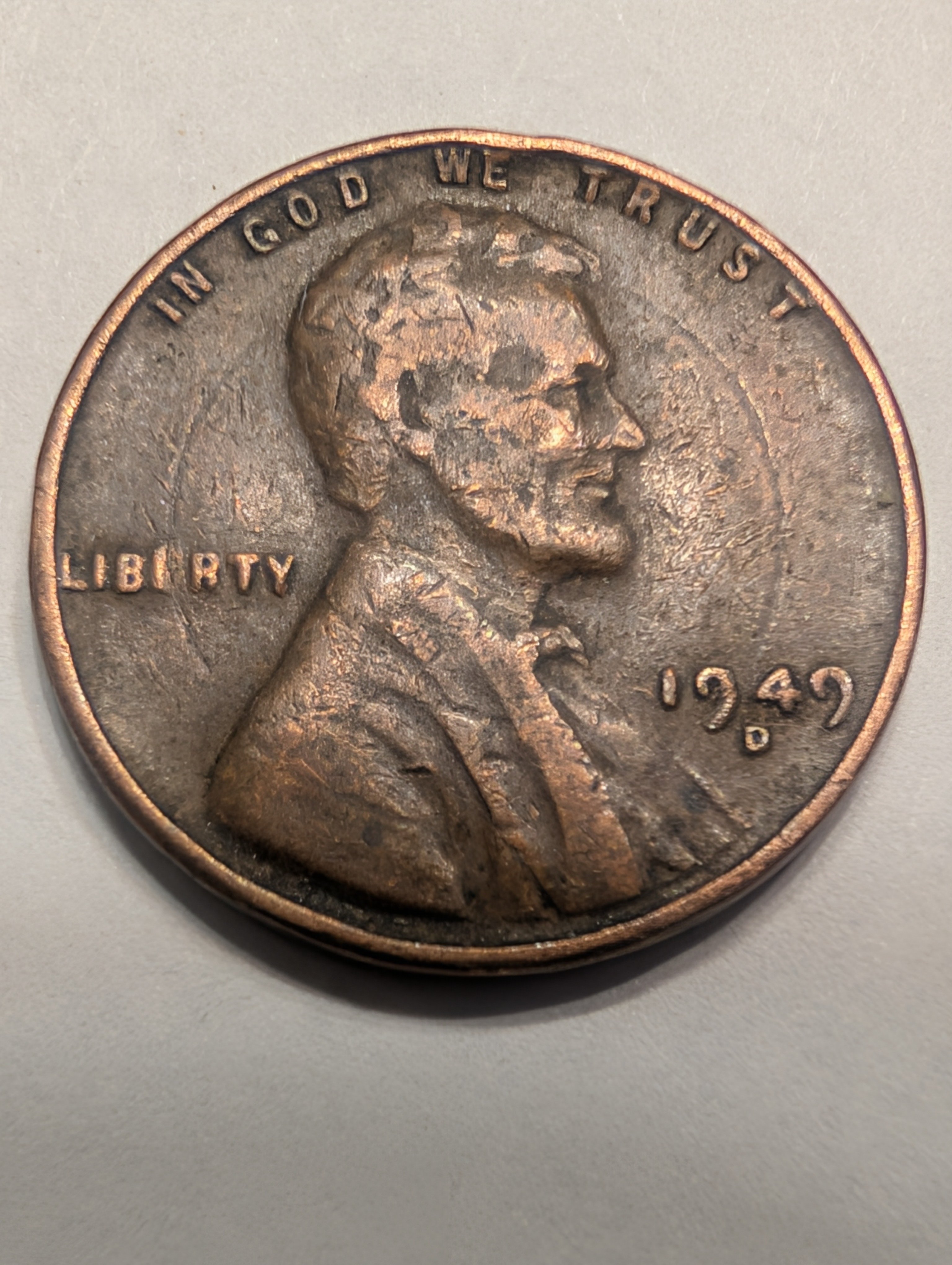
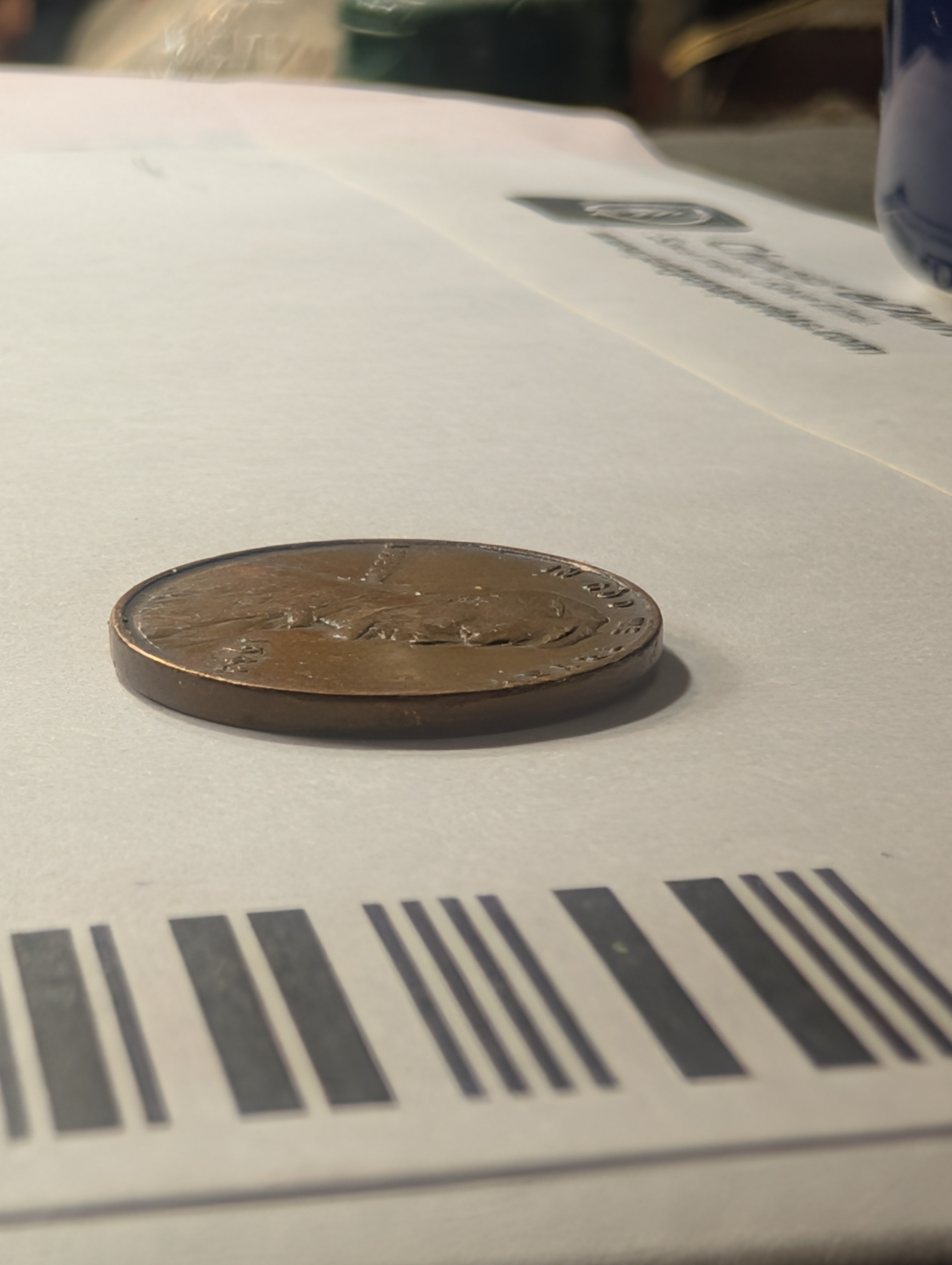
Hey all. Found this wheat penny in my coin stash. My buddy who is knowledgeable about these pennies says he thinks it's worth having someone look into it. Things I noticed on the coin are raised lines in Lincoln's hair, deformed chin/mouth, shortened nose, symetticral marks on the back on lincolns head in his hair, I believe maybe God in "in God we trust" is lower than normal, a dot of some sort on the last T in trust where the lines intersect. L may also be on the rim, not sure. There are no gouges in the coin at any of the spots where it's deformed. I also have a 49 that has a perfectly circular ring around Lincoln that he said may be worth checking out as well.


Comments

  • Options

    Also noticed the forward seems to be pushed back as well on the 42.

  • Options
    MeltdownMeltdown Posts: 9,256 ✭✭✭✭✭

    While they both look interesting they are not errors from the mint when struck. Like Ike said, post mint damage and anybody's guess what the hell happened to them.

  • Options
    johnny9434johnny9434 Posts: 32,930 ✭✭✭✭✭

    Post mint damage by the looks of it

  • Options
    TomBTomB Posts: 23,044 ✭✭✭✭✭

    I imagine that you just learned that your buddy does not know as much about numismatics as he thought he did.

    Thomas Bush Numismatics & Numismatic Photography

    In honor of the memory of Cpl. Michael E. Thompson

    image
  • Options
    MarkKelleyMarkKelley Posts: 2,087 ✭✭✭✭✭

    Post mint damage, as others have said. Also, they ALL have the L on the rim.

  • Options
    jmlanzafjmlanzaf Posts: 42,009 ✭✭✭✭✭

    It's damage, as has been said. It then circulated after it was gouged which is why it has worn smooth.

    99 99999999% of all coin anomalies are damage. It is far better to study the handful of genuine mint errors so you know what you are looking for.

    All comments reflect the opinion of the author, even when irrefutably accurate.

  • Options

    @MarkKelley said:
    Post mint damage, as others have said. Also, they ALL have the L on the rim.

    I kinda thought that too. I've looked at a decent amount of them and thought mostly all the Ls were close but I've read that that is something to look for for some reason lol

  • Options

    @TomB said:
    Too be fair, he sent a picture to his friend who also is a collector and that guy said the same thing as everyone here, and my buddy agreed kinda. He just said because there's no gouges basically at these spots that maybe it might be something and maybe worth getting it looked at.

  • Options
    IkesTIkesT Posts: 4,388 ✭✭✭✭✭

    @Larryw781 said:
    Too be fair, he sent a picture to his friend who also is a collector and that guy said the same thing as everyone here, and my buddy agreed kinda. He just said because there's no gouges basically at these spots that maybe it might be something and maybe worth getting it looked at.

    In that case, no one in the chain was knowledgeable.

    There are multiple gouges shown in your photos; don't you see them with your own eyes?

  • Options

    @IkesT said:

    @Larryw781 said:
    Too be fair, he sent a picture to his friend who also is a collector and that guy said the same thing as everyone here, and my buddy agreed kinda. He just said because there's no gouges basically at these spots that maybe it might be something and maybe worth getting it looked at.

    In that case, no one in the chain was knowledgeable.

    There are multiple gouges shown in your photos; don't you see them with your own eyes?

    I see the gouges in the material of Lincoln. I think he meant gouges down into the coin rather than just the material being pushed. For instance, I take a screw driver or something and push it in trying to create those marks, chances are I'm going to move the material and gouge down lower than the face of the coin, and it looks to be pretty even with the face. At least just by eye. Everything that is moved is at least by the naked eye only what's on the surface of the coin and nothing below.

  • Options
    IkesTIkesT Posts: 4,388 ✭✭✭✭✭

    @Larryw781 said:

    @IkesT said:

    @Larryw781 said:
    Too be fair, he sent a picture to his friend who also is a collector and that guy said the same thing as everyone here, and my buddy agreed kinda. He just said because there's no gouges basically at these spots that maybe it might be something and maybe worth getting it looked at.

    In that case, no one in the chain was knowledgeable.

    There are multiple gouges shown in your photos; don't you see them with your own eyes?

    I see the gouges in the material of Lincoln. I think he meant gouges down into the coin rather than just the material being pushed. For instance, I take a screw driver or something and push it in trying to create those marks, chances are I'm going to move the material and gouge down lower than the face of the coin, and it looks to be pretty even with the face. At least just by eye. Everything that is moved is at least by the naked eye only what's on the surface of the coin and nothing below.

    Gouges are gouges. If you see the gouges, that means your coin has gouges.

  • Options

    @IkesT said:

    @Larryw781 said:

    @IkesT said:

    @Larryw781 said:
    Too be fair, he sent a picture to his friend who also is a collector and that guy said the same thing as everyone here, and my buddy agreed kinda. He just said because there's no gouges basically at these spots that maybe it might be something and maybe worth getting it looked at.

    In that case, no one in the chain was knowledgeable.

    There are multiple gouges shown in your photos; don't you see them with your own eyes?

    I see the gouges in the material of Lincoln. I think he meant gouges down into the coin rather than just the material being pushed. For instance, I take a screw driver or something and push it in trying to create those marks, chances are I'm going to move the material and gouge down lower than the face of the coin, and it looks to be pretty even with the face. At least just by eye. Everything that is moved is at least by the naked eye only what's on the surface of the coin and nothing below.

    Gouges are gouges. If you see the gouges, that means your coin has gouges.

    While I understand "a gouge is a gouge" everything I've read says most post mint gouges are incuse and have piles of rigid material, not symmetrical smooth piles. Which is what my friend was basing his thought on.

  • Options
    airplanenutairplanenut Posts: 22,724 ✭✭✭✭✭

    @Larryw781 said:

    @IkesT said:

    @Larryw781 said:

    @IkesT said:

    @Larryw781 said:
    Too be fair, he sent a picture to his friend who also is a collector and that guy said the same thing as everyone here, and my buddy agreed kinda. He just said because there's no gouges basically at these spots that maybe it might be something and maybe worth getting it looked at.

    In that case, no one in the chain was knowledgeable.

    There are multiple gouges shown in your photos; don't you see them with your own eyes?

    I see the gouges in the material of Lincoln. I think he meant gouges down into the coin rather than just the material being pushed. For instance, I take a screw driver or something and push it in trying to create those marks, chances are I'm going to move the material and gouge down lower than the face of the coin, and it looks to be pretty even with the face. At least just by eye. Everything that is moved is at least by the naked eye only what's on the surface of the coin and nothing below.

    Gouges are gouges. If you see the gouges, that means your coin has gouges.

    While I understand "a gouge is a gouge" everything I've read says most post mint gouges are incuse and have piles of rigid material, not symmetrical smooth piles. Which is what my friend was basing his thought on.

    I see 5 piles of material at the end of 5 gouges. Why are the piles smooth? If the gouges happened before the coin circulated (which lines up with the fact that the gouged material is the same color as everything else--it's not freshly exposed metal) then just like the rest of the coin, those piles got wear, which smoothed them out.

    JK Coin Photography - eBay Consignments | High Quality Photos | LOW Prices | 20% of Consignment Proceeds Go to Pancreatic Cancer Research
  • Options
    MsMorrisineMsMorrisine Posts: 39,600 ✭✭✭✭✭

    your friend is wrong. those are just another flavor of gouge. forget whether it's flush or not

    Current maintainer of Stone's Master List of Favorite Websites // My BST transactions
  • Options
    coinbufcoinbuf Posts: 12,506 ✭✭✭✭✭

    You have two damaged coins, the damage to the 1942 looks intentional imo, but we will never know for sure. What is certain is that damage is damage no matter how it happens. The 1949-D has ring of death damage from a coin wrapper rolling machine. Google ring of death on coins to see many examples just like yours.

    My Lincoln Registry
    My Collection of Old Holders

    Never a slave to one plastic brand will I ever be.
  • Options
    cmerlo1cmerlo1 Posts: 8,055 ✭✭✭✭✭
    edited July 29, 2026 2:53PM

    'L touches rim' is a scam being pushed on the internet- it's not recognized as a legitimate variety by any respected variety publication, web or otherwise. None of the respectable grading services recognize it either. Since you're new, also do yourself a favor and don't fall for coins listed as slightly over or underweight. Small variances in weight are normal, and unless it's a large variance or the coin is noticibly thicker or thinner they aren't worth any premium.

    You Suck! Awarded 6/2008- 1901-O Micro O Morgan, 8/2008- 1878 VAM-123 Morgan, 9/2022 1888-O VAM-1B3 H8 Morgan | Senior Regional Representative- ANACS Coin Grading. Posted opinions on coins are my own, and are not an official ANACS opinion.
  • Options

    @IkesT said:

    @Larryw781 said:

    @IkesT said:

    @Larryw781 said:

    @IkesT said:

    @Larryw781 said:
    Too be fair, he sent a picture to his friend who also is a collector and that guy said the same thing as everyone here, and my buddy agreed kinda. He just said because there's no gouges basically at these spots that maybe it might be something and maybe worth getting it looked at.

    In that case, no one in the chain was knowledgeable.

    There are multiple gouges shown in your photos; don't you see them with your own eyes?

    I see the gouges in the material of Lincoln. I think he meant gouges down into the coin rather than just the material being pushed. For instance, I take a screw driver or something and push it in trying to create those marks, chances are I'm going to move the material and gouge down lower than the face of the coin, and it looks to be pretty even with the face. At least just by eye. Everything that is moved is at least by the naked eye only what's on the surface of the coin and nothing below.

    Gouges are gouges. If you see the gouges, that means your coin has gouges.

    While I understand "a gouge is a gouge" everything I've read says most post mint gouges are incuse and have piles of rigid material, not symmetrical smooth piles. Which is what my friend was basing his thought on.

    You and your friend are moving too quickly and trying to jump too far ahead of your abilities.

    I recommend that the two of you start filling a Whitman folder.

    I mean me for sure. I have no idea about coins. I didn't even know there was special pennies. This other guy is an older guy. Late 60s, he has folders of coins, idk if they're the same one you said but he has a decent amount. Maybe knowledgeable isn't the correct word for him, but in comparison to me he's knowledgeable. As far as me, I know nothing other than what I read which is why I'm here.

  • Options
    IkesTIkesT Posts: 4,388 ✭✭✭✭✭

    @Larryw781 said:

    @IkesT said:

    @Larryw781 said:

    @IkesT said:

    @Larryw781 said:

    @IkesT said:

    @Larryw781 said:
    Too be fair, he sent a picture to his friend who also is a collector and that guy said the same thing as everyone here, and my buddy agreed kinda. He just said because there's no gouges basically at these spots that maybe it might be something and maybe worth getting it looked at.

    In that case, no one in the chain was knowledgeable.

    There are multiple gouges shown in your photos; don't you see them with your own eyes?

    I see the gouges in the material of Lincoln. I think he meant gouges down into the coin rather than just the material being pushed. For instance, I take a screw driver or something and push it in trying to create those marks, chances are I'm going to move the material and gouge down lower than the face of the coin, and it looks to be pretty even with the face. At least just by eye. Everything that is moved is at least by the naked eye only what's on the surface of the coin and nothing below.

    Gouges are gouges. If you see the gouges, that means your coin has gouges.

    While I understand "a gouge is a gouge" everything I've read says most post mint gouges are incuse and have piles of rigid material, not symmetrical smooth piles. Which is what my friend was basing his thought on.

    You and your friend are moving too quickly and trying to jump too far ahead of your abilities.

    I recommend that the two of you start filling a Whitman folder.

    I mean me for sure. I have no idea about coins. I didn't even know there was special pennies. This other guy is an older guy. Late 60s, he has folders of coins, idk if they're the same one you said but he has a decent amount. Maybe knowledgeable isn't the correct word for him, but in comparison to me he's knowledgeable. As far as me, I know nothing other than what I read which is why I'm here.

    When it comes to recognizing post Mint damage, you are both in the same boat.

  • Options
    MasonGMasonG Posts: 7,270 ✭✭✭✭✭

    @Larryw781 said:
    I mean me for sure. I have no idea about coins. I didn't even know there was special pennies. This other guy is an older guy. Late 60s, he has folders of coins, idk if they're the same one you said but he has a decent amount. Maybe knowledgeable isn't the correct word for him, but in comparison to me he's knowledgeable. As far as me, I know nothing other than what I read which is why I'm here.

    If you're interested in errors, you should start out by learning what errors are and how they're made and then looking for them, not looking for coins that aren't perfect and asking if they're errors.

  • Options
    jmlanzafjmlanzaf Posts: 42,009 ✭✭✭✭✭

    @IkesT said:

    @Larryw781 said:

    @IkesT said:

    @Larryw781 said:

    @IkesT said:

    @Larryw781 said:

    @IkesT said:

    @Larryw781 said:
    Too be fair, he sent a picture to his friend who also is a collector and that guy said the same thing as everyone here, and my buddy agreed kinda. He just said because there's no gouges basically at these spots that maybe it might be something and maybe worth getting it looked at.

    In that case, no one in the chain was knowledgeable.

    There are multiple gouges shown in your photos; don't you see them with your own eyes?

    I see the gouges in the material of Lincoln. I think he meant gouges down into the coin rather than just the material being pushed. For instance, I take a screw driver or something and push it in trying to create those marks, chances are I'm going to move the material and gouge down lower than the face of the coin, and it looks to be pretty even with the face. At least just by eye. Everything that is moved is at least by the naked eye only what's on the surface of the coin and nothing below.

    Gouges are gouges. If you see the gouges, that means your coin has gouges.

    While I understand "a gouge is a gouge" everything I've read says most post mint gouges are incuse and have piles of rigid material, not symmetrical smooth piles. Which is what my friend was basing his thought on.

    You and your friend are moving too quickly and trying to jump too far ahead of your abilities.

    I recommend that the two of you start filling a Whitman folder.

    I mean me for sure. I have no idea about coins. I didn't even know there was special pennies. This other guy is an older guy. Late 60s, he has folders of coins, idk if they're the same one you said but he has a decent amount. Maybe knowledgeable isn't the correct word for him, but in comparison to me he's knowledgeable. As far as me, I know nothing other than what I read which is why I'm here.

    When it comes to recognizing post Mint damage, you are both in the same boat.

    There's no reason to berate the man. He appears to be trying to learn.

    All comments reflect the opinion of the author, even when irrefutably accurate.

  • Options
    vintagebanksvintagebanks Posts: 58 ✭✭✭

    Who else would like to see a picture of the coin folders?
    "This other guy is an older guy. Late 60s, he has folders of coins, idk if they're the same one you said but he has a decent amount. Maybe knowledgeable isn't the correct word for him, but in comparison to me he's knowledgeable."

  • Options
    IkesTIkesT Posts: 4,388 ✭✭✭✭✭
    edited July 29, 2026 5:44PM

    @jmlanzaf said:

    @IkesT said:

    @Larryw781 said:

    @IkesT said:

    @Larryw781 said:

    @IkesT said:

    @Larryw781 said:

    @IkesT said:

    @Larryw781 said:
    Too be fair, he sent a picture to his friend who also is a collector and that guy said the same thing as everyone here, and my buddy agreed kinda. He just said because there's no gouges basically at these spots that maybe it might be something and maybe worth getting it looked at.

    In that case, no one in the chain was knowledgeable.

    There are multiple gouges shown in your photos; don't you see them with your own eyes?

    I see the gouges in the material of Lincoln. I think he meant gouges down into the coin rather than just the material being pushed. For instance, I take a screw driver or something and push it in trying to create those marks, chances are I'm going to move the material and gouge down lower than the face of the coin, and it looks to be pretty even with the face. At least just by eye. Everything that is moved is at least by the naked eye only what's on the surface of the coin and nothing below.

    Gouges are gouges. If you see the gouges, that means your coin has gouges.

    While I understand "a gouge is a gouge" everything I've read says most post mint gouges are incuse and have piles of rigid material, not symmetrical smooth piles. Which is what my friend was basing his thought on.

    You and your friend are moving too quickly and trying to jump too far ahead of your abilities.

    I recommend that the two of you start filling a Whitman folder.

    I mean me for sure. I have no idea about coins. I didn't even know there was special pennies. This other guy is an older guy. Late 60s, he has folders of coins, idk if they're the same one you said but he has a decent amount. Maybe knowledgeable isn't the correct word for him, but in comparison to me he's knowledgeable. As far as me, I know nothing other than what I read which is why I'm here.

    When it comes to recognizing post Mint damage, you are both in the same boat.

    There's no reason to berate the man. He appears to be trying to learn.

    That's why I didn't berate him. He has been trying to learn from someone that knows no more than he does (perhaps less); it was important to point out the error in that approach so that he can move forward.

    There's no reason to berate me for trying to help him.

  • Options
    safari_dudesafari_dude Posts: 608 ✭✭✭✭✭

    Surprised no one noticed the “In Cod We Trust”…🤔🤪😂

  • Options
    MsMorrisineMsMorrisine Posts: 39,600 ✭✭✭✭✭

    @vintagebanks said:
    Who else would like to see a picture of the coin folders?

    no need to jump on

    Current maintainer of Stone's Master List of Favorite Websites // My BST transactions
  • Options

    @MasonG said:

    @Larryw781 said:
    I mean me for sure. I have no idea about coins. I didn't even know there was special pennies. This other guy is an older guy. Late 60s, he has folders of coins, idk if they're the same one you said but he has a decent amount. Maybe knowledgeable isn't the correct word for him, but in comparison to me he's knowledgeable. As far as me, I know nothing other than what I read which is why I'm here.

    If you're interested in errors, you should start out by learning what errors are and how they're made and then looking for them, not looking for coins that aren't perfect and asking if they're errors.

    Ya that makes sense. In my researching I came across the typical errors. Id be able to point them out I think for the most part, without the technical name. I sort of thought you could have all sorts of errors and they could all be vastly different but, I suppose the more I think about it that wouldn't really make much sense with the whole process.

  • Options
    Old_CollectorOld_Collector Posts: 1,191 ✭✭✭✭✭

    While I tend to use https://www.error-ref.com/error_and_variety_check_list/ as a starting point for odd errors that I don't recognize, our host does have a page with some nice cent error coin TVs and slabs: https://www.pcgs.com/setregistry/collectors-showcase/errors/lincoln-cent-mint-errors/imagegallery/3655

  • Options

    @Old_Collector said:
    While I tend to use https://www.error-ref.com/error_and_variety_check_list/ as a starting point for odd errors that I don't recognize, our host does have a page with some nice cent error coin TVs and slabs: https://www.pcgs.com/setregistry/collectors-showcase/errors/lincoln-cent-mint-errors/imagegallery/3655

    Hey thanks, that's actually helpful. I actually only joined this forum because chat gpt told me to post here and try and reach out to wexlers and get opinions because it was unsure. Pretty neat to see all the different errors. Appreciate that.

  • Options
    nwcoastnwcoast Posts: 2,905 ✭✭✭✭✭

    Might want to consider inserting it into a date/mm coin album. That could be fun!
    Rare errors aside, they are a long shot- though fun to look for.

    Happy, humble, honored and proud recipient of the “You Suck” award 10/22/2014

  • Options
    SapyxSapyx Posts: 2,580 ✭✭✭✭✭

    @Larryw781 said:
    Ya that makes sense. In my researching I came across the typical errors. Id be able to point them out I think for the most part, without the technical name. I sort of thought you could have all sorts of errors and they could all be vastly different but, I suppose the more I think about it that wouldn't really make much sense with the whole process.

    Your conclusion is essentially correct there. The process by which coins are made is still, essentially, the same as it has been ever since coins were invented 2600 years ago. It's highly mechanized now, but fundamentally the same: round blank piece of metal is squeezed between two dies, coin is then removed so process can repeat.

    As a simple process, there are really only a small number of ways it can go wrong, and only a small subset of those "wrong ways" will end up producing something that we might call an error or variety. Usually, when coin minting machinery breaks or malfunctions, all you end up with is a broken machine and no error coin. For the more spectacular errors, you also need to explain how it managed to escape the mint without it being stopped by security or detected by quality control.

    "Post mint damage" is not similarly restricted in its scope. Once billions of perfectly normal coins are produced and put out there, in the hands of bored, careless or malicious people, all kinds of things can happen to them. This can create all kinds of weird, odd-looking coins. Sometimes, that damage can create effects that make people think "did this happen in the mint". But it didn't.

    This does, unfortunately, mean that the vast majority of coins that "look funny" look funny because somebody took a perfectly normal coin and (either accidentally or deliberately) made them look funny, rather than because of a mint error.

    I often cite Ockham’s Razor when determining whether a coin is an "error" or not: if a pattern of damage has two possible explanations, and one of those explanations is simple (eg "someone hit the coin with a screwdriver") and one is complex (eg. an improbable chain of events requiring multiple sequential failures of the minting process, or several coins going flying through the air and somehow all landing in the striking chamber at the same time), then the simplest explanation can be assumed to be true, because it's the most probable. Those improbable errors do sometimes happen - they're improbable, not impossible - but you need to eliminate all of the more probable explanations first.

    Waste no more time arguing what a good man should be. Be one.
    Roman emperor Marcus Aurelius, "Meditations"

    Apparently I have been awarded the DPOTD twice. B)
  • Options

    @Sapyx said:

    @Larryw781 said:
    Ya that makes sense. In my researching I came across the typical errors. Id be able to point them out I think for the most part, without the technical name. I sort of thought you could have all sorts of errors and they could all be vastly different but, I suppose the more I think about it that wouldn't really make much sense with the whole process.

    Your conclusion is essentially correct there. The process by which coins are made is still, essentially, the same as it has been ever since coins were invented 2600 years ago. It's highly mechanized now, but fundamentally the same: round blank piece of metal is squeezed between two dies, coin is then removed so process can repeat.

    As a simple process, there are really only a small number of ways it can go wrong, and only a small subset of those "wrong ways" will end up producing something that we might call an error or variety. Usually, when coin minting machinery breaks or malfunctions, all you end up with is a broken machine and no error coin. For the more spectacular errors, you also need to explain how it managed to escape the mint without it being stopped by security or detected by quality control.

    "Post mint damage" is not similarly restricted in its scope. Once billions of perfectly normal coins are produced and put out there, in the hands of bored, careless or malicious people, all kinds of things can happen to them. This can create all kinds of weird, odd-looking coins. Sometimes, that damage can create effects that make people think "did this happen in the mint". But it didn't.

    This does, unfortunately, mean that the vast majority of coins that "look funny" look funny because somebody took a perfectly normal coin and (either accidentally or deliberately) made them look funny, rather than because of a mint error.

    I often cite Ockham’s Razor when determining whether a coin is an "error" or not: if a pattern of damage has two possible explanations, and one of those explanations is simple (eg "someone hit the coin with a screwdriver") and one is complex (eg. an improbable chain of events requiring multiple sequential failures of the minting process, or several coins going flying through the air and somehow all landing in the striking chamber at the same time), then the simplest explanation can be assumed to be true, because it's the most probable. Those improbable errors do sometimes happen - they're improbable, not impossible - but you need to eliminate all of the more probable explanations first.

    Yes I follow what your saying here. Speaking of malicious people in this space, my friend (the one who got me into this whole space) goes through his coins every month or every other month and just 2 days ago he text me saying he had a 1943 copper penny. Almost gave himself a heart attack (he's all but 70). Yesterday we were looking at it and he came to the conclusion it was a fake. Not sure how he decided that but. It was really rough looking. Then he had another wheat that he found that was the size of a dime. I looked at that one for awhile and came to the conclusion someone spooned it. And then filed down the material it built up. You could look on the edges and see where someone ground it or rubbed it in something and didn't quite get the flat spots smooth. I never would've thought people who do things like that but, if there's 10s of thousands of dollars potentially involved It makes it more plausible.

  • Options
    jmlanzafjmlanzaf Posts: 42,009 ✭✭✭✭✭
    edited July 31, 2026 9:05AM

    @Larryw781 said:

    @Sapyx said:

    @Larryw781 said:
    Ya that makes sense. In my researching I came across the typical errors. Id be able to point them out I think for the most part, without the technical name. I sort of thought you could have all sorts of errors and they could all be vastly different but, I suppose the more I think about it that wouldn't really make much sense with the whole process.

    Your conclusion is essentially correct there. The process by which coins are made is still, essentially, the same as it has been ever since coins were invented 2600 years ago. It's highly mechanized now, but fundamentally the same: round blank piece of metal is squeezed between two dies, coin is then removed so process can repeat.

    As a simple process, there are really only a small number of ways it can go wrong, and only a small subset of those "wrong ways" will end up producing something that we might call an error or variety. Usually, when coin minting machinery breaks or malfunctions, all you end up with is a broken machine and no error coin. For the more spectacular errors, you also need to explain how it managed to escape the mint without it being stopped by security or detected by quality control.

    "Post mint damage" is not similarly restricted in its scope. Once billions of perfectly normal coins are produced and put out there, in the hands of bored, careless or malicious people, all kinds of things can happen to them. This can create all kinds of weird, odd-looking coins. Sometimes, that damage can create effects that make people think "did this happen in the mint". But it didn't.

    This does, unfortunately, mean that the vast majority of coins that "look funny" look funny because somebody took a perfectly normal coin and (either accidentally or deliberately) made them look funny, rather than because of a mint error.

    I often cite Ockham’s Razor when determining whether a coin is an "error" or not: if a pattern of damage has two possible explanations, and one of those explanations is simple (eg "someone hit the coin with a screwdriver") and one is complex (eg. an improbable chain of events requiring multiple sequential failures of the minting process, or several coins going flying through the air and somehow all landing in the striking chamber at the same time), then the simplest explanation can be assumed to be true, because it's the most probable. Those improbable errors do sometimes happen - they're improbable, not impossible - but you need to eliminate all of the more probable explanations first.

    Yes I follow what your saying here. Speaking of malicious people in this space, my friend (the one who got me into this whole space) goes through his coins every month or every other month and just 2 days ago he text me saying he had a 1943 copper penny. Almost gave himself a heart attack (he's all but 70). Yesterday we were looking at it and he came to the conclusion it was a fake. Not sure how he decided that but. It was really rough looking. Then he had another wheat that he found that was the size of a dime. I looked at that one for awhile and came to the conclusion someone spooned it. And then filed down the material it built up. You could look on the edges and see where someone ground it or rubbed it in something and didn't quite get the flat spots smooth. I never would've thought people who do things like that but, if there's 10s of thousands of dollars potentially involved It makes it more plausible.

    It was quite common to file down cents to use as transit tokens. It probably wasn't spooned. Just filed down to roughly dime size.

    All comments reflect the opinion of the author, even when irrefutably accurate.

  • Options

    @jmlanzaf said:

    @Larryw781 said:

    @Sapyx said:

    @Larryw781 said:
    Ya that makes sense. In my researching I came across the typical errors. Id be able to point them out I think for the most part, without the technical name. I sort of thought you could have all sorts of errors and they could all be vastly different but, I suppose the more I think about it that wouldn't really make much sense with the whole process.

    Your conclusion is essentially correct there. The process by which coins are made is still, essentially, the same as it has been ever since coins were invented 2600 years ago. It's highly mechanized now, but fundamentally the same: round blank piece of metal is squeezed between two dies, coin is then removed so process can repeat.

    As a simple process, there are really only a small number of ways it can go wrong, and only a small subset of those "wrong ways" will end up producing something that we might call an error or variety. Usually, when coin minting machinery breaks or malfunctions, all you end up with is a broken machine and no error coin. For the more spectacular errors, you also need to explain how it managed to escape the mint without it being stopped by security or detected by quality control.

    "Post mint damage" is not similarly restricted in its scope. Once billions of perfectly normal coins are produced and put out there, in the hands of bored, careless or malicious people, all kinds of things can happen to them. This can create all kinds of weird, odd-looking coins. Sometimes, that damage can create effects that make people think "did this happen in the mint". But it didn't.

    This does, unfortunately, mean that the vast majority of coins that "look funny" look funny because somebody took a perfectly normal coin and (either accidentally or deliberately) made them look funny, rather than because of a mint error.

    I often cite Ockham’s Razor when determining whether a coin is an "error" or not: if a pattern of damage has two possible explanations, and one of those explanations is simple (eg "someone hit the coin with a screwdriver") and one is complex (eg. an improbable chain of events requiring multiple sequential failures of the minting process, or several coins going flying through the air and somehow all landing in the striking chamber at the same time), then the simplest explanation can be assumed to be true, because it's the most probable. Those improbable errors do sometimes happen - they're improbable, not impossible - but you need to eliminate all of the more probable explanations first.

    Yes I follow what your saying here. Speaking of malicious people in this space, my friend (the one who got me into this whole space) goes through his coins every month or every other month and just 2 days ago he text me saying he had a 1943 copper penny. Almost gave himself a heart attack (he's all but 70). Yesterday we were looking at it and he came to the conclusion it was a fake. Not sure how he decided that but. It was really rough looking. Then he had another wheat that he found that was the size of a dime. I looked at that one for awhile and came to the conclusion someone spooned it. And then filed down the material it built up. You could look on the edges and see where someone ground it or rubbed it in something and didn't quite get the flat spots smooth. I never would've thought people who do things like that but, if there's 10s of thousands of dollars potentially involved It makes it more plausible.

    It was quite common to file down cents to use as transit tokens. It probably wasn't spooned. Just filed down to roughly dime size.

    Oh ya maybe. I just assumed spooned because the edges look smooth like a standard penny with no file marks or anything. Didn't know people did that to use as tokens.

  • Options
    jmlanzafjmlanzaf Posts: 42,009 ✭✭✭✭✭
    edited July 31, 2026 10:28AM

    @Larryw781 said:

    @jmlanzaf said:

    @Larryw781 said:

    @Sapyx said:

    @Larryw781 said:
    Ya that makes sense. In my researching I came across the typical errors. Id be able to point them out I think for the most part, without the technical name. I sort of thought you could have all sorts of errors and they could all be vastly different but, I suppose the more I think about it that wouldn't really make much sense with the whole process.

    Your conclusion is essentially correct there. The process by which coins are made is still, essentially, the same as it has been ever since coins were invented 2600 years ago. It's highly mechanized now, but fundamentally the same: round blank piece of metal is squeezed between two dies, coin is then removed so process can repeat.

    As a simple process, there are really only a small number of ways it can go wrong, and only a small subset of those "wrong ways" will end up producing something that we might call an error or variety. Usually, when coin minting machinery breaks or malfunctions, all you end up with is a broken machine and no error coin. For the more spectacular errors, you also need to explain how it managed to escape the mint without it being stopped by security or detected by quality control.

    "Post mint damage" is not similarly restricted in its scope. Once billions of perfectly normal coins are produced and put out there, in the hands of bored, careless or malicious people, all kinds of things can happen to them. This can create all kinds of weird, odd-looking coins. Sometimes, that damage can create effects that make people think "did this happen in the mint". But it didn't.

    This does, unfortunately, mean that the vast majority of coins that "look funny" look funny because somebody took a perfectly normal coin and (either accidentally or deliberately) made them look funny, rather than because of a mint error.

    I often cite Ockham’s Razor when determining whether a coin is an "error" or not: if a pattern of damage has two possible explanations, and one of those explanations is simple (eg "someone hit the coin with a screwdriver") and one is complex (eg. an improbable chain of events requiring multiple sequential failures of the minting process, or several coins going flying through the air and somehow all landing in the striking chamber at the same time), then the simplest explanation can be assumed to be true, because it's the most probable. Those improbable errors do sometimes happen - they're improbable, not impossible - but you need to eliminate all of the more probable explanations first.

    Yes I follow what your saying here. Speaking of malicious people in this space, my friend (the one who got me into this whole space) goes through his coins every month or every other month and just 2 days ago he text me saying he had a 1943 copper penny. Almost gave himself a heart attack (he's all but 70). Yesterday we were looking at it and he came to the conclusion it was a fake. Not sure how he decided that but. It was really rough looking. Then he had another wheat that he found that was the size of a dime. I looked at that one for awhile and came to the conclusion someone spooned it. And then filed down the material it built up. You could look on the edges and see where someone ground it or rubbed it in something and didn't quite get the flat spots smooth. I never would've thought people who do things like that but, if there's 10s of thousands of dollars potentially involved It makes it more plausible.

    It was quite common to file down cents to use as transit tokens. It probably wasn't spooned. Just filed down to roughly dime size.

    Oh ya maybe. I just assumed spooned because the edges look smooth like a standard penny with no file marks or anything. Didn't know people did that to use as tokens.

    Yes, or even used them as dimes, back in the day.

    People spoon them because they need the raised rim. There would be no point in spooning it and then filing it.

    It's also possible that it just got accidentally ground down by getting caught in a mechanism like a dryer.

    All comments reflect the opinion of the author, even when irrefutably accurate.

Leave a Comment

BoldItalicStrikethroughOrdered listUnordered list
Emoji
Image
Align leftAlign centerAlign rightToggle HTML viewToggle full pageToggle lights
Drop image/file