Could someone please explain to me the difference between an open and closed collar

I would like to know what an open collar looked like and how it was used compared to a closed collar and how it was used at the early mint. Thanks. Dave
Comments
-
All comments reflect the opinion of the author, even when irrefutably accurate.
5 -
Close not closed... that and the prior post will get you there!
-----Burton
ANA 50+ year/Life Member (now "Emeritus")
Author: 3rd Edition of the SampleSlabs book, https://sampleslabs.info/0 -
For bust quarters, not much functional difference between the two from what I can tell. Both collars added reeded edges as the coins were struck.
The “closed” or “close” collar probably had a different look or mechanism due to the change in presses between 1828 and 1831.0 -
@scubafuel said:
For bust quarters, not much functional difference between the two from what I can tell. Both collars added reeded edges as the coins were struck.
The “closed” or “close” collar probably had a different look or mechanism due to the change in presses between 1828 and 1831.I know this might sound crazy but,having never seen a die (collar) for appling the reeded edges . And never seen a coin with any evidence of a broken collar. Knowing the reading is to consistent to have been applied with a castaing machine. I'm wondering if the reeding could have been applied while stamping out the planchets. Cutting in the reeds while punching through the silver sheets. Just a thought but seems plausible. Dave
0 -
**I'm wondering if the reeding could have been applied while stamping out the planchets. Cutting in the reeds while punching through the silver sheets. Just a thought but seems plausible. Dave
The reeding is part of the collar and is applied to the planchet when the coin is struck.
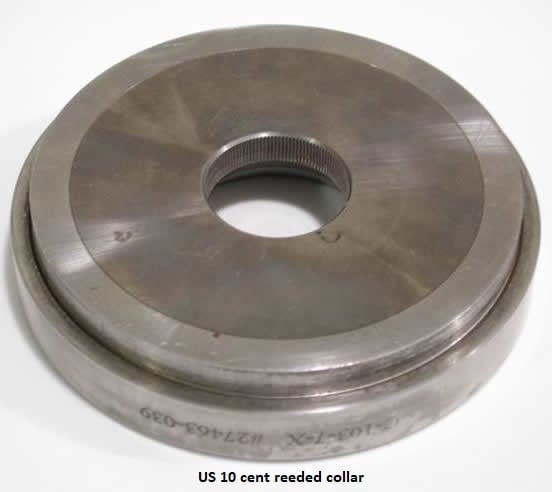 0
0 -
@Greenstang said:
**I'm wondering if the reeding could have been applied while stamping out the planchets. Cutting in the reeds while punching through the silver sheets. Just a thought but seems plausible. DaveThe reeding is part of the collar and is applied to the planchet when the coin is struck.
Any idea what year this collar is from?
0 -
@Bustquarterhound said:
@scubafuel said:
For bust quarters, not much functional difference between the two from what I can tell. Both collars added reeded edges as the coins were struck.
The “closed” or “close” collar probably had a different look or mechanism due to the change in presses between 1828 and 1831.I know this might sound crazy but,having never seen a die (collar) for appling the reeded edges . And never seen a coin with any evidence of a broken collar. Knowing the reading is to consistent to have been applied with a castaing machine. I'm wondering if the reeding could have been applied while stamping out the planchets. Cutting in the reeds while punching through the silver sheets. Just a thought but seems plausible. Dave
Here is evidence of a broken collar in the Bust Dime Variety Identification Guide that points to a close collar setup instead of reeding applied otherwise:
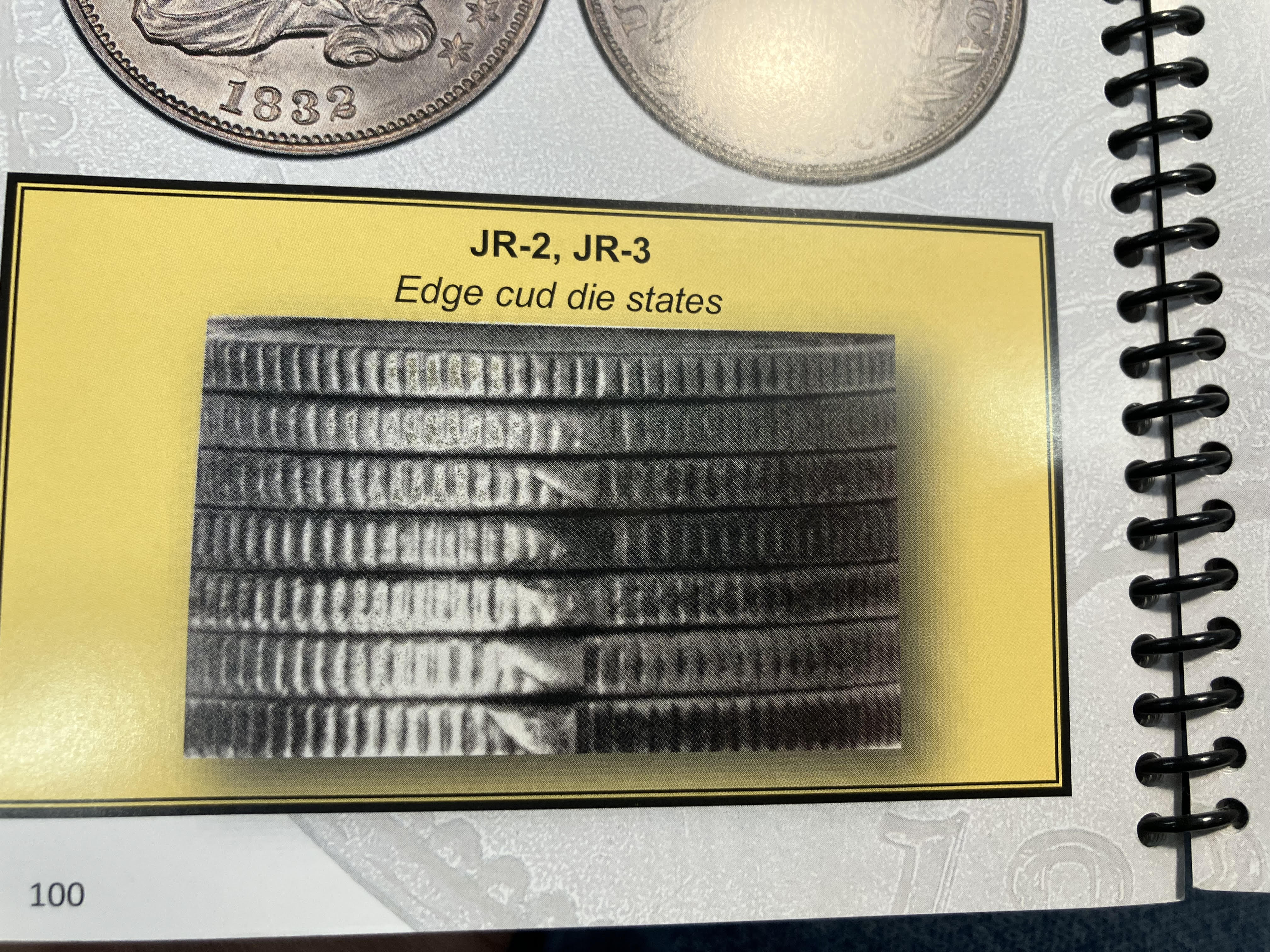
-Off center coins always have no reeding (disproves shearing), as opposed to Castaing-applied edge lettering that is always apparent on Capped Bust half dollars.
-Reeding on early coinage is nearly always unevenly pressed i.e. one side stronger than opposite side. (disproves Castaing and shearing)"But seek ye first the kingdom of God and His righteousness and all these things shall be added unto you" Matthew 6:33. Young fellow suffering from Bust Half fever.
BHNC #AN-10
JRCS #16061 -
Thanks jacrispies
1


Leave a Comment
Categories
- All Categories
- 520.1K Coins and Currency - PCGS
- 328.6K U.S. Coin Forum
- 14.8K PCGS Set Registry Forum
- 5.2K Q & A Forum
- 41.4K World & Ancient Coins Forum
- 3K U.S. & World Currency Forum
- 96.4K Buy, Sell, & Trade - U.S. Coins
- 7.3K Buy, Sell & Trade - World & Ancient Coins
- 1.5K Buy, Sell & Trade - Currency
- 61 Random
- 246.2K Trading Cards, Autographs and Memorabilia - PSA
- 90.3K Trading Cards & Memorabilia Forum
- 1.7K Autographs Forum
- 16.4K PSA Set Registry Forum
- 22K Sports Talk
- 115K Buy, Sell & Trade - Cards & Memorabilia
- 663 Buy, Sell & Trade - Autographs
- 2.2K Stamps
- 1.5K Stamps Forum
- 670 Buy, Sell & Trade - Stamps
- 83 Coin Shows
- 83 General Coin Show Information and Discussion
- 11.9K Misc
- 11.9K Testing Forum