@MasonG said:
The coin is what it is. It doesn't know where it was counterstamped. If PCGS can give that one a numerical grade, why not others?
That wasn't my point. But given that it was a pattern, I think it's possible it was "canceled" at the Mint.
Yes that's possible, but then why wouldn't the other J-44 specimen(s) be canceled? And why would the mint write "platina" on the reverse? I just think PMD makes more sense in this case, but you could make very plausible arguments for either.
I collect world proof sets, coins featuring composers, mid-20th century U.S. proof coins, U.S. type coins, and whatever else I want.
I can’t believe there is any point than hasn’t been made already, but none of the posts have addressed my concern. Details grades coexist pretty well with circulated coins, because the numeric range is pretty narrow for each nominal grade: XF Details encompasses only a few numerical grades.
For uncirculated coins the story is different. No matter the quality of the coin, a single chopmark reduces every uncirculated trade dollar to the same grade - essentially MS60. For example, this is NGC Unc Details.
I am firmly in the camp of the chopmark being an enhancement, showing the coin did its job, traveling to the Orient, being weighed, appraised, and approved, and then (given the lack of wear and any further chopmarks) probably went into a bag and sealed up for use as a bulk form of currency. So cool!
But I am in the camp of ALL net grading. I see two big flaws that are too late to fix. First, the inheritance of the Circulated / Uncirculated divide. This leads to grading conundrums where an AU58 may or may not be better than an MS63. I would have preferred that wear be simply a factor like any other, so a 65 with a trace of cabinet friction would be a 64, and a 65 with some strike roughness in the fields would also be a 64. Not, slotted 5 or more grades apart.
I think the other structural error was the whole Details idea. Yes, just net grade it. Damage is damage. Your Walmart coin is an 01. Figure out the other details categories. If a coin has 75 chopmarks, then it is probably an 01 as well.
But what purpose is served by refusing to grade the coin above. Anyone can see the sharp strike, fine detail, lack of wear or obvious flaws. Grade the coin. Let the collector know about the chopmark. And let the collector decide if that is a good thing, or a bad thing.
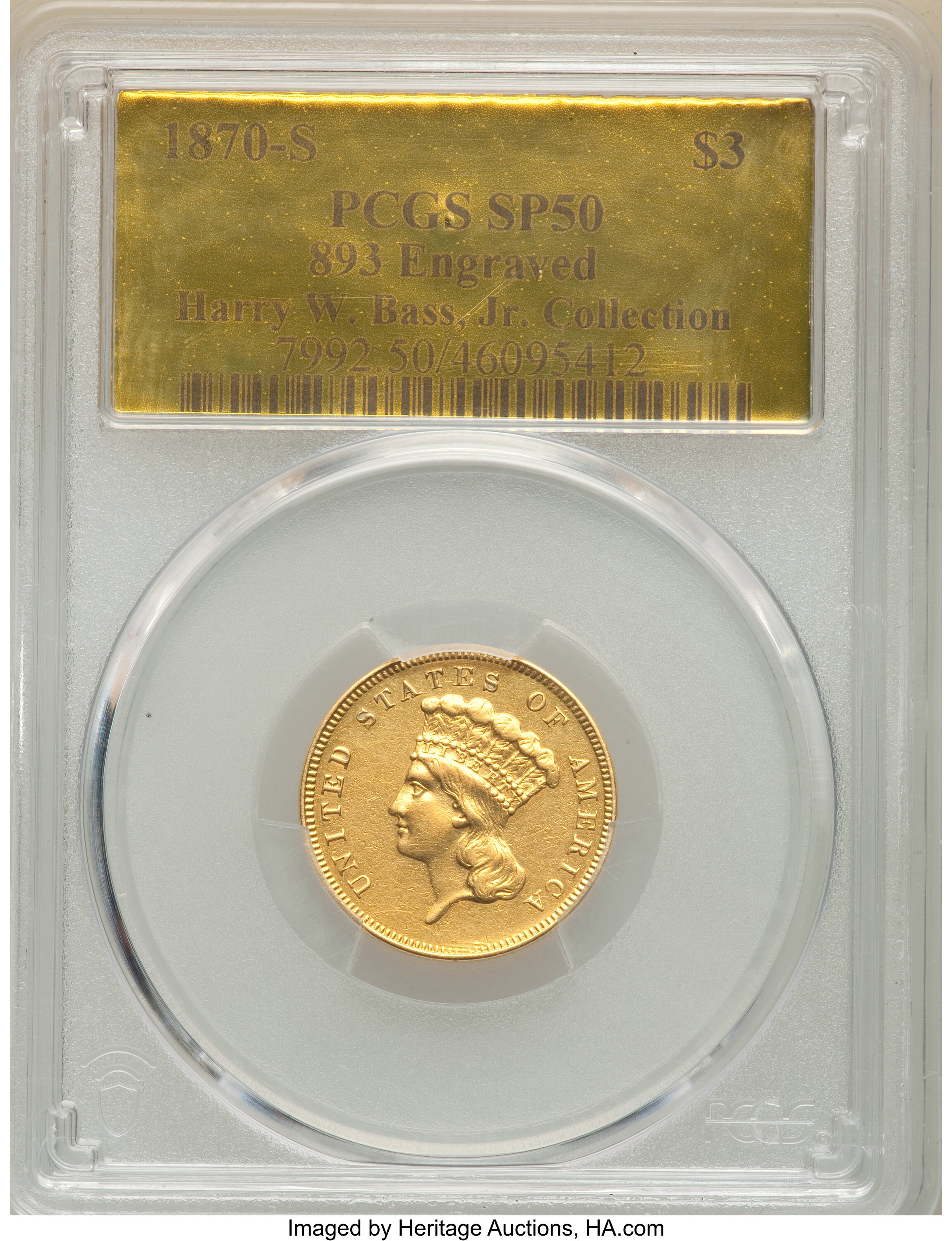
Then there is this beautiful Specimen-50 of the unique 1870-S $3 which is certainly the same label any other date looking identical would also get.
(I don't really have a big problem with them making it so it could go in a registry set as a graded coin. Maybe just allow it without a number grade or state that they were making an exception to all the grading rules since it is currently unique. - Just wait until the rest of the roll is finally found in the mint cornerstone. - Would not be surprised if that action allowed an increased price realized by 6 or even 7 figures due to catching additional interest of bidders that would not care as much if not registry acceptable. It brought $5,520,000 in the January 2023 Bass Core Collection auction Part II.)
.
.
Description of condition and part of its early owner history from Heritage listing here :
"Despite an attractive overall presentation, the present coin has a few technical problems that must be acknowledged. The medium yellow-gold surfaces are lightly polished, with a slightly pebbled texture. The coin was evidently mounted in a jewelry setting at one time, as indicated by some slight damage to the obverse rim at 6 o'clock. The numerals 893 are lightly scratched above the wreath on the reverse. Oliver and Kelly note this may represent the fineness of the Feather River gold deposit the coin was struck from."
.
"Ex: San Francisco Mint Chief Coiner Joseph B. Harmstead; possibly Francis Harmstead (his wife, mounted in a necklace, per Nancy Oliver and Richard Kelly); Sarah Fay (Francis' oldest daughter, on her mother's death in 1885); Charles Luther Fay (Sarah's husband, on her death in 1903); Charles Ralph Fay (Charles Luther's son, on his father's death in 1906); Harry Terry Van Camp, advertised in The Numismatist in April 1907..."
.
.
.
"To Be Esteemed Be Useful" - 1792 Birch Cent --- "I personally think we developed language because of our deep need to complain." - Lily Tomlin
A 45 with a chopmnark would look like a 45 without one, except it has a chopmark. And a 45 without a chopmark would look like a 45 with one, except it has no chopmark.
I don't think you could tell a45 from a 40 with all that damage
It may be that a coin with very extensive chop marks should just be labled “chopmarked genuine” if the surface is seriously obscured. I’ve seen a few that would certainly be a challenge.
Here’s another twist on the chopmarked subject. There is an NGC seated half on eBay that is “VF Details Chopmarked”. I believe this is a scarce coin with a chopmark. However, it looks like it may possibly have been cleaned as well. I have read that not all the problems with coins might be included on the label. If this coin had been numerically graded by PCGS with the Chopmarked notation I would buy it as I would believe it to be free of other problems. As it is I’ll pass.
Comments
Yes that's possible, but then why wouldn't the other J-44 specimen(s) be canceled? And why would the mint write "platina" on the reverse? I just think PMD makes more sense in this case, but you could make very plausible arguments for either.
I collect world proof sets, coins featuring composers, mid-20th century U.S. proof coins, U.S. type coins, and whatever else I want.
I can’t believe there is any point than hasn’t been made already, but none of the posts have addressed my concern. Details grades coexist pretty well with circulated coins, because the numeric range is pretty narrow for each nominal grade: XF Details encompasses only a few numerical grades.
For uncirculated coins the story is different. No matter the quality of the coin, a single chopmark reduces every uncirculated trade dollar to the same grade - essentially MS60. For example, this is NGC Unc Details.
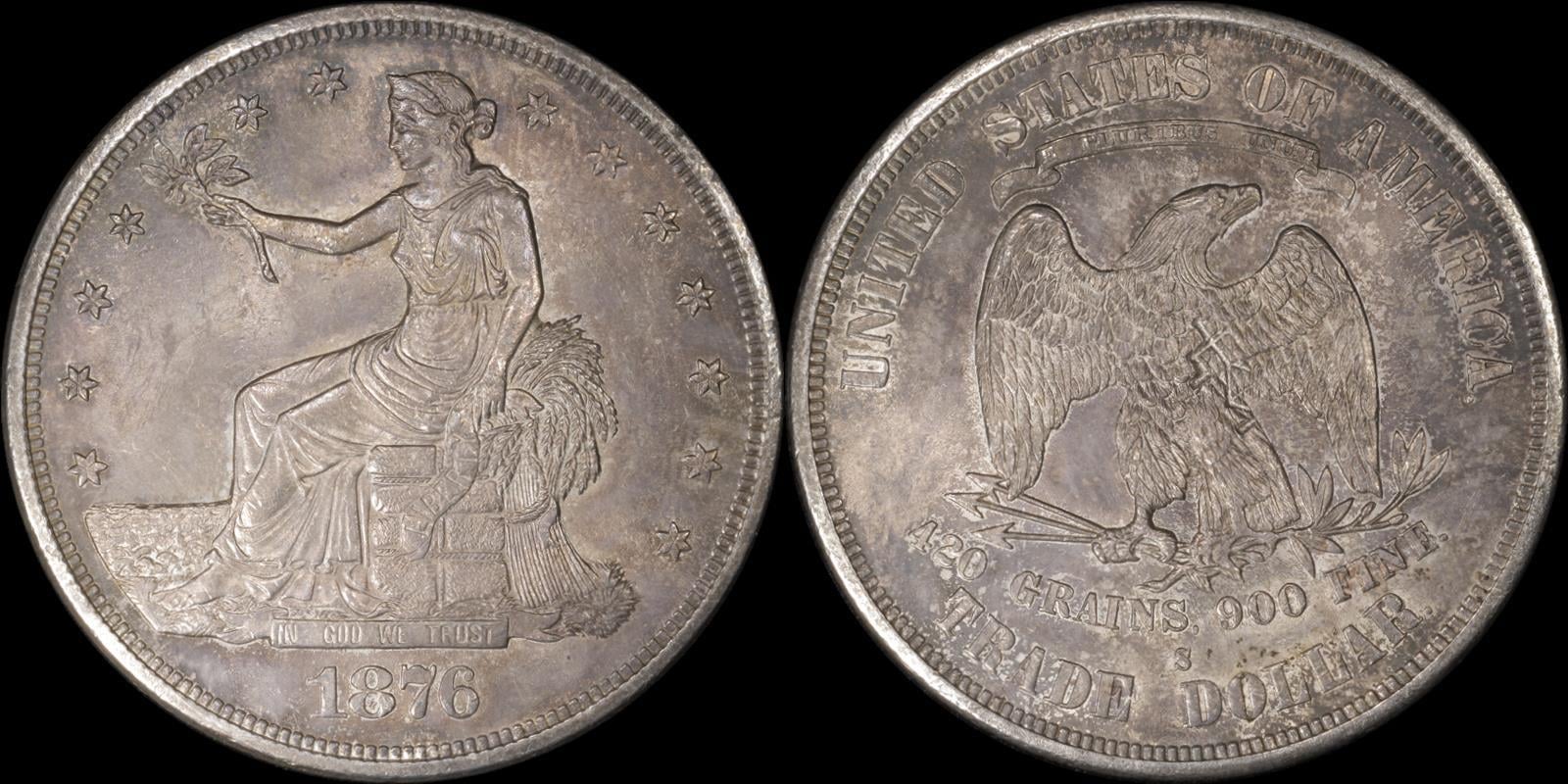
I am firmly in the camp of the chopmark being an enhancement, showing the coin did its job, traveling to the Orient, being weighed, appraised, and approved, and then (given the lack of wear and any further chopmarks) probably went into a bag and sealed up for use as a bulk form of currency. So cool!
But I am in the camp of ALL net grading. I see two big flaws that are too late to fix. First, the inheritance of the Circulated / Uncirculated divide. This leads to grading conundrums where an AU58 may or may not be better than an MS63. I would have preferred that wear be simply a factor like any other, so a 65 with a trace of cabinet friction would be a 64, and a 65 with some strike roughness in the fields would also be a 64. Not, slotted 5 or more grades apart.
I think the other structural error was the whole Details idea. Yes, just net grade it. Damage is damage. Your Walmart coin is an 01. Figure out the other details categories. If a coin has 75 chopmarks, then it is probably an 01 as well.
But what purpose is served by refusing to grade the coin above. Anyone can see the sharp strike, fine detail, lack of wear or obvious flaws. Grade the coin. Let the collector know about the chopmark. And let the collector decide if that is a good thing, or a bad thing.
Then there is this beautiful Specimen-50 of the unique 1870-S $3 which is certainly the same label any other date looking identical would also get.
(I don't really have a big problem with them making it so it could go in a registry set as a graded coin. Maybe just allow it without a number grade or state that they were making an exception to all the grading rules since it is currently unique. - Just wait until the rest of the roll is finally found in the mint cornerstone. - Would not be surprised if that action allowed an increased price realized by 6 or even 7 figures due to catching additional interest of bidders that would not care as much if not registry acceptable. It brought $5,520,000 in the January 2023 Bass Core Collection auction Part II.)
.
.
Description of condition and part of its early owner history from Heritage listing here :
https://coins.ha.com/itm/three-dollar-gold-pieces/1870-s-3-sp50-893-engraved-pcgs-unique-pcgs-7992-/a/1355-9013.s?ic4=ListView-ShortDescription-071515#
"Despite an attractive overall presentation, the present coin has a few technical problems that must be acknowledged. The medium yellow-gold surfaces are lightly polished, with a slightly pebbled texture. The coin was evidently mounted in a jewelry setting at one time, as indicated by some slight damage to the obverse rim at 6 o'clock. The numerals 893 are lightly scratched above the wreath on the reverse. Oliver and Kelly note this may represent the fineness of the Feather River gold deposit the coin was struck from."
.
"Ex: San Francisco Mint Chief Coiner Joseph B. Harmstead; possibly Francis Harmstead (his wife, mounted in a necklace, per Nancy Oliver and Richard Kelly); Sarah Fay (Francis' oldest daughter, on her mother's death in 1885); Charles Luther Fay (Sarah's husband, on her death in 1903); Charles Ralph Fay (Charles Luther's son, on his father's death in 1906); Harry Terry Van Camp, advertised in The Numismatist in April 1907..."
.
.
.
"To Be Esteemed Be Useful" - 1792 Birch Cent --- "I personally think we developed language because of our deep need to complain." - Lily Tomlin
A 45 with a chopmnark would look like a 45 without one, except it has a chopmark. And a 45 without a chopmark would look like a 45 with one, except it has no chopmark.
IMO, who cares? I'm talking about grading coins, not pricing them.
LMAO, I trust them, just didn't have anything else valuable enough to be worth grading
It may be that a coin with very extensive chop marks should just be labled “chopmarked genuine” if the surface is seriously obscured. I’ve seen a few that would certainly be a challenge.
Here’s another twist on the chopmarked subject. There is an NGC seated half on eBay that is “VF Details Chopmarked”. I believe this is a scarce coin with a chopmark. However, it looks like it may possibly have been cleaned as well. I have read that not all the problems with coins might be included on the label. If this coin had been numerically graded by PCGS with the Chopmarked notation I would buy it as I would believe it to be free of other problems. As it is I’ll pass.