Options
How to determine whether a Business struck coin is "Proof Like"
 Matt04
Posts: 642 ✭✭✭✭
Matt04
Posts: 642 ✭✭✭✭
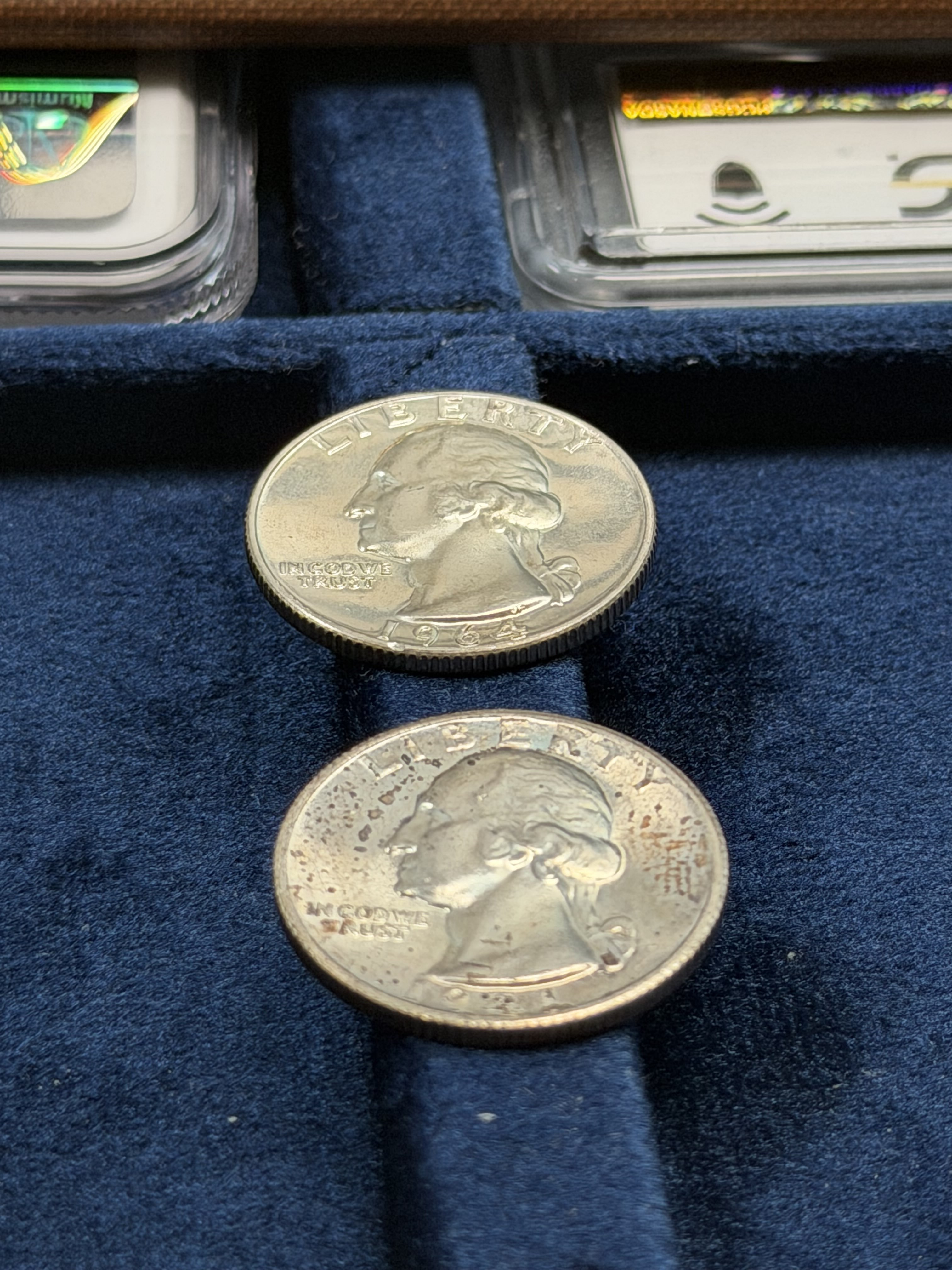
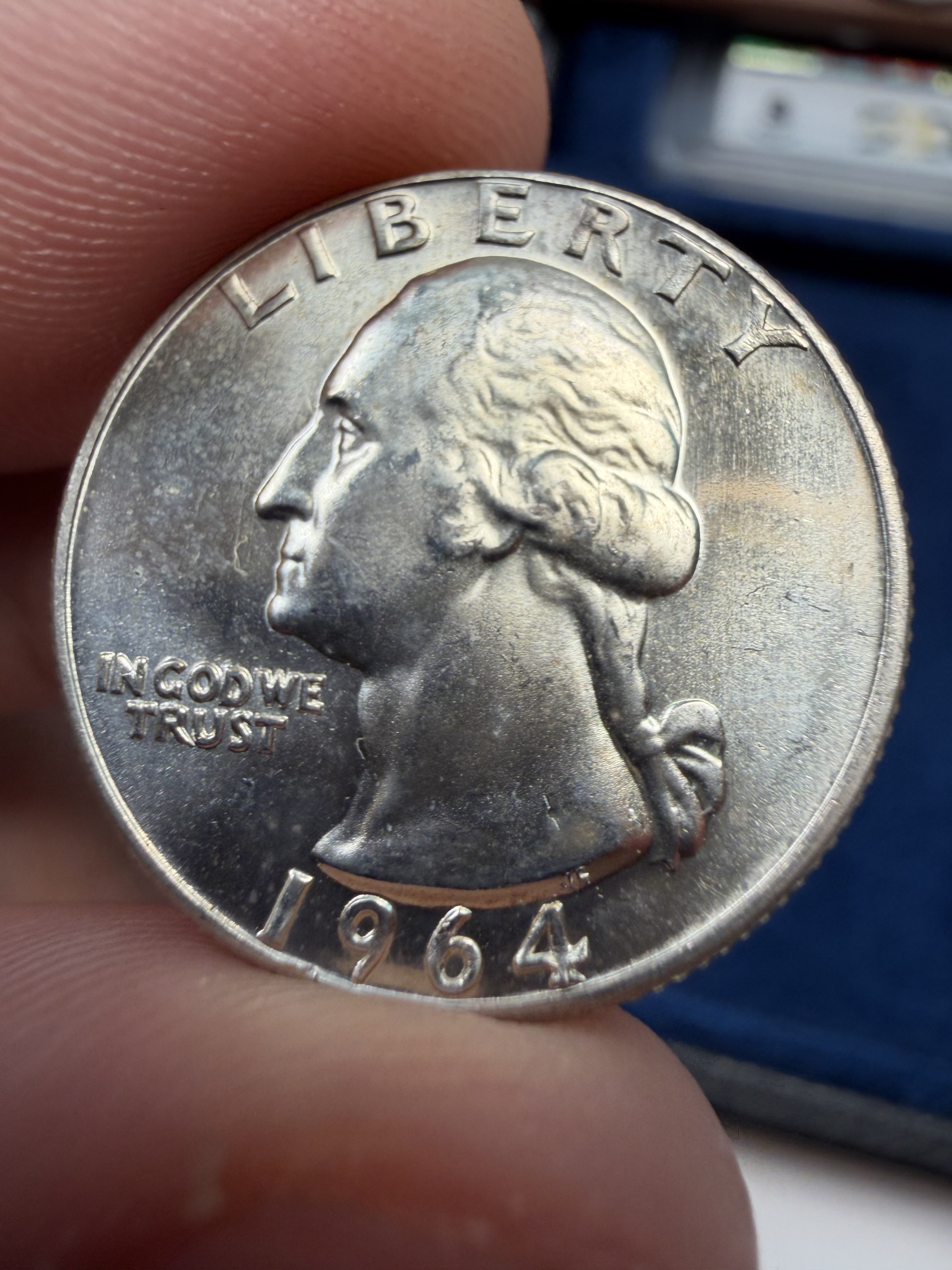
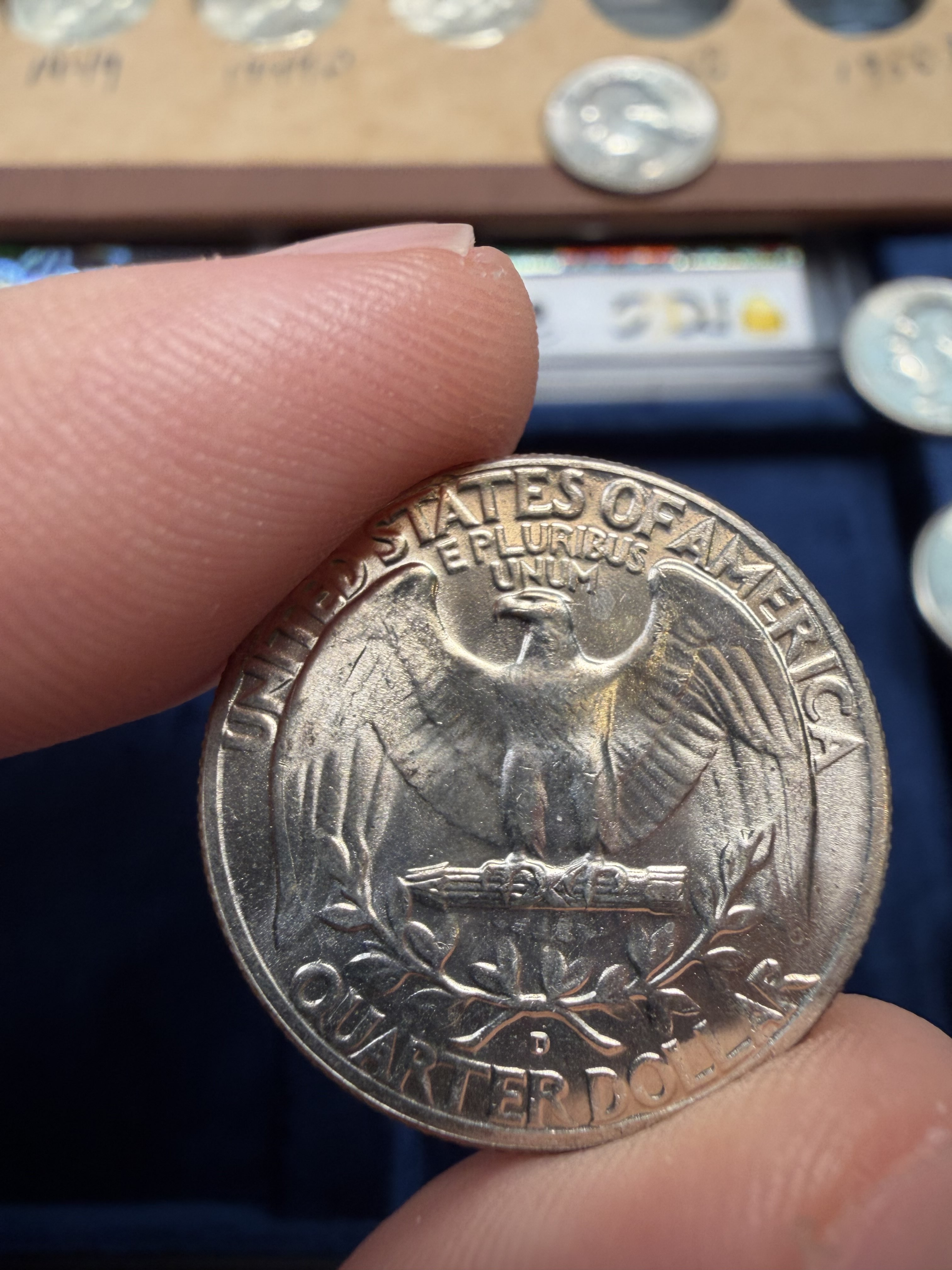
I thought this would make for an interesting discussion. Several years ago I had bought this 1964-D Washington Quarter that came from an Original Bank Wrapped Roll. What stood out to me was how lustrous it was, for years its sat in my Wayte Raymond holder.
Today I took several pieces out again for further observation. With that being said, this 1964-D exhibits die polish marks on the obverse and what I would believe to be "Proof like" reflective surfaces in comparison to all other BU quarters I have raw.
My question, how does one determine whether a Business struck coin is indeed "Proof Like" ?
Here are some Sample Photos:
1964-D (Top Coin) in Comparison to another BU Quarter.
0
Comments
In theory, a “PL” determination would be made, based on sufficient reflectivity similar to that on PL Morgan dollars. But on them, as well as on other types of coins that are eligible for the PL designation, the application of the standard can be inconsistent.
Based on the images provided, your quarter doesn’t look PL to me. The reverse, in particular, doesn’t even appear close.
Mark Feld* of Heritage Auctions*Unless otherwise noted, my posts here represent my personal opinions.
I agree with @MFeld. The Morgan standard pertains to the clarity of reflected images. i.e., you should be able to read text reflected at a certain distance. Many people incorrectly think the standard pertains to a Cameo appearance but it does not.
what sized text and what distance. this is a how to thread
If only it were that easy and consistent. But, according to PCGS, here : https://www.pcgs.com/news/differences-between-proof-and-prooflike-coins
“What Are the Standards for a Prooflike Coin?
PCGS has a set standard for designating a given coin as Prooflike, or “PL.” These grading standards are the following:
There must be a clear reflection in the fields on both sides of the coin as viewed from two to four inches away.
Cloudiness or striations may impede the reflectivity on eligible Prooflike coins.”
Mark Feld* of Heritage Auctions*Unless otherwise noted, my posts here represent my personal opinions.
Yes, the implementation of this is the hard part. Not so easy to do and not exactly clear what to look for. Very subjective.
When I get some time in the future I am actually planning to explore using technology to figure out if there's a way to objectively measure the quality of a mirrored surface. They do have devices that measure the quality of actual mirrors, so it seems that this could be applied to coins as well, and then calibrating what qualifies as PL or DMPL.
If you're a collector of brilliant uncirculated coins, the most lustrous coins tend to have some degree of PL surfaces/fields that reflect a greater amount of light back into your eyes. And they are rare to find! The following terms are used as you search and build a collection of highly lustrous, VEDS, mark-free coins. Full PL, PL, Semi PL and About Semi PL. But you have only one coin which is a great starter.
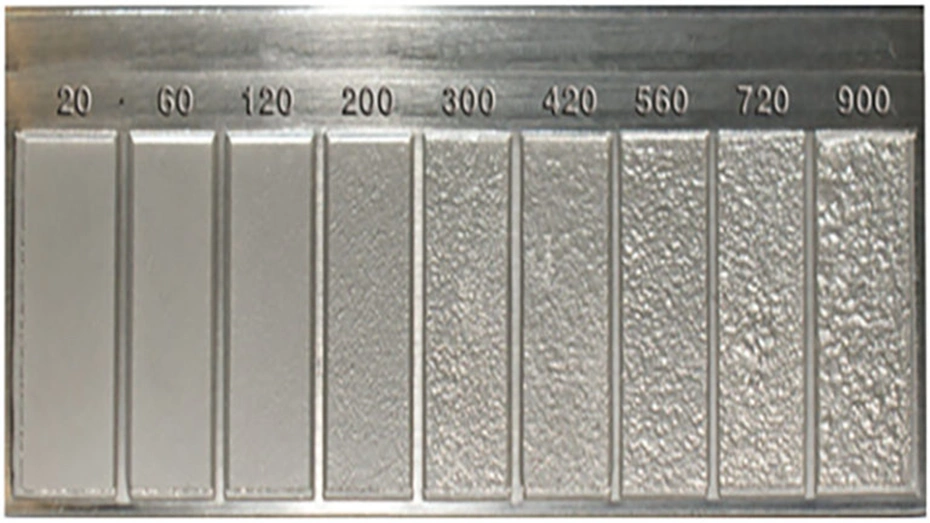
Here's something, like a chart of some sort that shows a number of particles or a range of unevenness to smoothness of the fields to look for when studying a coin's surfaces. Someone else posted this a year or so ago.
The more qualities observed in a coin, the more desirable that coin becomes!
My Jefferson Nickel Collection
and this is where small point fonts can be cloudied away