An AI experiment...
 SoCalBigMark
Posts: 2,851 ✭✭✭✭✭
SoCalBigMark
Posts: 2,851 ✭✭✭✭✭
Six Centavos
In 1922, Portugal destroyed its own money. Inflation had stripped small coins of their purpose, and the Mint fed centavos into the furnace by the cartload. It was routine work—hot, loud, relentless—and no one expected anything from it except molten copper.
The Mint roared day and night. Fire breathed, metal screamed, and heat pressed against the skin like a second shirt. António Rocha fed large carts of coins into the smelter until his arms ached. Wheels rattled, copper spilled like grain, and the furnace swallowed it all in glittering cascades.
He moved carefully, scanning the workshop. Men were busy. The noise was constant. The night watchman slept, as usual.
Coins vanished into the fire. Faces glowed red, then darkened again. António worked, paused, worked again. In that pause, he slipped a few coins into his pocket—nothing heroic, nothing reckless. Just a small decision made in a place where millions were already being erased. The Mint kept singing. No one noticed.
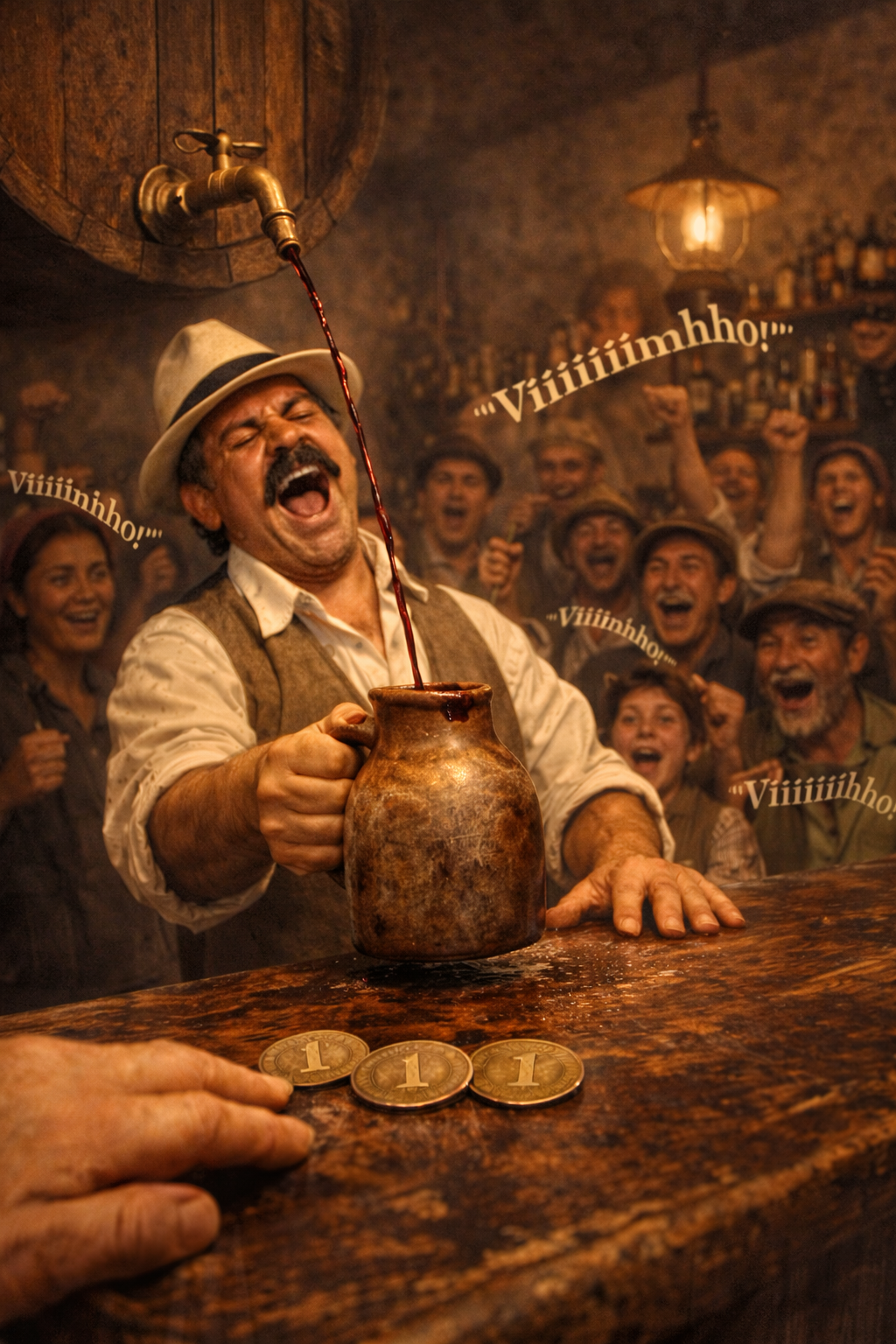
Later, he stopped at Duarte’s Café, the hub of the village. Farmers, laborers, and children crowded the tables. Wine came from big oak barrels bought from a nearby farm, cheap and good, like most everything in Portugal. Duarte would open the large wooden spigot, the wine rushing out in a crimson stream, captured expertly in the jug with exaggerated flair, always calling out the same long, theatrical “Viiiiiinho!” to the delight of farmers, laborers, and children alike. He would slam the jug down on the weathered, ancient bar top, and the whole café would sing it back—“Viiiiiinho!”
Duarte knew the village. He noticed that António always paid in new, bright coins. Duarte knew all the town’s secrets. He knew who you made pay first, the woman who sat on the wrong laps when the wine was flowing, and which kids you had to watch at the candy shelf—some of whom did not closely resemble their fathers. All of it passed beneath his quiet gaze from behind the café counter, where he poured wine and collected stories as deftly as he did payment.
António drank more than he should have. The wine was rough, honest, and generous. His tongue loosened. His caution slipped. He made a mistake—one that could have cost him his job, his freedom, his home.
When he stood to leave, he slid the coins across the bar and winked.
“We survived the war… these did too.”
Duarte frowned, unsure what to make of it, but tucked the coins into a small wooden box behind the counter, among foreign coins and things that had lost their use but not their place.
Not long after, António bought a birdcage for his wife, paying the maker with coins and a few bills. The craftsman studied the cage’s design and later realized that the old copper coins worked perfectly as washers in the next cage he built—soft enough to shape, strong enough to hold, and cheaper than proper hardware. Quietly, the coins became part of the cage’s frame, holding wire spacers in place as if they had always belonged there.
Time passed. António aged. Duarte did too. The café endured.
Decades later, in the 1960s, the café passed to Duarte’s grandson, Miguel. While sorting through the counter, he found a small wooden box mixed in with keys and papers that no longer opened or proved anything. Inside were foreign coins—and beneath them, several dull centavos.
Miguel was a coin collector. He examined the foreign pieces first and almost overlooked the centavos, certain they were fake—after all, there are no 1922 centavos. Still, something about their weight gave him pause. He set them aside and, days later, took them to an expert.
Weeks passed. Miguel waited.
The verdict, when it came, was simple. The coins were genuine. The only ones known to exist.
They were auctioned for a record price, and the story spread across Portugal. With the proceeds, Miguel restored the old café, hanging his grandfather’s portrait high on the wall. Some of the surviving regulars stared up at it, finally relieved that the secrets had gone to the grave.
A few weeks later, an old birdcage was cleaned for new parakeets from the farmers’ market. The washers were discovered to be old centavos. Someone noticed their color. Then their weight. Only then did they check the dates.
Six centavos survived—out of more than two million—not through chance, but through heat, habit, silence, and love.
And some say, if you pour the wine just right, you can still hear them sing in the bar: “Viiiiiinho!
Comments
Neat. Was that whole thing AI-generated, or just the illustration?
Collector since 1976. On the CU forums here since 2001.