Options
Proof Likes - How Are They Determined?
 interpols
Posts: 51 ✭✭✭
interpols
Posts: 51 ✭✭✭
I just got a MS62PL Morgan Silver Dollar (I lowkey forgot the date I'll send a picture of it later), and I'm just wondering; what are the requirements to make something proof like? How shiny is not shiny enough?
Tagged:
1
Comments
Have you tried doing a web search for the standards used by the major grading companies?
Often, pictures don’t allow viewers to make accurate determinations as to whether a coin should qualify for a PL or DMPL/DPL designation.
Mark Feld* of Heritage Auctions*Unless otherwise noted, my posts here represent my personal opinions.
all the searches i've done have just said proof level like luster on a coin, when I still don't know what proof level luster means, ts too niche
I did a search under “PCGS PL standard” and got an answer in less than 5 seconds.
Mark Feld* of Heritage Auctions*Unless otherwise noted, my posts here represent my personal opinions.
bet
mirror depth
11.5$ Southern Dollars, The little “Big Easy” set
I think it has to do with how far the mirror effect can "stretch"
I remember someone telling me that if both sides can go 10 inches and retain the mirrored effect from there then its PL; idk about DMPL
"Another day, another Collectors Universe forum scrolling session."
- Someone, probably
If someone said that, they were mistaken. As I posted previously, a few seconds of searching led me to the PCGS standard for “PL”.
Mark Feld* of Heritage Auctions*Unless otherwise noted, my posts here represent my personal opinions.
fair enough
"Another day, another Collectors Universe forum scrolling session."
- Someone, probably
Depends on the grader, but the standards Mark mentioned are a good starting place.
Coin Photography
FWIW, PCGS uses the term "Prooflike" in two ways.
1) To describe a subset of a business strike run that is particularly '"shiny"/reflective'.
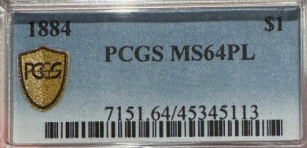
Example:
Image Source: https://www.ebay.com/itm/226282351446
PCGS Cert Verification: https://www.pcgs.com/cert/45345113
2) To describe a unique manufacturing 'process/finish' for an entire manufacturing run. This process is more involved than a business strike run, but does not qualify as a Proof.
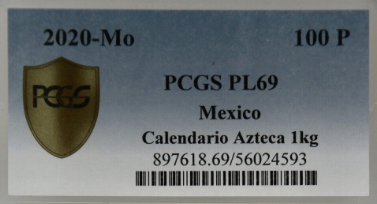
Example:
Image Source: https://www.ebay.com/itm/196809395845
PCGS Cert Verification: https://www.pcgs.com/cert/56024593
You can distinguish between the two uses by looking at the grade. If the "PL" follows the numeric portion of the grade, it is the former usage (e.g., MS64PL). Conversely, if the "PL" precedes the numeric portion of the grade, it is the latter usage (e.g., PL69).
Note - I am NOT associated with either eBay listing.
I'd say this definition can also be applied to Specimen Strike designations. (In case OP comes across a coin that says SP)