Options
CME/LBMA
 badhop55
Posts: 178 ✭✭✭
badhop55
Posts: 178 ✭✭✭
In light of all that's been going on I'd to ask a question.
When do the CME and LBMA become irrelevant regarding setting spot prices for precious metals?
0
Comments
cme is futures , lbma is buy at current spot
the cme is the usa's largest silver futures market. each contract is 5,000 ounces and open interest in the front month contract is about 150,000 - or 750,000,000 t ounces
we the people can't compete with that
lbma? i'm not sure what the volume is traded vs that spot. the us mint uses those numbers to reset gold, platinum and palladium prices on a weekly basis (the mint adjusts silver prices at their discretion and simply places an advance notice in what is "the federal register")
5 x 1,000 ounce bars are 69.93 $100 bags of 90% or about 7 $1000 bags(715 t oz)
compare to 750,000,000 t oz
LMBA also sets prices with its own futures market. Both exchanges hold a very small fraction of metal in their vaults to meet conversion to metal for futures contracts (fractional bullion banking) they have sold. What keeps the exchanges operational is that most futures contract holders never demand conversion to physical delivery, they simply roll over the contract or settle for cash. Shanghai has recently joined the fray with its own exchange and is similarly serving asian customers while at the same time competing with the other two for hard metal supply.
Price for physical is based on spot plus a premium depending on the fabricated product. That premium (spred in price between spot and physcial products) also fluctuates depending on availability and demand for the metal. What will break the futures exchanges (and remove spot price's tie to physical prices) will be their inability to meet demand to convert the paper promise into the metal in their vault. At that time the curtain will be pulled back on their heavily leveraged operation and numerous other paper products such as PM ETFs will take a beating. It is also likely to be revealed that the each bar of metal in those vault has been promised to multiple owners. So far, the exchanges have maintained pricing control with margin increases and with what many believe to be downright manipulation on futures prices. Prices are at record highs partially due to record demand for physical metal and what is perceived to be a supply issue for the real stuff. There has been a lot of news (and rumor) about a physical supply crisis at the LBMA and CME's COMEX.
COMEX (CME) and LBMA will become irrelevant when bidding for physical metal disregards pricing set on the exchanges or when they default because they cannot honor their paper promises.
The futures market and exchanges were founded to maintain order in the otherwise volitile pricing of many commodities to protect both producers and users of the commodity. Bullion bankers have demonstrated (and been heavily fined) for taking advantage of their ability to bid/ask in the price setting mechanism, usually for bank profit and for what some believe a move to help protect the nation's paper currency that for quite a while now has been mismanaged.
"Money does not care about speeches on morality. Capital asks whether the rules will remain the same tomorrow. With inflation, people assume price is the problem, and propose regulation—but price is simply the message." - Martin Armstrong
Paper.
LOL
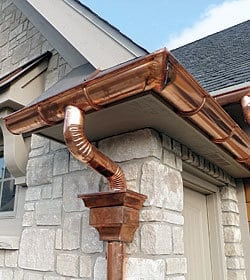
COPPER is gutter !
It's what's in your wallet. LOL
"Money does not care about speeches on morality. Capital asks whether the rules will remain the same tomorrow. With inflation, people assume price is the problem, and propose regulation—but price is simply the message." - Martin Armstrong
Yep. Have no choice. Just like you. LOL
COPPER is gutter !

looked on the lbma and don't see where lbma is also a futures market
lme does futures
hah wikipedia say they do "forwards contracts" and says it's futures, but unlike many wikipedia pages, provides no reference for that.
there are websites indicating lbma wants to start trading futures. the articles are from the end of 2025
CME (COMEX) reports 440 million ounces of silver located in its depositories.
CME reports the current silver futures contract which settles March 27, has an open interest of 150,200 contracts. At 5,000 ounces of silver per contract, this comes to 751 MILLION ounces of silver contracts trading, or 1.7 TIMES the amount of actual silver the CME has stored in various depositories.
Given the current demand for physical this just might not end well.
"Money does not care about speeches on morality. Capital asks whether the rules will remain the same tomorrow. With inflation, people assume price is the problem, and propose regulation—but price is simply the message." - Martin Armstrong
Not all contracts end with delivery.
Even if the trader requests physical delivery CME still has the right to settle in cash:
Under specific circumstances, COMEX can settle ̶s̶i̶l̶v̶e̶r̶ gutter contracts in cash even if a trader requests physical delivery. While the primary purpose of the main 5,000 oz ̶s̶i̶l̶v̶e̶r̶ gutter futures contract (SI) is physical delivery, the exchange allows or requires cash settlement under certain rules, particularly when there is insufficient physical inventory to meet all delivery requests.
How and Why Cash Settlement Occurs:
Forced Cash Settlement during Shortages: If physical inventory is insufficient to satisfy all outstanding contracts, COMEX can enforce cash settlement for remaining open positions.
"Paper" Domination: In cases where many contracts are held by speculators rather than industry users, COMEX may accept that 99%+ of contracts are cash-settled, and when the physical market is tight, this can lead to forced cash settlements at a "paper" price.
Alternative Delivery Mechanisms (EFP): If a trader requests delivery, the exchange allows for an "Exchange for Related Position" (EFRP) or Exchange for Physical (EFP), which can be used to settle positions outside of the standard, immediate delivery mechanism.
Specific Contract Types: While the standard 5,000 oz (SI) contract is physically delivered, other derivatives, such as E-mini ̶s̶i̶l̶v̶e̶r̶ gutter futures (QI) or newer micro-contracts, may be cash-settled by default.
What Happens to the Trader:
If a contract is cash-settled against a trader's request for physical delivery, the trader receives the cash value difference between the contract price and the final settlement price, rather than the physical ̶s̶i̶l̶v̶e̶r̶ gutter bars. RGDS!
The whole worlds off its rocker, buy Gold™.
BOOMIN!™
Wooooha! Did someone just say it's officially "TACO™" Tuesday????
Retiring at 55, what day is today?
It's not CME which is on the hook, it's the individuals who are long/short the contracts and only for the net amount, not the entire notional value.
If the underlying fundamentals warrant a higher silver price....it'll go higher. If not, it'll fall.
Has nothing to do with an operation that has been around for 50-plus years.
Has everything to do with the "operation" if there is failure to deliver. If Comex fails to deliver whose gonna want to buy their contracts?
"Money does not care about speeches on morality. Capital asks whether the rules will remain the same tomorrow. With inflation, people assume price is the problem, and propose regulation—but price is simply the message." - Martin Armstrong
as mentioned, the comex is merely storage for other people's metals
it's not comex that has to make delivery, it is the other side of the contract
Just before delivery who owns the bars?
When a contract holder trades his contract for metal who is on the other side of the trade?
One would assume that since COMEX sells the contracts the contract is with COMEX.
"Money does not care about speeches on morality. Capital asks whether the rules will remain the same tomorrow. With inflation, people assume price is the problem, and propose regulation—but price is simply the message." - Martin Armstrong
ex - exchange
they trade like options trade. no stock is traded until the option is exercised. the exchange holds no stock. i can only imagine the member banks of the exchange must hold some amount of metal in the exchange's trust for exercise possibilities.
when an option or futures contract is exercised, the contract is randomly paired with someone on the opposite side. members of the exchange are the trader of last resort. with futures, the exchange is out of the delivery part and the two parties must arrange it amongst themselves.
just to mention, the gfd bars are generally known as 100oz bars. perhaps it weighs to be 100.05. and, gfd for gold is also 3x 1 kilo bars. three of those aren't exactly 100 oz. In the end, during the transaction, the actual weight of the metal is used in the calculation. this is all outside the exchange's involvement.
OK, if exchange owns the bars, who owns the exchange?
"Money does not care about speeches on morality. Capital asks whether the rules will remain the same tomorrow. With inflation, people assume price is the problem, and propose regulation—but price is simply the message." - Martin Armstrong
i didn't explaain myself on that one
com-ex - the ex is exchange - they assist/broker the exchange of stuff, not own it