1792 Quarter Dollar, Judd-13 Sold for $1.2M on Heritage
 coinsarefun
Posts: 21,772 ✭✭✭✭✭
coinsarefun
Posts: 21,772 ✭✭✭✭✭
I’m surprised no one mentioned this one
https://coins.ha.com/itm/patterns/1792-quarter-dollar-judd-13-pollock-15-high-r7-au58-ngc/a/1329-4960.s?ic2=mytracked-lotspage-lotlinks-12202013&tab=MyTrackedLots-101116
.
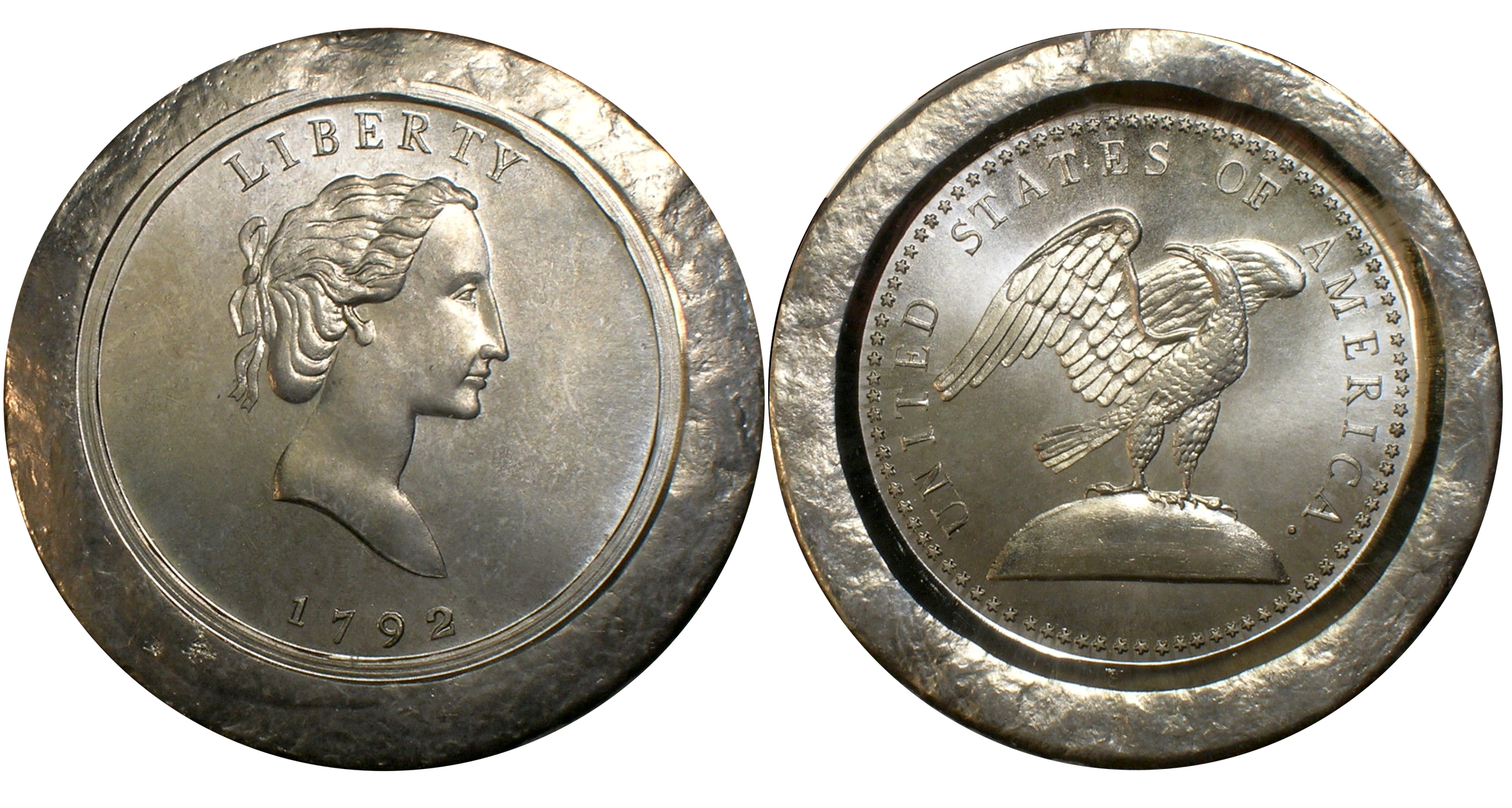
It is another of my favorite patterns that I will never be able to own but would sure love to see one in hand.
Such an enigmatic pattern with a beautiful obverse. I don’t mean in any way to cheapen this beauty but the only way
most of us can come close are the Electrotype’s which I’m not aware of any or replica’s. I do own from the Gallery Mint museum a copy of a die trial.
.
.
.
.
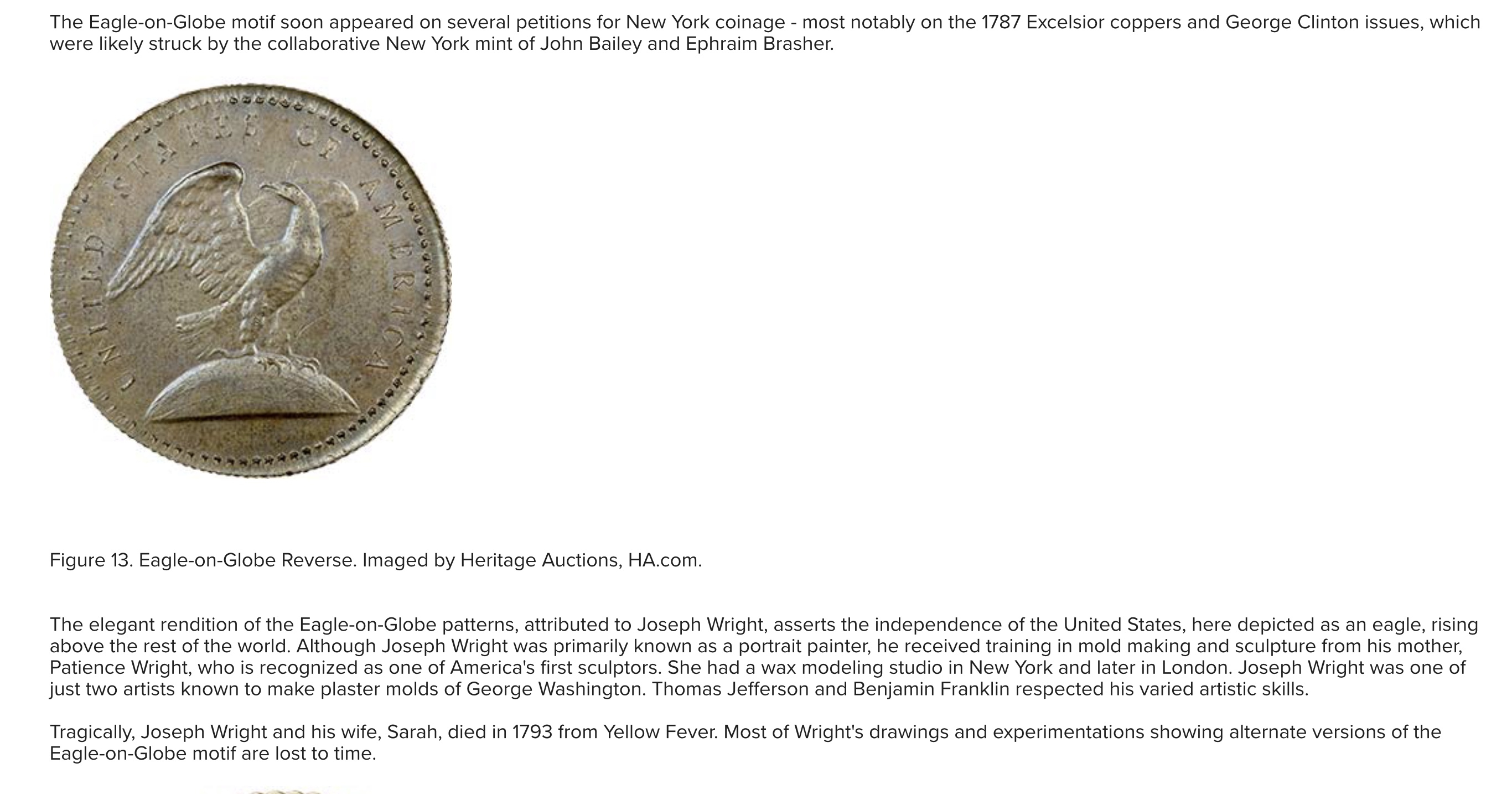
While descriptions do appear to become lengthy I do like this part. But the entirety is a great read.
.
.
CoinsAreFun Pictorials Album FOR SALE
.
CoinsAreFun Toned Silver Eagle Proof Album
.
Gallery Mint Museum, Ron Landis& Joe Rust, The beginnings of the Golden Dollar
.
More CoinsAreFun Pictorials NGC FOR SALE
.
CoinsAreFun Toned Silver Eagle Proof Album
.
Gallery Mint Museum, Ron Landis& Joe Rust, The beginnings of the Golden Dollar
.
More CoinsAreFun Pictorials NGC FOR SALE
4
Comments
Underbidder, again. Sigh
You quit too soon.
All comments reflect the opinion of the author, even when irrefutably accurate.
.
.
.
One day......you're young
.
CoinsAreFun Toned Silver Eagle Proof Album
.
Gallery Mint Museum, Ron Landis& Joe Rust, The beginnings of the Golden Dollar
.
More CoinsAreFun Pictorials NGC FOR SALE
While we’re at it, how about Judd-18 at $840,000?
Dealing in Canadian and American coins and historical medals.
The 1792 patterns have always been among my favorite US coins.
Very nice look.
I’m interested in why it’s so often called a pattern quarter. Seems like it could easily have been a cent. Those stars on the reverse appear on a cent just a couple years later.
Mine too. I've owned a couple of Copper Dismes (one, the Lovejoy coin, with @HarryLaibstain) and the Parmelee Silver Disme with @MrEureka and @DrDuck. The former "NGC XF40 EAC 25", the latter "VF20 details, two obv scratches present when auctioned in 1891", not unreasonably ensconced (so I'm told) in a PCGS VG08 holder.
After seeing the the Garrett 1792 Copper Disme, an impressive SP65, it's easy to think, based on the relatively large surviving population, that these functioned as propaganda pieces, much as did the much less meticulously-(mass-)produced half- dismes, but the 10c pieces in both metals were surely intended only for important politicians. Clearly die-cutting and strike execution were not technical issues for copper planchets when one single production run could be knocked off in a day. I find it hard to imagine a circumstance in which the scant emission was not comprised of inevitable gems.
Only three Silver Dismes are known. I think it a reasonable speculation that they were all "gems" when first struck. My dream coin, it should only show up, is a 1792 Silver Disme SP64. FWIW IMNSHO the Specimen status our host assigned one particular silver Half-Disme is fatuous honorific.
I see their production, as for most if not all of the 1792 specimen quality "quasi-coins" to be intended as patterns, not for a design, but the Unit adaptation as a reformulation of the heretofore previously obscure decimal system into the basis of a radical shift to measurement to a more efficient and less British system of monetary calculation. (there's a sentence that could use some work, or another paragraph)
Were the 1792 half-dismes patterns? Let's not over-semanticize when the semiotics are clear.
I also remember sitting next to Martin Paul when he bought the copper 1794 $1 pattern and maybe the 1794 half-dime. The dollar bought like $60K. I'll have to check the auction descriptions and correct prices via later edit.
That is wicked cool - a pristine product of this nation's fledging mint.
There's also the possibility that the design had not been completed, that these were some sort of progress proofs, and that a denomination for the design remained to be determined. There's also the possibility that these pieces were produced posthumously by the US Mint, just to see what they might want to do with Wright's work. And it's also possible that the central devices were designed by Wright,, and that the rest of the design was finished by someone else at the Mint after Wright's death. My best guess is that the truth lies in that general direction, but it's pure speculation at this point.
Doggedly collecting coins of the Central American Republic.
Visit the Society of US Pattern Collectors at USPatterns.com.