To Hanover Token

Can't find this coin anywhere. 1861 22.5 mm 4.34 g and orientation is flipped 180 degrees. It is not this one https://en.numista.com/catalogue/pieces72116.html 

A world without coins "Chaos"
Comments
-
This article may help: https://www.coinworld.com/news/precious-metals/to-hanover-gaming-counter.html
Coin collector since childhood and New York Numismatist at Heritage Auctions.3 -
These pieces were mass-produced and there were many different varieties, and bear many dates both fictitious and authentic. Early pieces may have been sold as souvenirs to the poor, as the article notes, but most (especially the later versions such as this one) were sold in bulk packets for use as gambling tokens, as they almost-but-not-quite looked like gold sovereigns.
As the article notes, the token contains a political message. Ever since George I, the kIngs of England had been German prices too. But Queen Victoria was disallowed from inheriting the throne of Hanover, due to the strict male-only primogeniture laws of that country; the throne passed tot he Queen's cousin, the arch-conservative Duke of Cumberland, a generally unpopular fellow whom the British public were mostly thankful to be rid of. Duke Ernest became King Ernst Augustus I of Hanover.
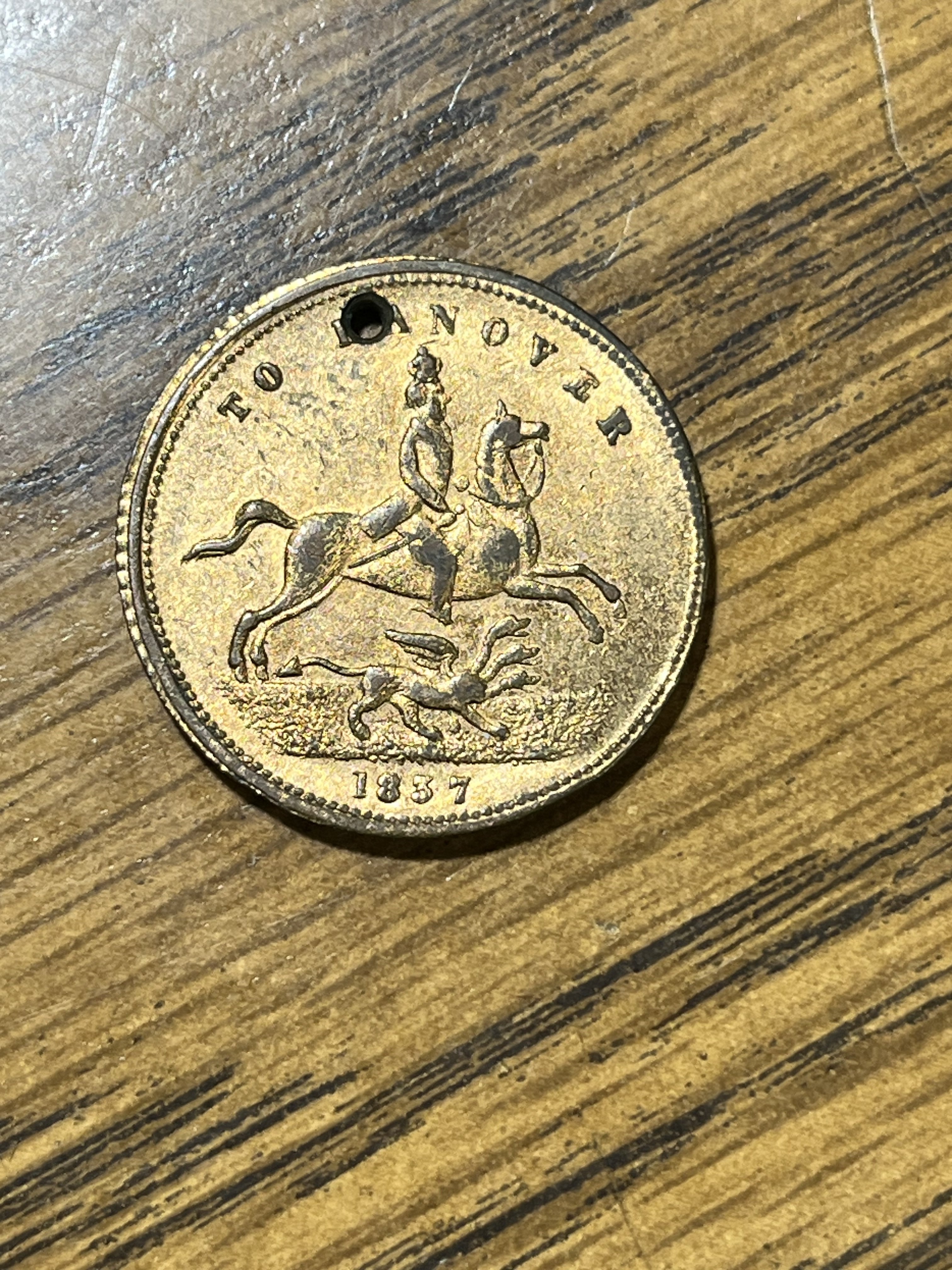
The token depicts the Duke, wearing the Hanoverian crown. Unlike St George who faces and slays the dragon, the Duke is shown avoiding and jumping over the dragon instead; the dragon has two heads, representing the former "un-natural" union of Britain and Hanover. The message of the token overall is simple: "Hanover can keep Cumberland Jack if they want him, good riddance we say; we'll keep Victoria, thanks". King Ernst August died in 1851, so if the 1861 date is accurate, the king depicted had been dead for ten years.
Waste no more time arguing what a good man should be. Be one.
Roman emperor Marcus Aurelius, "Meditations"
Apparently I have been awarded the DPOTD twice. 3
3 -
Thanks for solving the mystery
A world without coins "Chaos"
0 -
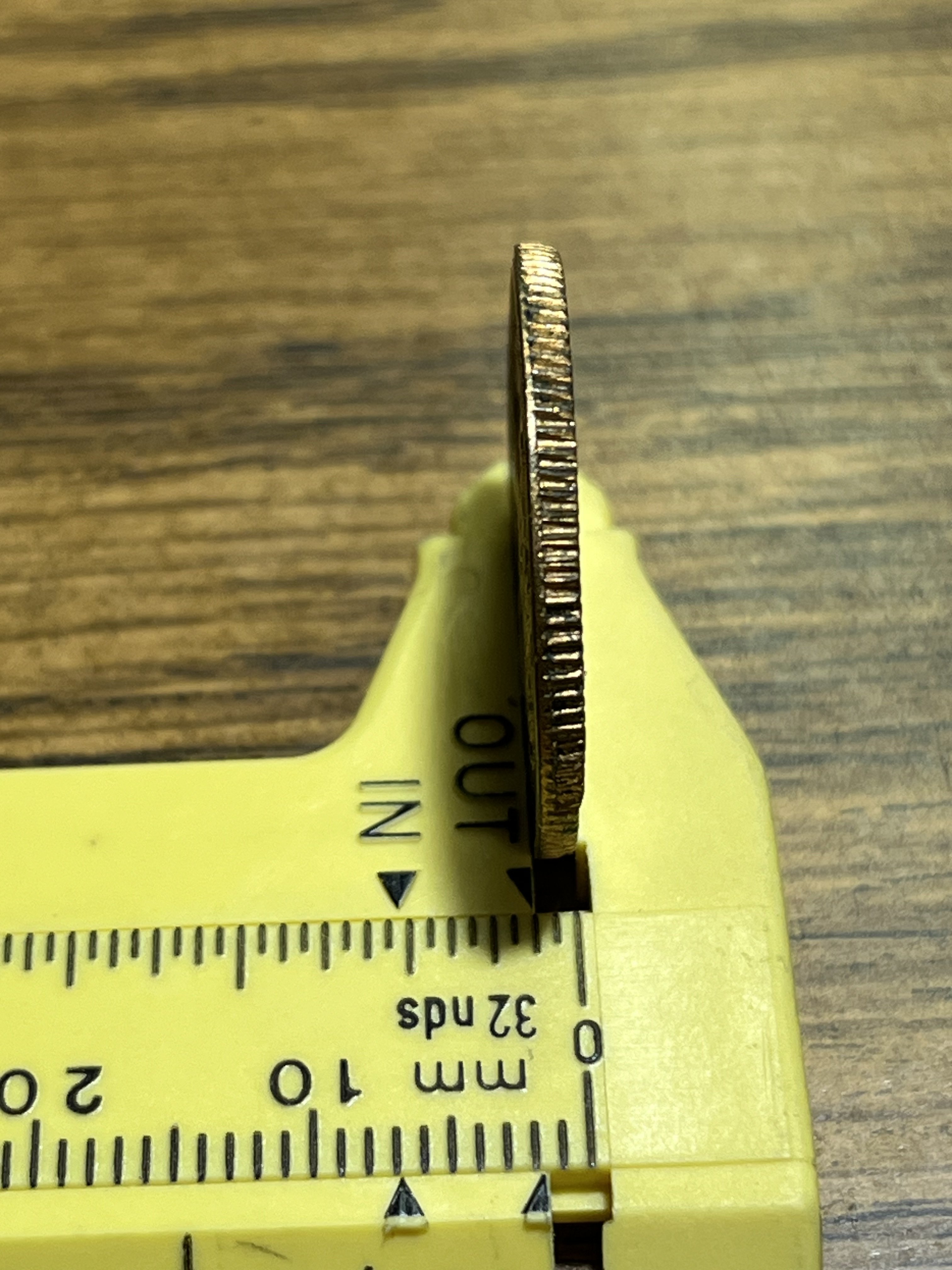
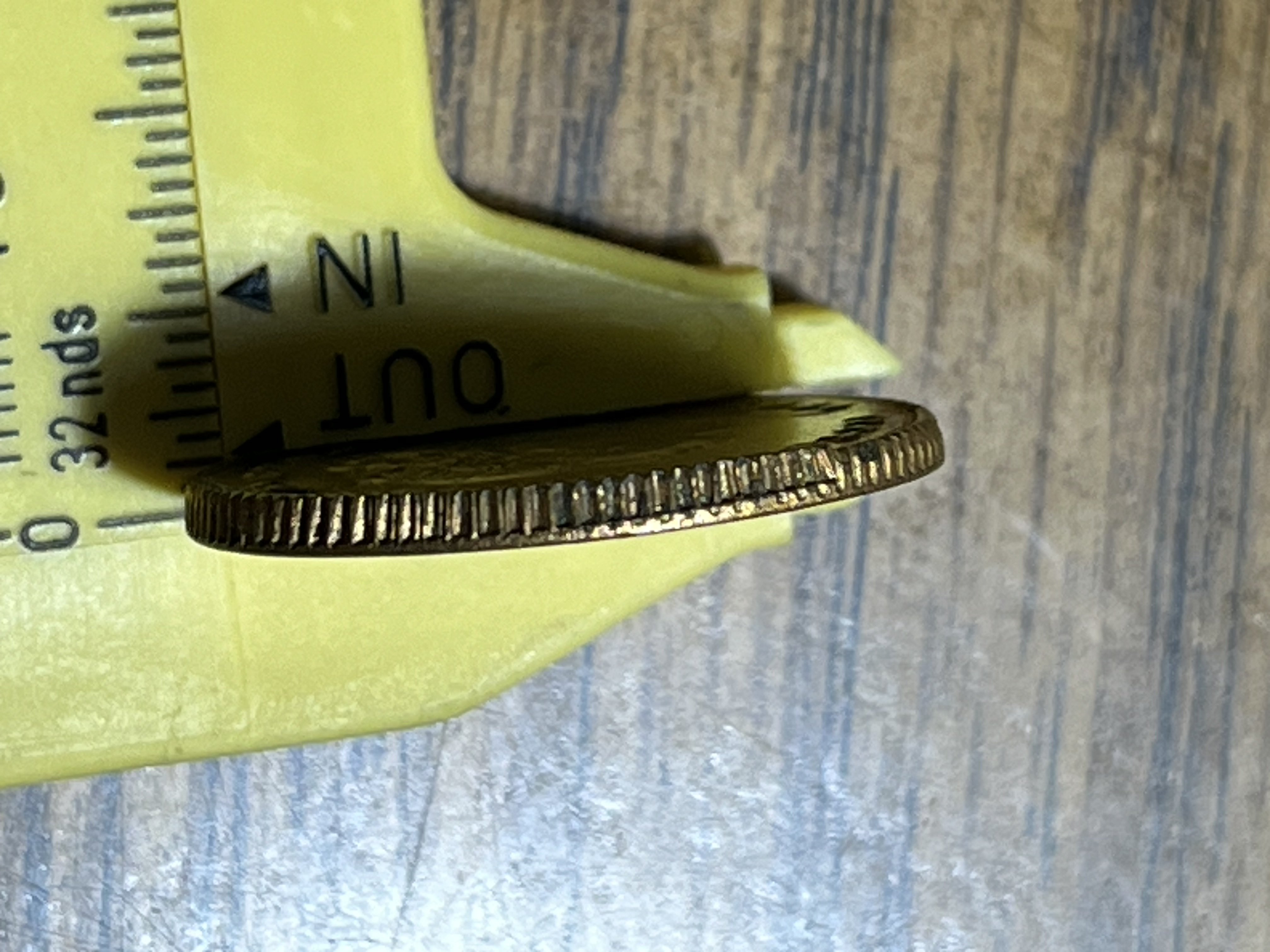
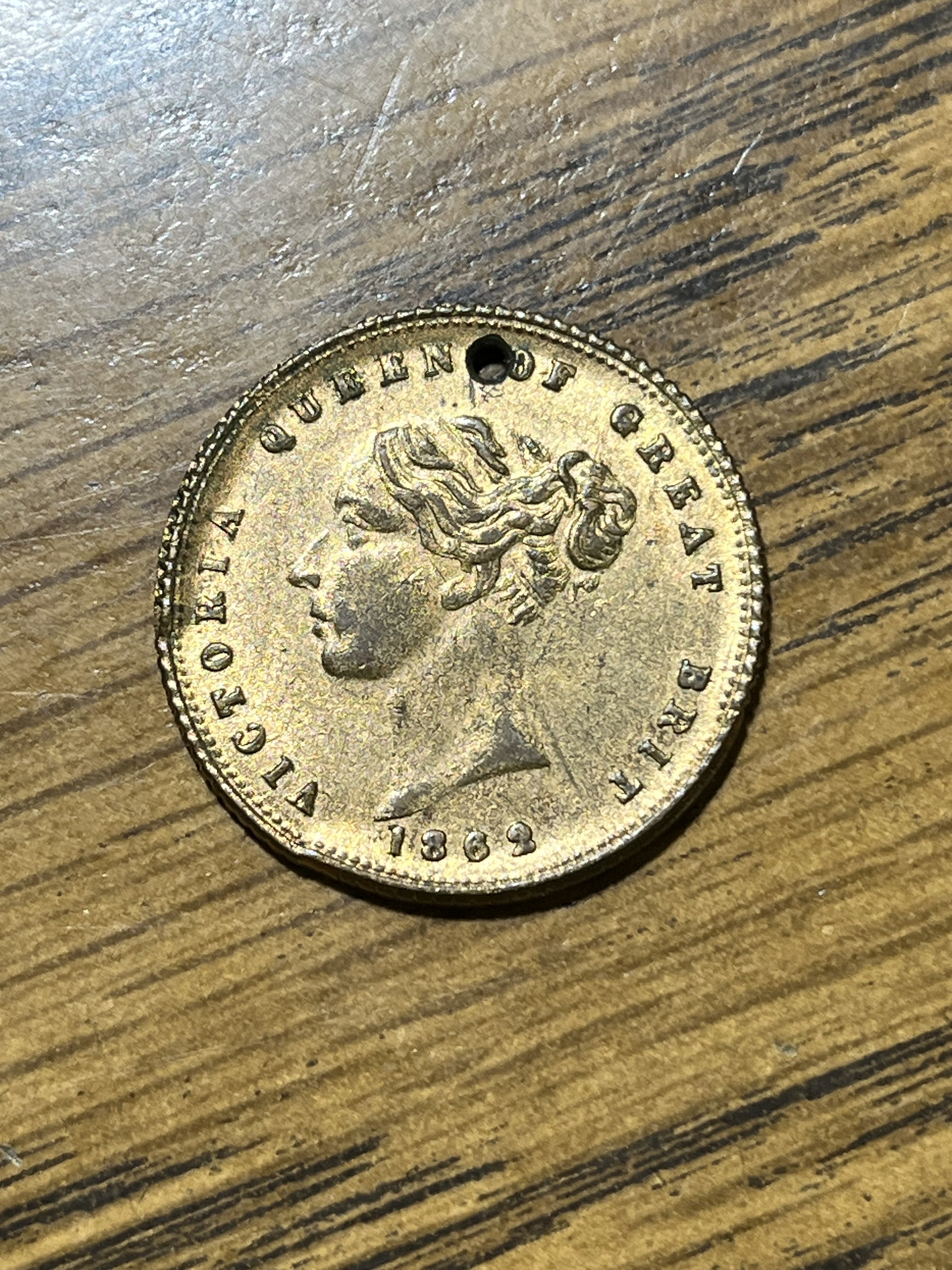
Old thread alert, but related topic. I can’t find any information on this specific “To Hanover” piece with a reeded edge. Any information would be appreciated.
“Land of the free because of the brave”
“Saved by grace alone, through faith alone, in Christ alone”
In Deo solo confidimus
ΙΧΘΥΣ
ΙϹ ΧϹ ΝΙΚΑ (ΙΗΣΟΥΣ ΧΡΙΣΤΟΣ ΝΙΚΑ)
Member since 2026
Successful BST transactions with: Ted 1, JWP, bigjpst, Vetter, nickelsciolist, ajaan, USMarine6, ad4400, grote15, coinbuf, Gothat3rs, No Headlights, PROMETHIUS88, Harlequin, Coin Finder, Coins3675, CKcollectibles20 -
I believe most of these Cumberland Jacks have reeded edges; if you look closely at the OP pictures, that one has a milled edge too. Judging by the appearance of the edge on your piece, it was applied post-striking by some variant of a Castaing machine (the same process where Spanish dollars had their edges applied).
There's an awful lot of variety in Cumberland Jack designs; not surprising given they were issued for around 50 years, from various manufacturers. While most bear dates, the dates are not necessarily to be trusted in terms of being an accurate year of issue. Yours has two dates, "1837" being Victoria's accession year (the year that the Duke of Cumberland went "to Hanover") and "1862"; that latter date is clearly closer to the actual production date for these tokens, but the manufacturer could in theory have used the "1862" dated die for many years afterwards.
I thought I recalled the existence of a catalogue of these pieces, but I can't find any evidence of such a book now. There certainly aren't too many collectors of these pieces who are actively seeking out a "full set" of the various types, so none of the tokens (not even the notionally rarer ones) seem to carry any sort of market premium.
Cumberland Jacks were produced from 1837 until 1883, when the Counterfeit Medals Act was drafted specifically with the intent of banning them: https://www.legislation.gov.uk/ukpga/Vict/46-47/45/pdfs/ukpga_18830045_en.pdf
The token-makers then switched to making "in memory of the good old days" tokens which imitated the by-then-long-obsolete gold guinea, or various foreign coins including Prussian, Austrian, Russian and the Boer Republic of South Africa (since imitating foreign coins was not mentioned in the Act).
Waste no more time arguing what a good man should be. Be one.
Roman emperor Marcus Aurelius, "Meditations"
Apparently I have been awarded the DPOTD twice.0


Categories
- All Categories
- 520.1K Coins and Currency - PCGS
- 328.6K U.S. Coin Forum
- 14.8K PCGS Set Registry Forum
- 5.2K Q & A Forum
- 41.4K World & Ancient Coins Forum
- 3K U.S. & World Currency Forum
- 96.4K Buy, Sell, & Trade - U.S. Coins
- 7.3K Buy, Sell & Trade - World & Ancient Coins
- 1.5K Buy, Sell & Trade - Currency
- 61 Random
- 246.2K Trading Cards, Autographs and Memorabilia - PSA
- 90.3K Trading Cards & Memorabilia Forum
- 1.7K Autographs Forum
- 16.4K PSA Set Registry Forum
- 22K Sports Talk
- 115K Buy, Sell & Trade - Cards & Memorabilia
- 663 Buy, Sell & Trade - Autographs
- 2.2K Stamps
- 1.5K Stamps Forum
- 670 Buy, Sell & Trade - Stamps
- 83 Coin Shows
- 83 General Coin Show Information and Discussion
- 11.9K Misc
- 11.9K Testing Forum