Best Of


Re: Warning- this is counterfeit - beware!
@Rexford said:
@dcarr said:
@Rexford said:
@dcarr said:
@Rexford said:
@Byers said:
@Rexford said:
@Byers said:
@Rexford said:
@7Jaguars said:
I always wonder how on "one-offs" they can be determined false/counterfeit when it seems the possibilities for a genuine MINT PRODUCED die are nearly endless. How do we know that the die was not some creation of a mint employee or engraver that potentially could be a trial or experiment for virtually any purpose that was not employed immediately; rather, what if the die was left on a back shelf somewhere and then later hauled out and used by somebody within or without the mint to strike this piece up.
One suggestion is to back up from the designation of "not genuine, false dies, counterfeit" similar in some way to what had been proposed: "questionable authenticity" or "die does not match known reverse dies".I don't have an interest in this piece other than an open-minded discussion. I would hesitate to condemn on basis of die rust or uneven denticles, etc. I suppose although not exactly the same issue that one thinks of Paquet....
They can determine such fakes to be fakes because transfer counterfeits have consistent characteristics that will generally not be seen on genuine items. Essentially every decent fake of a milled coin is a transfer of some kind from a genuine example.
The difference between a “good quality” and a “bad quality” transfer counterfeit comes down to the quantity and severity of those detectable characteristics. This piece is not, in my opinion from the images, of particularly good quality, and I am surprised that it passed as genuine for as long as it did.
It passed as genuine because it looks genuine in person, without high magnification. Obviously you are basing your opinion on the images. But viewing it in person is a totally different experience.
I don’t think so, generally these things are easier to judge in person. The luster looks like it would be way off from a genuine mint product, the devices look granular, and the field texture is pretty bad - and that’s ignoring the odd planchet and composition. In hand I imagine there’s more to observe. I’m also not sure why such a strange piece wouldn’t be observed under magnification before accepting it as genuine - that wouldn’t be doing one’s due diligence.
It fooled many world class experts for many years. And you haven’t seen it in person. You are basing it on an image. Images often look different than the coin. Your observations on luster, devices and texture are based on an image, not examing it in person. It would be a different story had you examined it in person.
It sounds like the TPGs weren’t fooled with it in hand.
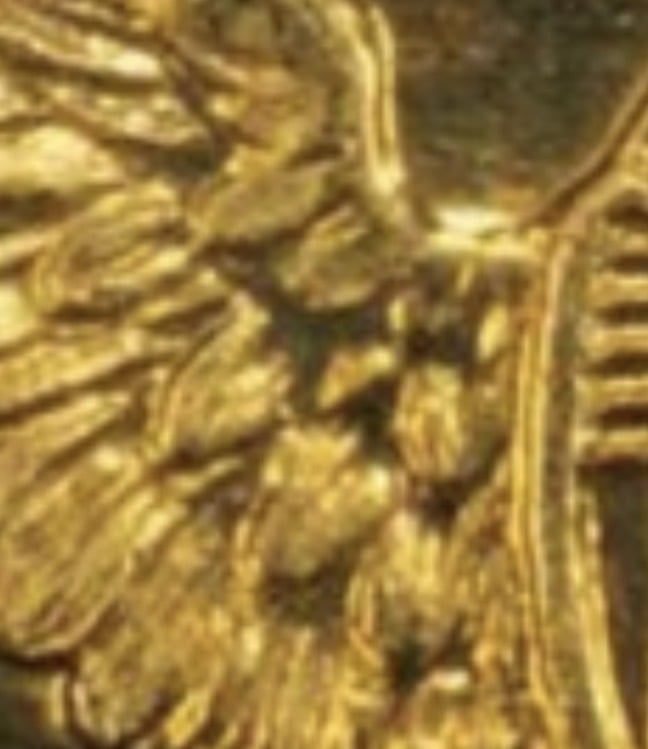
There is visible empty space between the feathers where the detail didn’t transfer well enough from the original coin...come on now.
.
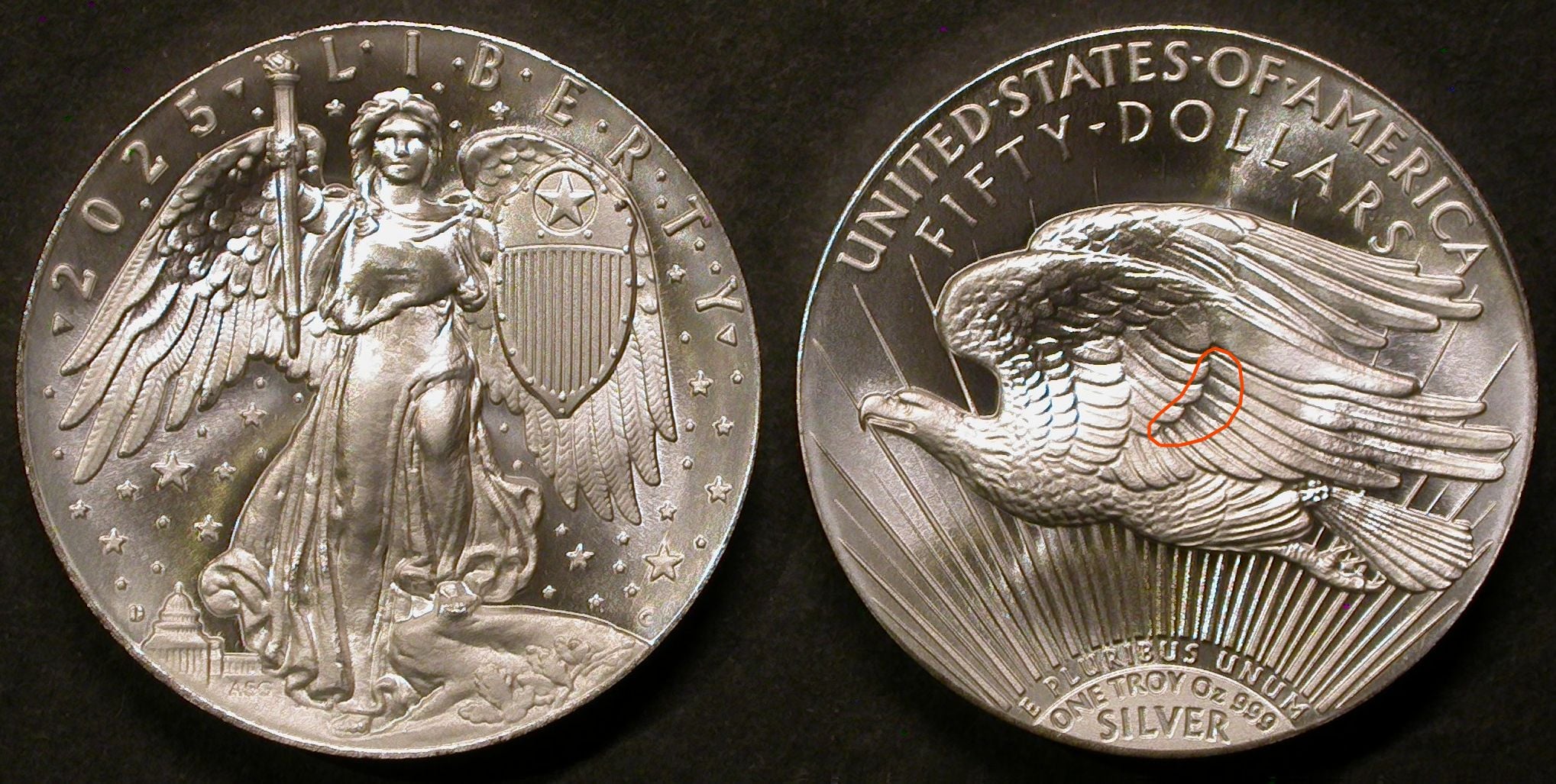
A little over-polishing of the die can easily cause a loss of low-lying detail. That is what happened here.
I have had the same thing happen to my own dies when I have polished them. Like this :
.
It’s also a common feature of transfer counterfeits, especially spark erosion dies. It’s significantly less common as overpolishing to that degree on a genuine mint trial or pattern. When combined with the other visible surface issues it should be clear that it’s a fake.
From NGC regarding spark-erosion fakes:
“Once complete, the dies are heavily polished to remove the pitting this counterfeiting method typically leaves. The polishing process cannot remove the pitting from the recesses of the die, however, and, as a result, the raised elements of the counterfeits have a granular appearance.”
“Counterfeits made by this process lose some design detail and lack Mint-quality luster.”
Overpolishing, pitted surfaces, mushy detail, wrong luster…sounds familiar.
.
The surface texture of the subject item is not much different than a genuine [1900] proof. See the areas I outlined in the image below. Genuine gold proofs of that era have a distinctive field texture that is not as flat and smooth as one might expect. The detail sharpness and granularity is hard to judge, but I don't see a lot of difference. It would require a side-by-side examination with identical lighting.
It is visibly different. Pitting and orange peel are not the same texture. The devices are also visibly granular and there are very clear differences in the level of detail. Look at the fine detail in the tops of the feathers, the neck, the feathers on the arrows, etc. Everything is rounded and mushy. I don’t need a side-by-side examination in hand.
Do you have much experience with transfer die counterfeits?
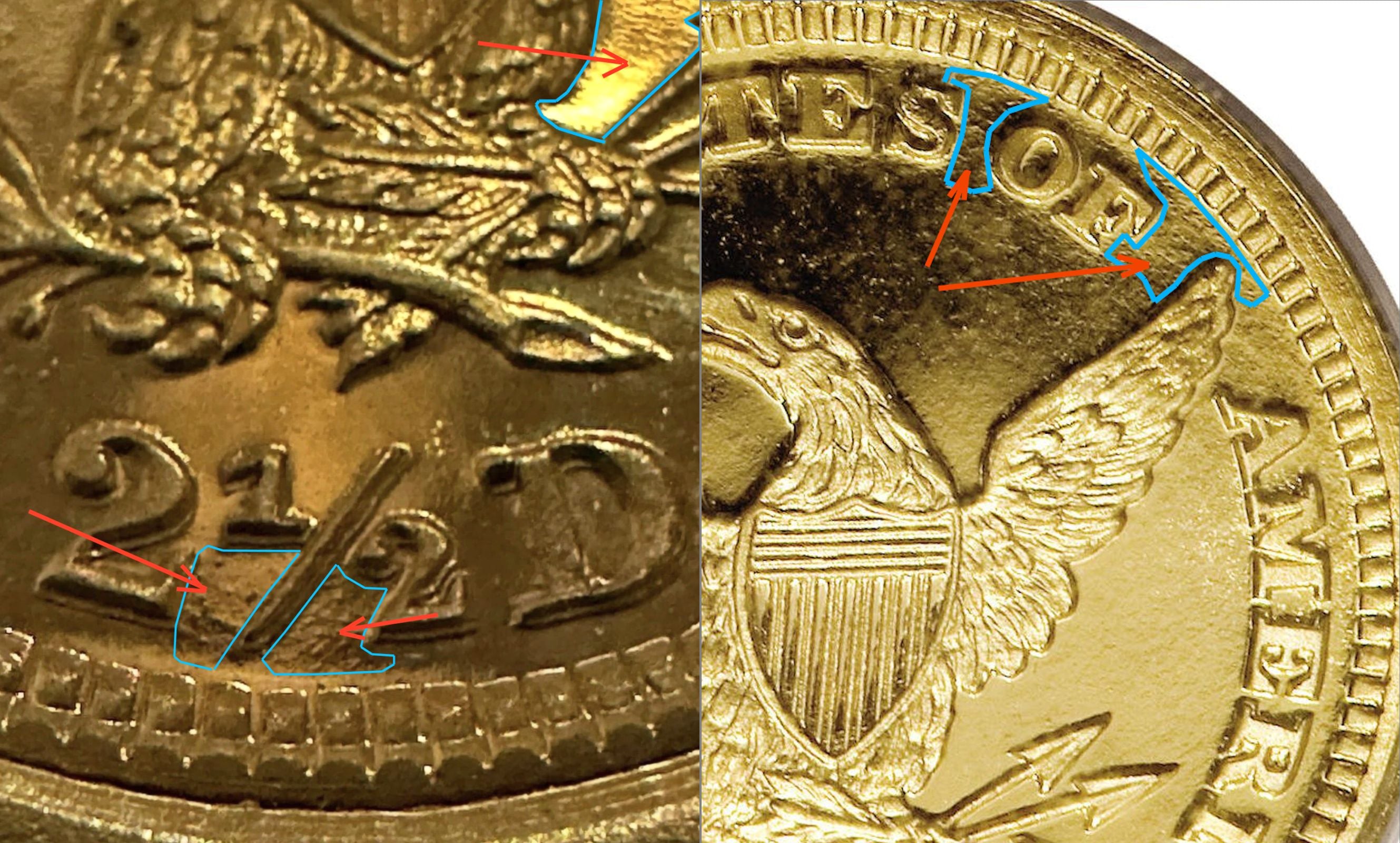
.
Of course the two pictures look different - the lighting is not even close to being the same in the two pictures.
There is no "pitting" visible on the subject item. Please point the out the pits specifically if you think you see some.
It does have some raised bumps in the fields, but so does the genuine proof coin. Keep in mind that the subject item is broad-struck, which will result in those small raised lumps being smoothed over a little bit.
You mentioned "wrong luster". But that is not really applicable because both are proofs and neither one really has any "mint luster" (nor should they).
Do you have much experience with transfer die counterfeits?
A few people would say "yes" 
I make dies. All the time.
I am also credited with discovering some of the VAM-listed vintage-counterfeit die-struck silver Morgan Dollar "privately made" counterfeits, including : 1893-O VAM-7 ; 1893-O VAM-8 ; 1893-O VAM-9 ; 1894-O VAM-vna-A ; 1894-O VAM-vna-B ; 1902-O VAM-92 .
 dcarr
dcarr
Re: Tough Lesson for Someone - 3CN
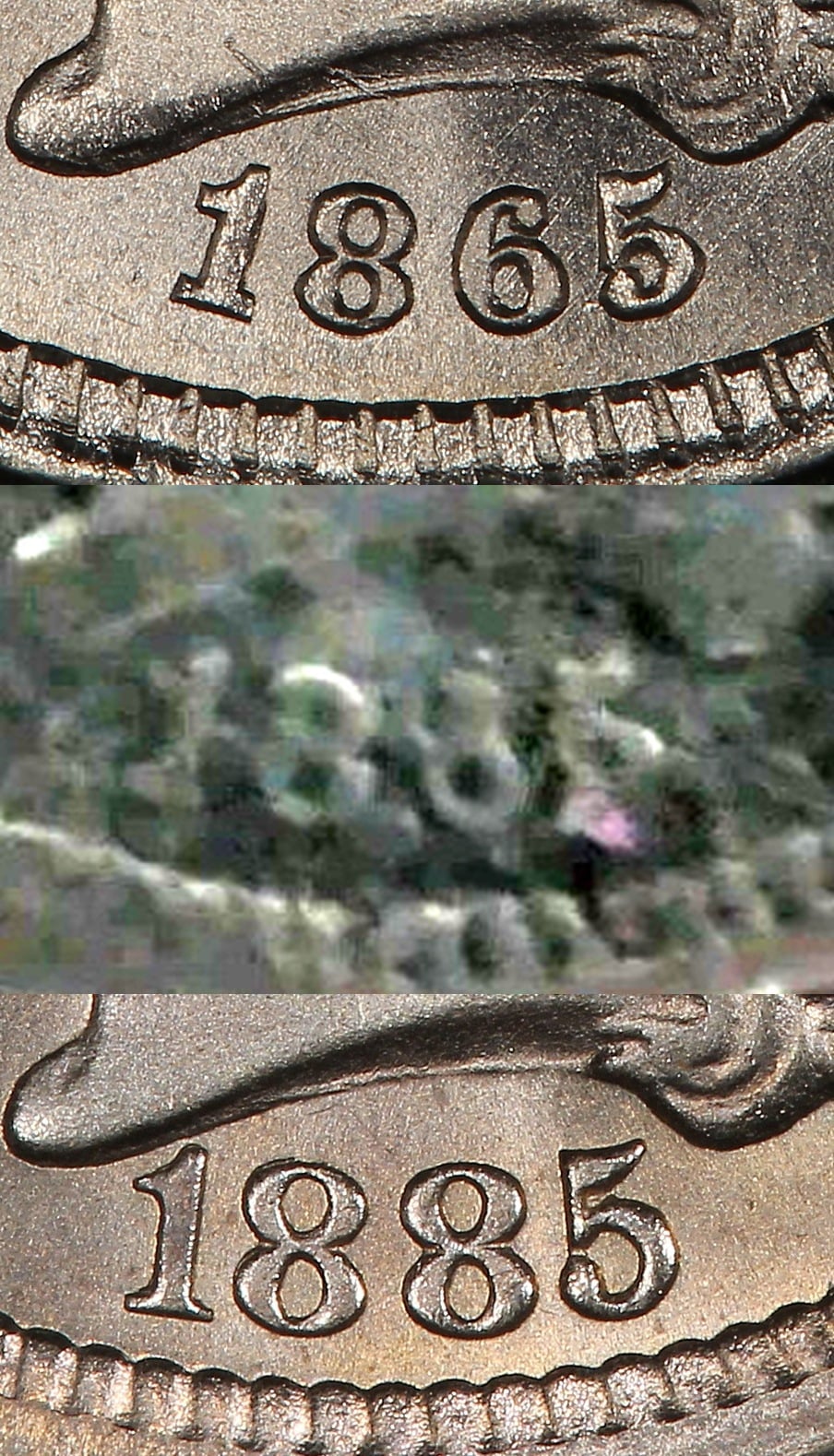
Here's a similar comparison. Middle image redone with contrast enhance from original ebay photo 3.
Note: there are several different date positions for 1865 and I picked a high one.
 yosclimber
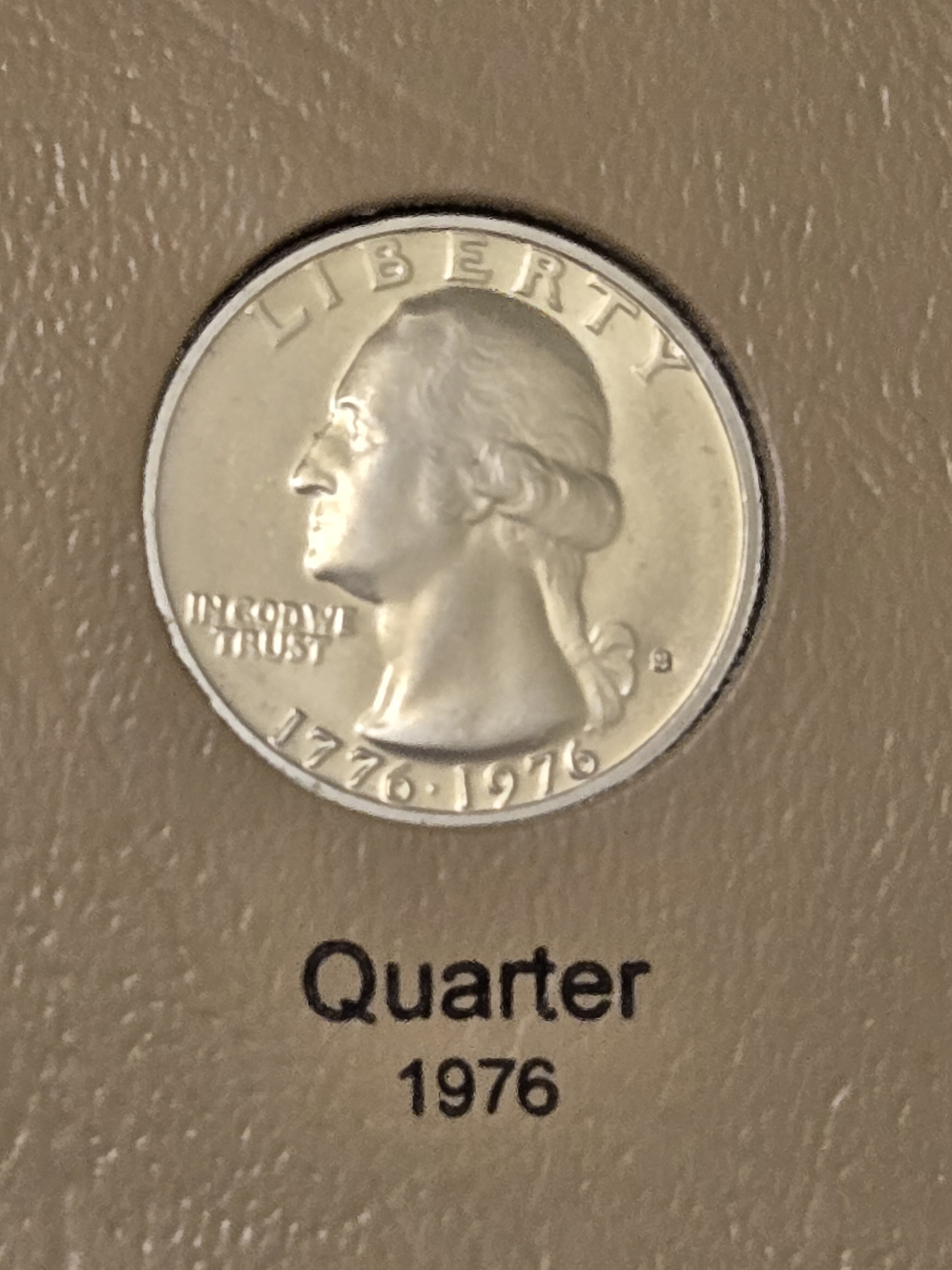
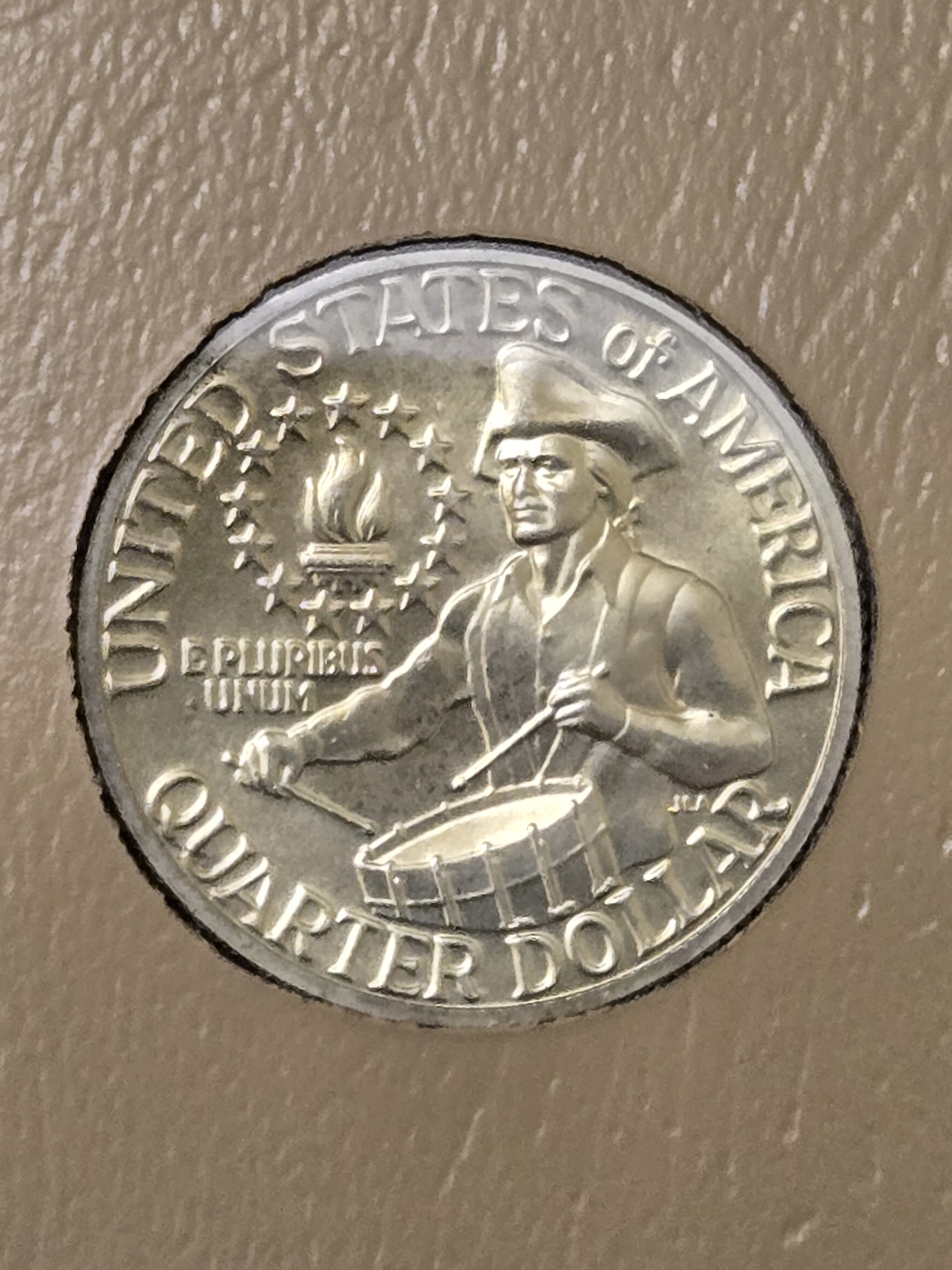

Re: The Collaborative "Virtual 7070" Type Set Project
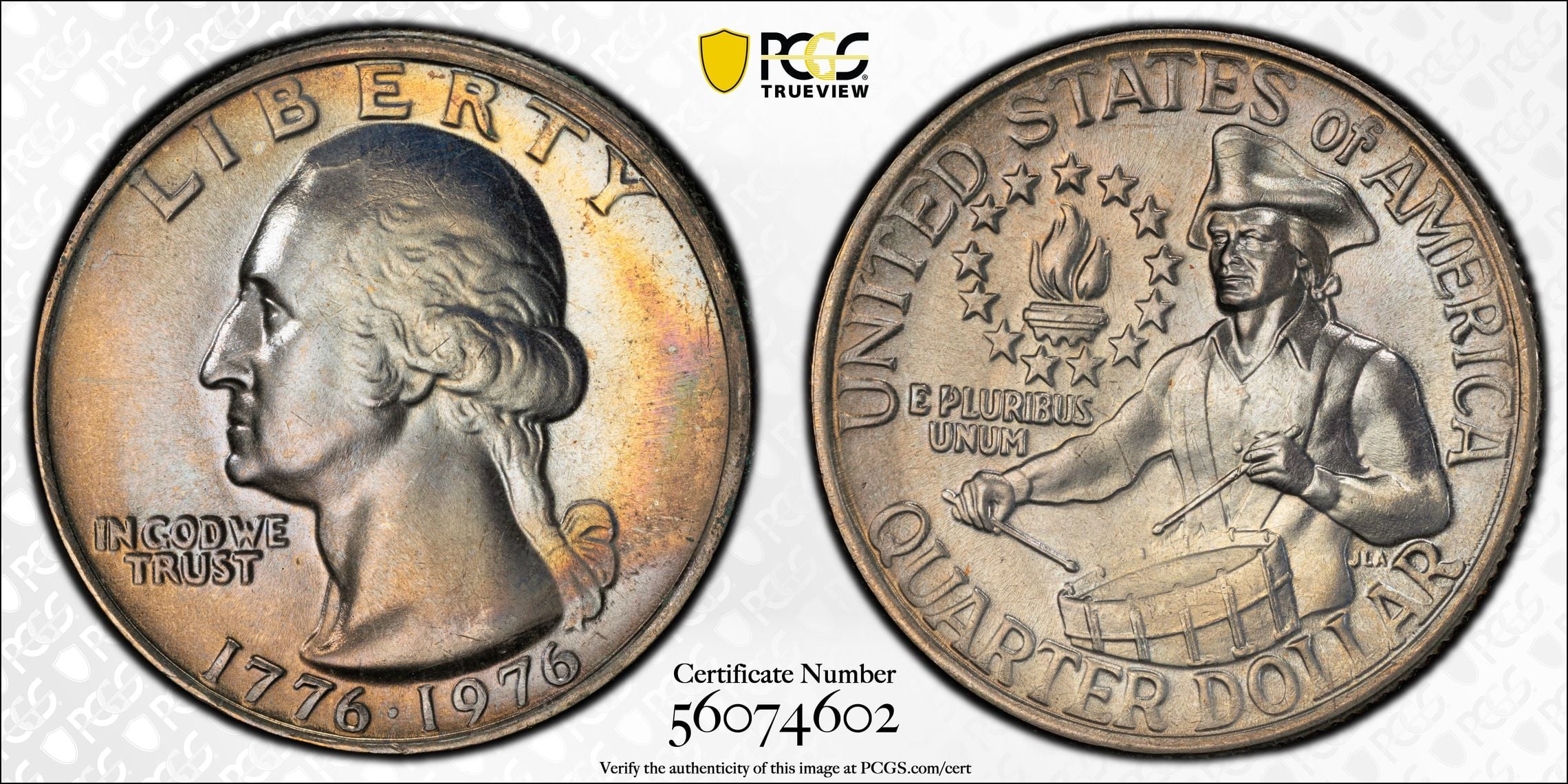
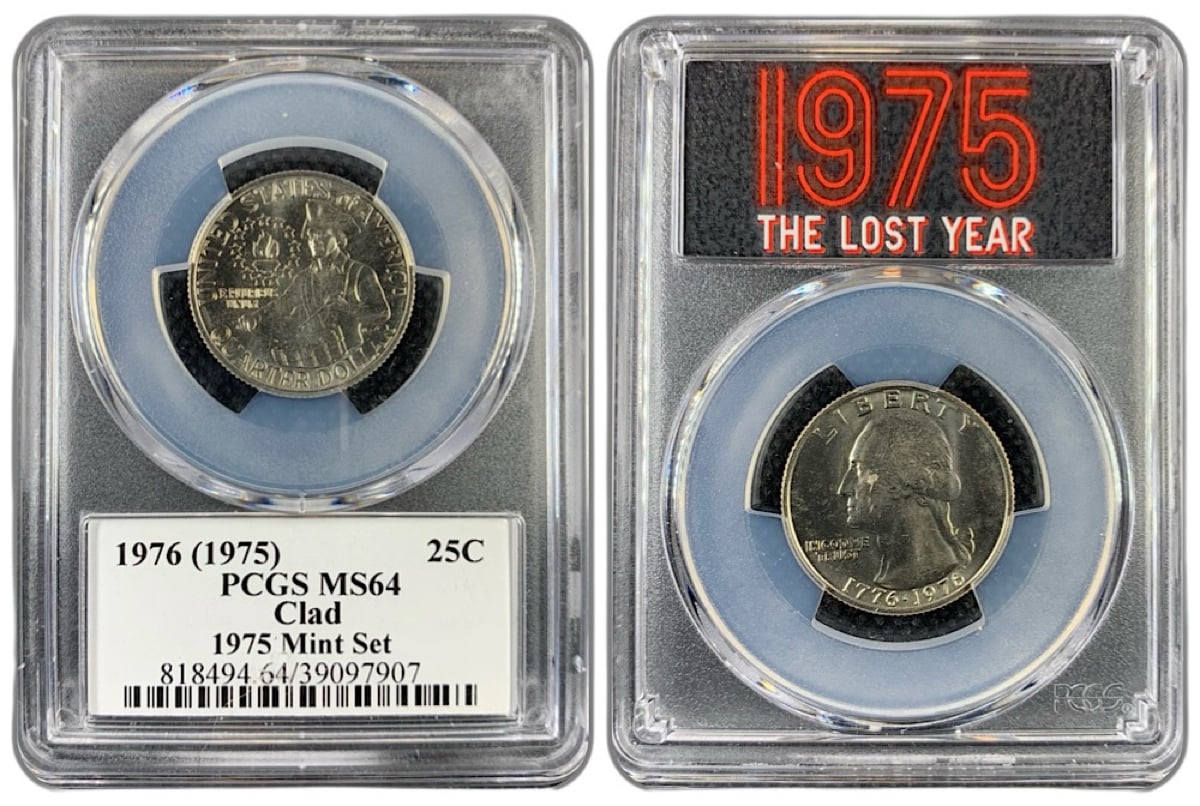
Good morning. Today is Monday March 30th. Following the order of the PCGS Registry Dansco 7070, we now go back to the remaining eight non-gold designs.
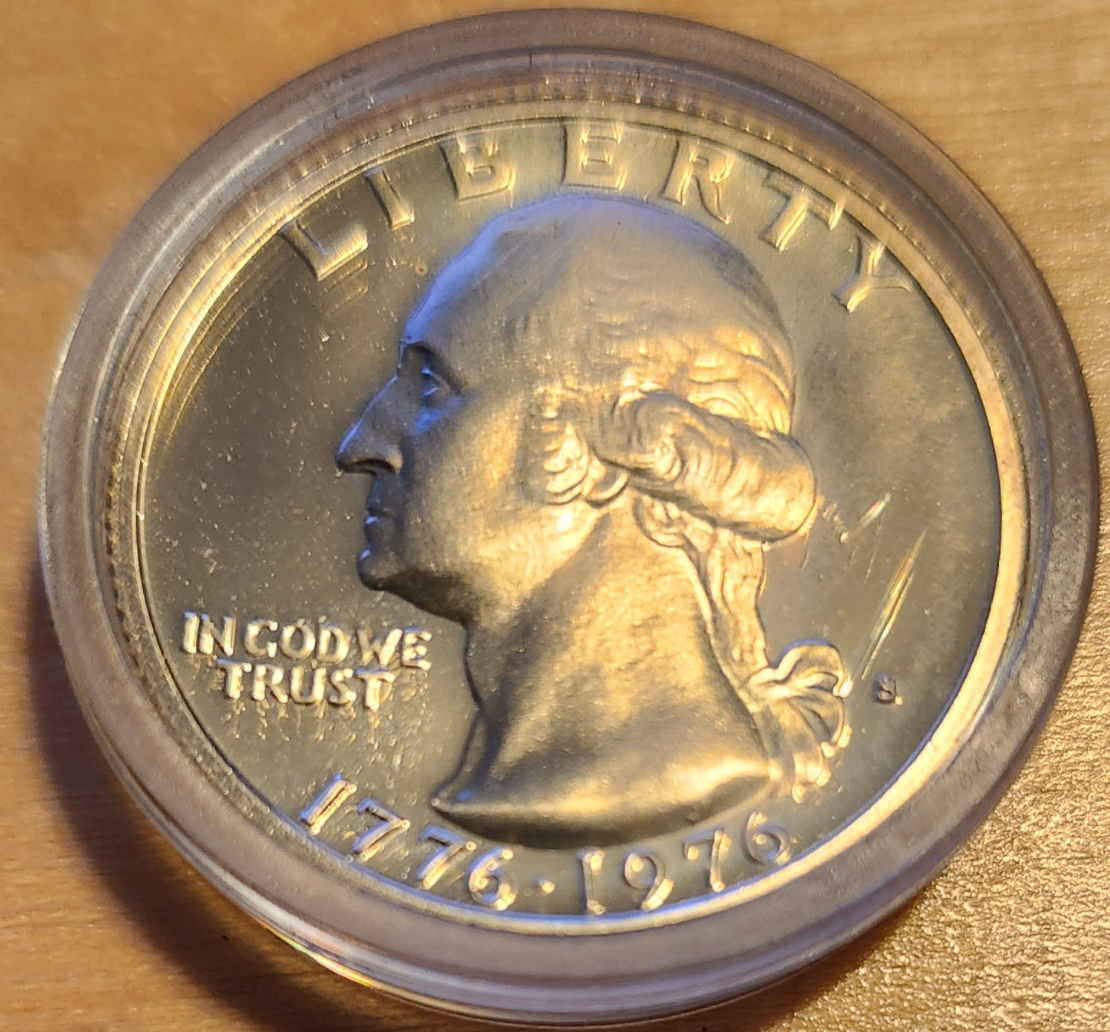
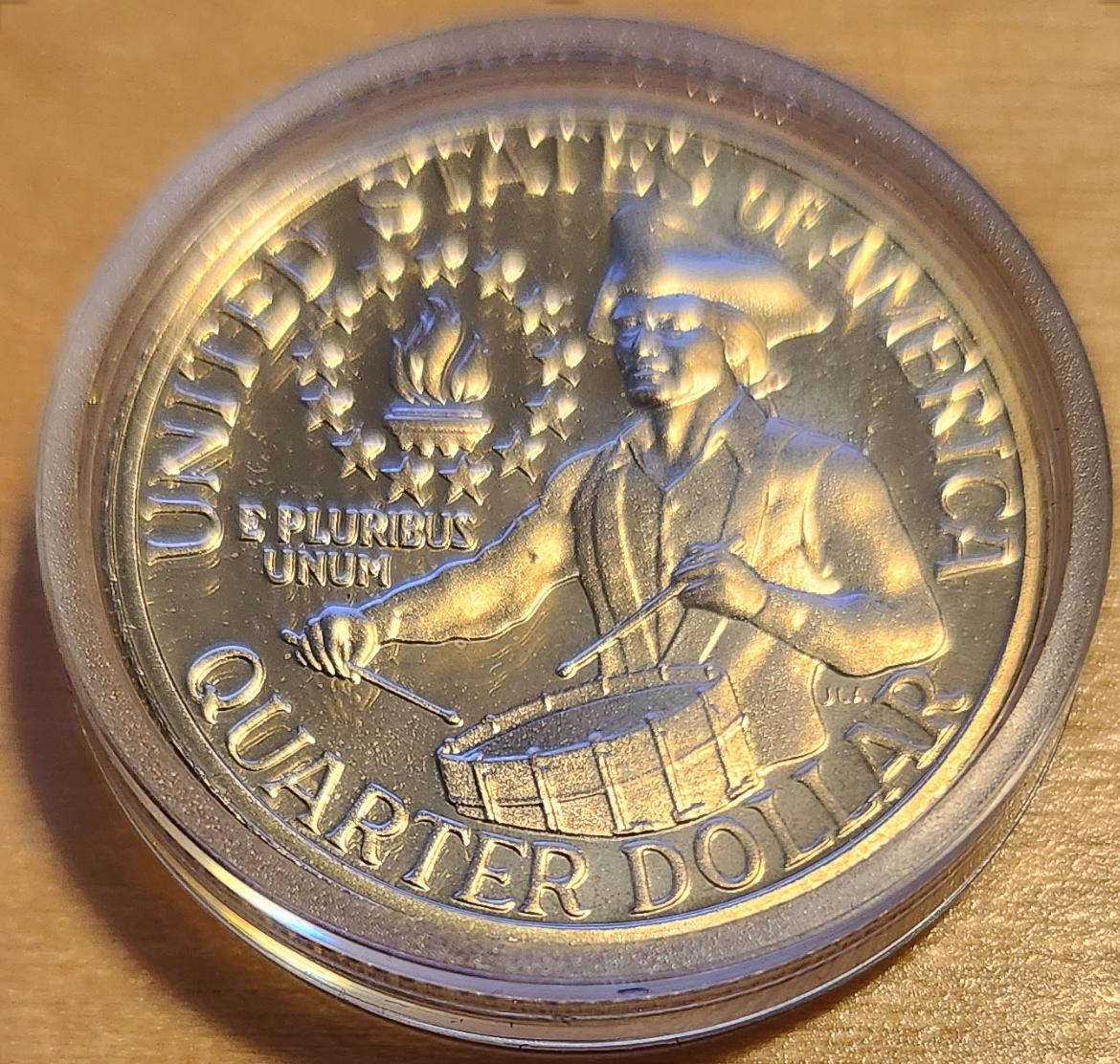
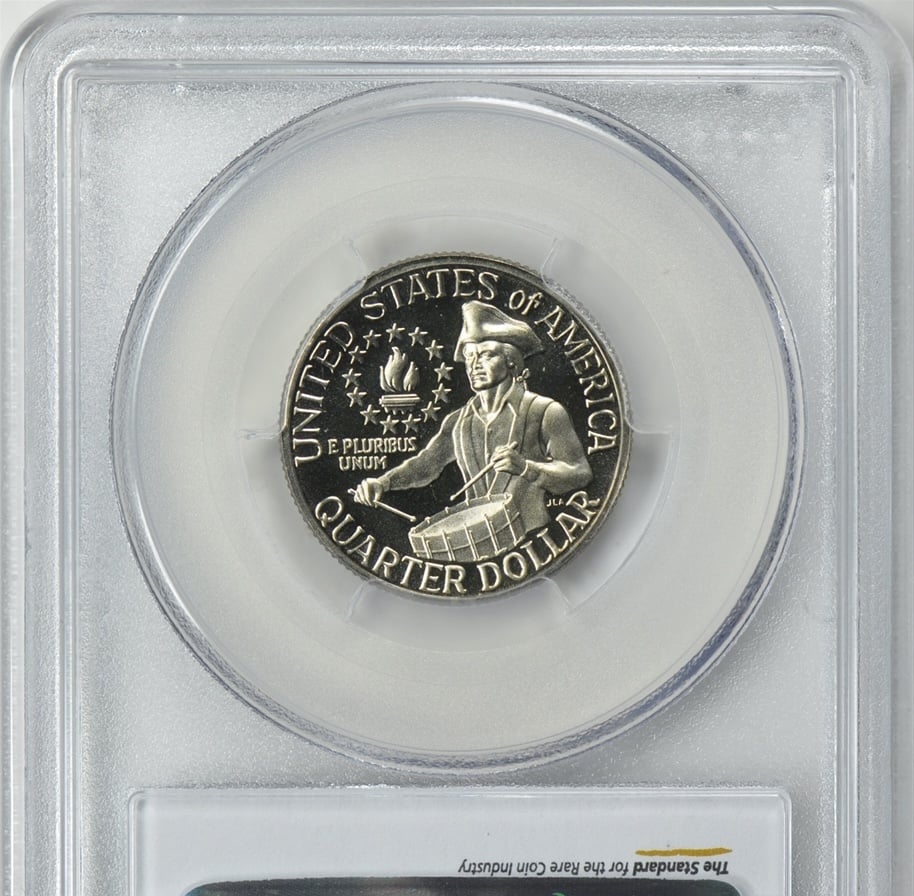
For today, we have the Bicentennial Quarter (1976). You can show any or all Clad, Silver, MS or Proof, but they must be Quarters with the Bicentennial design.
Here are my two proofs, one Silver, the other Clad:
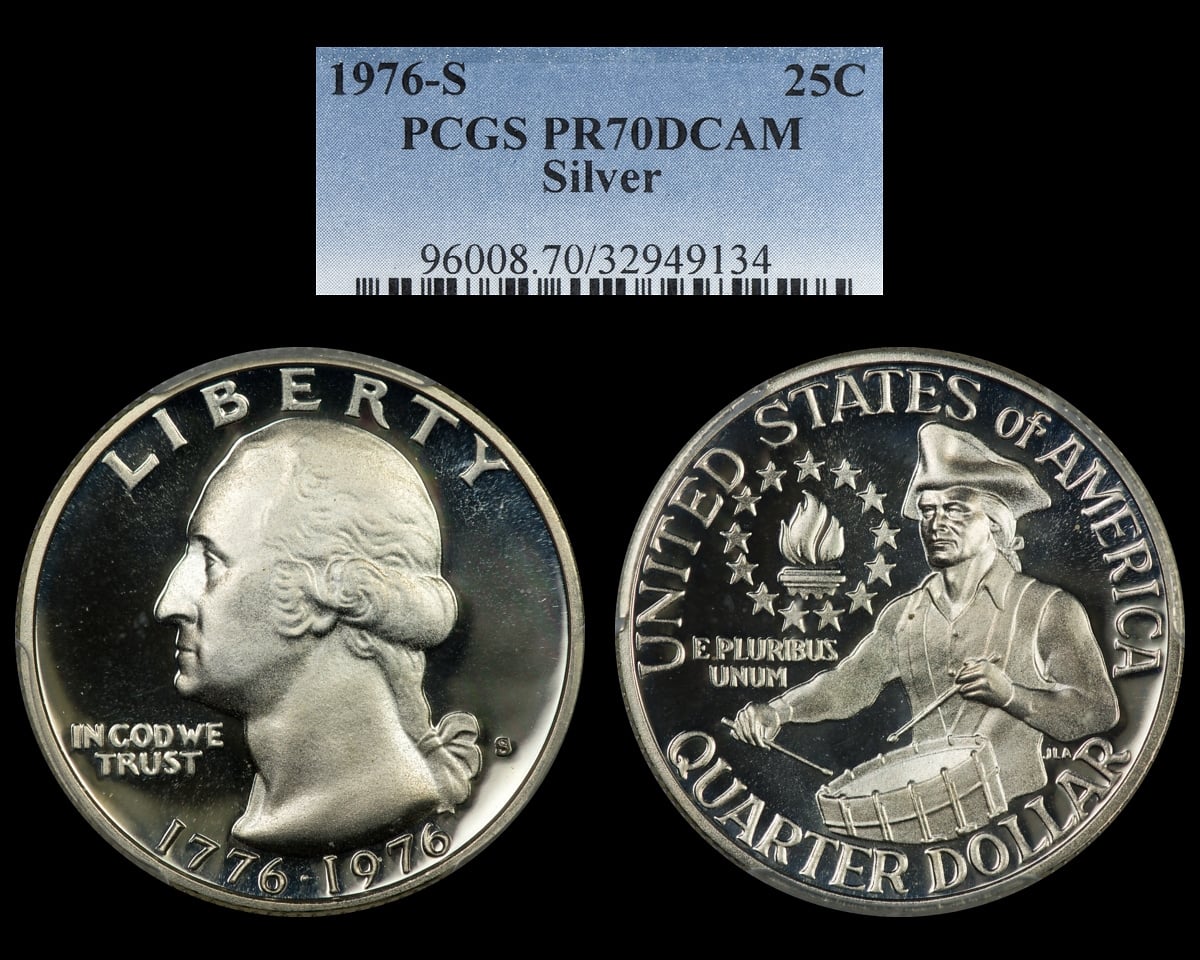
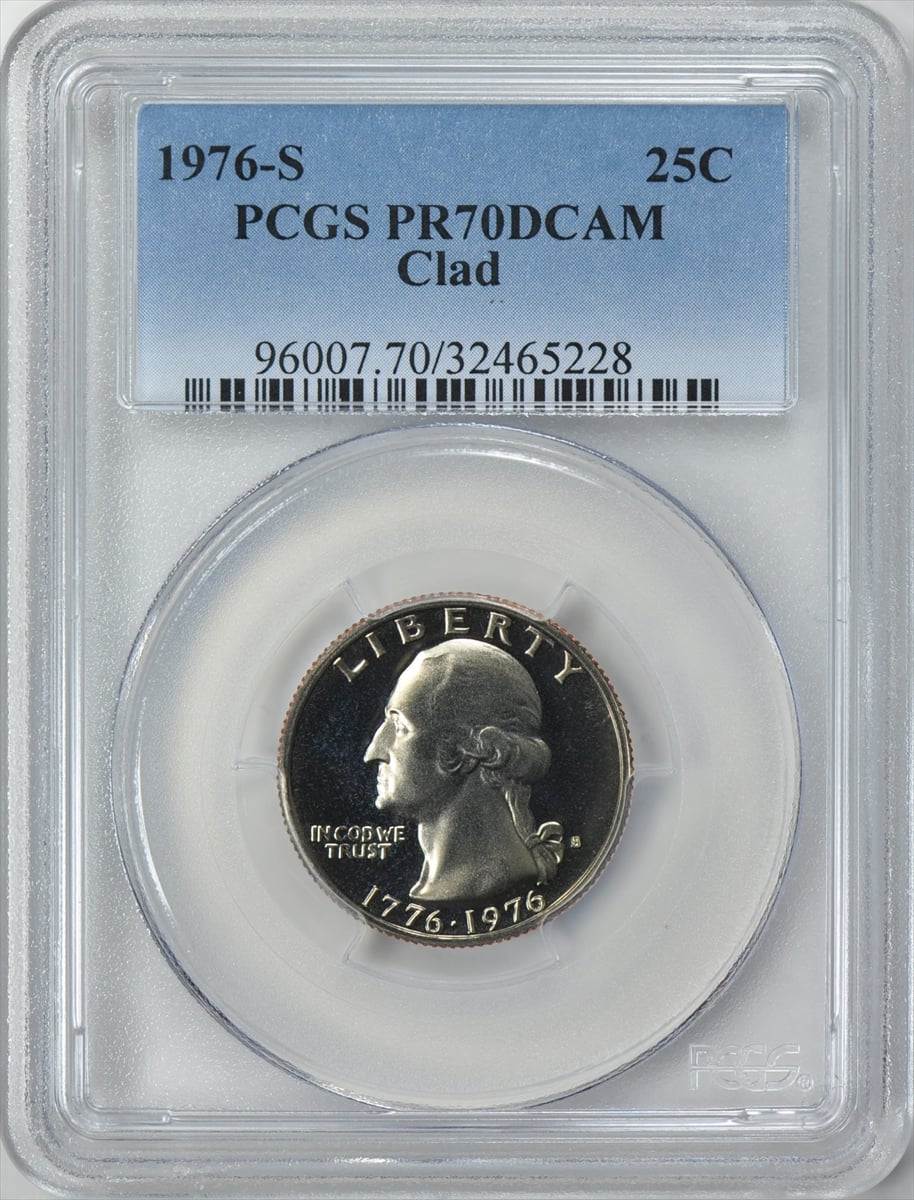
Steve
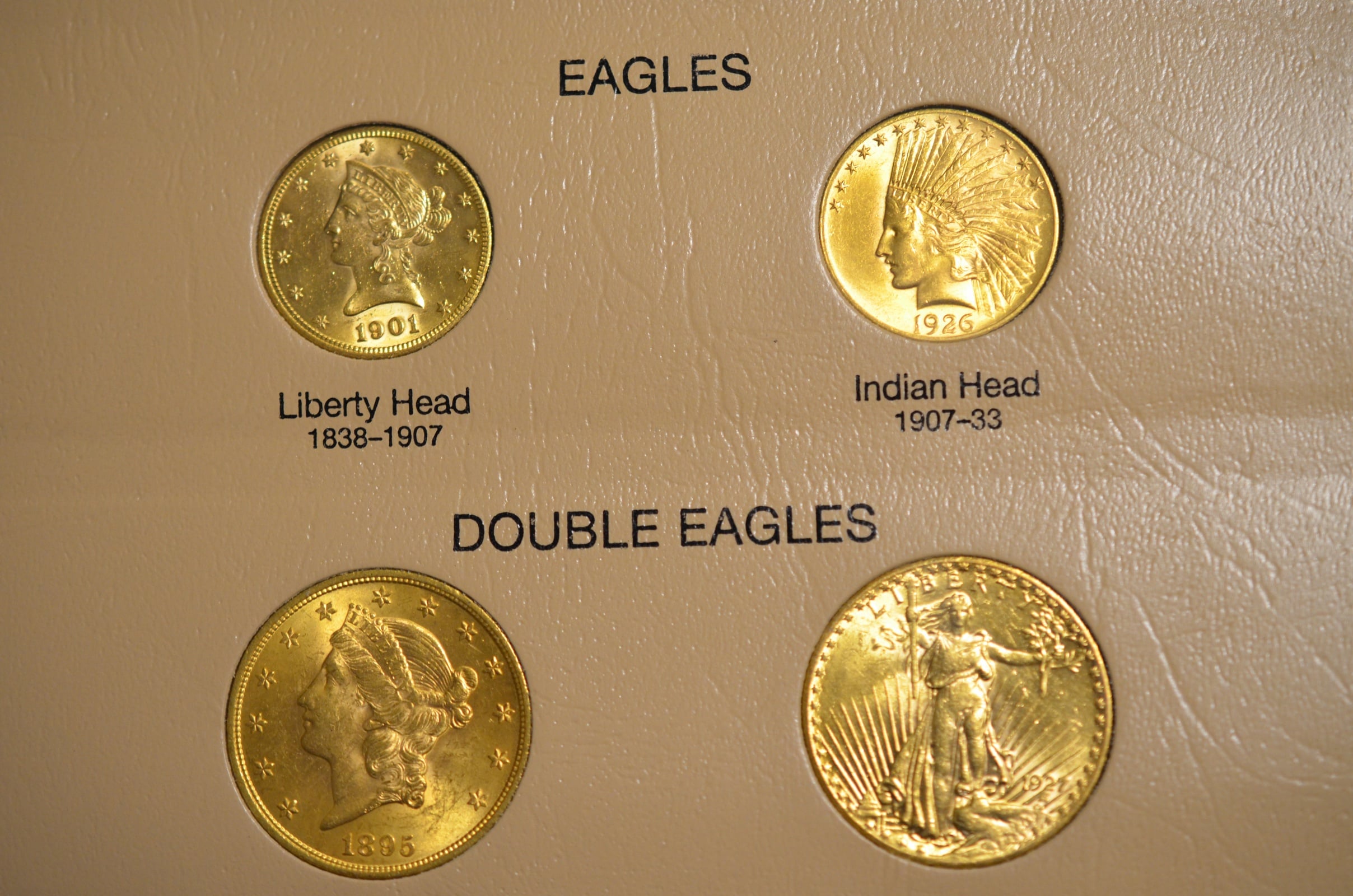
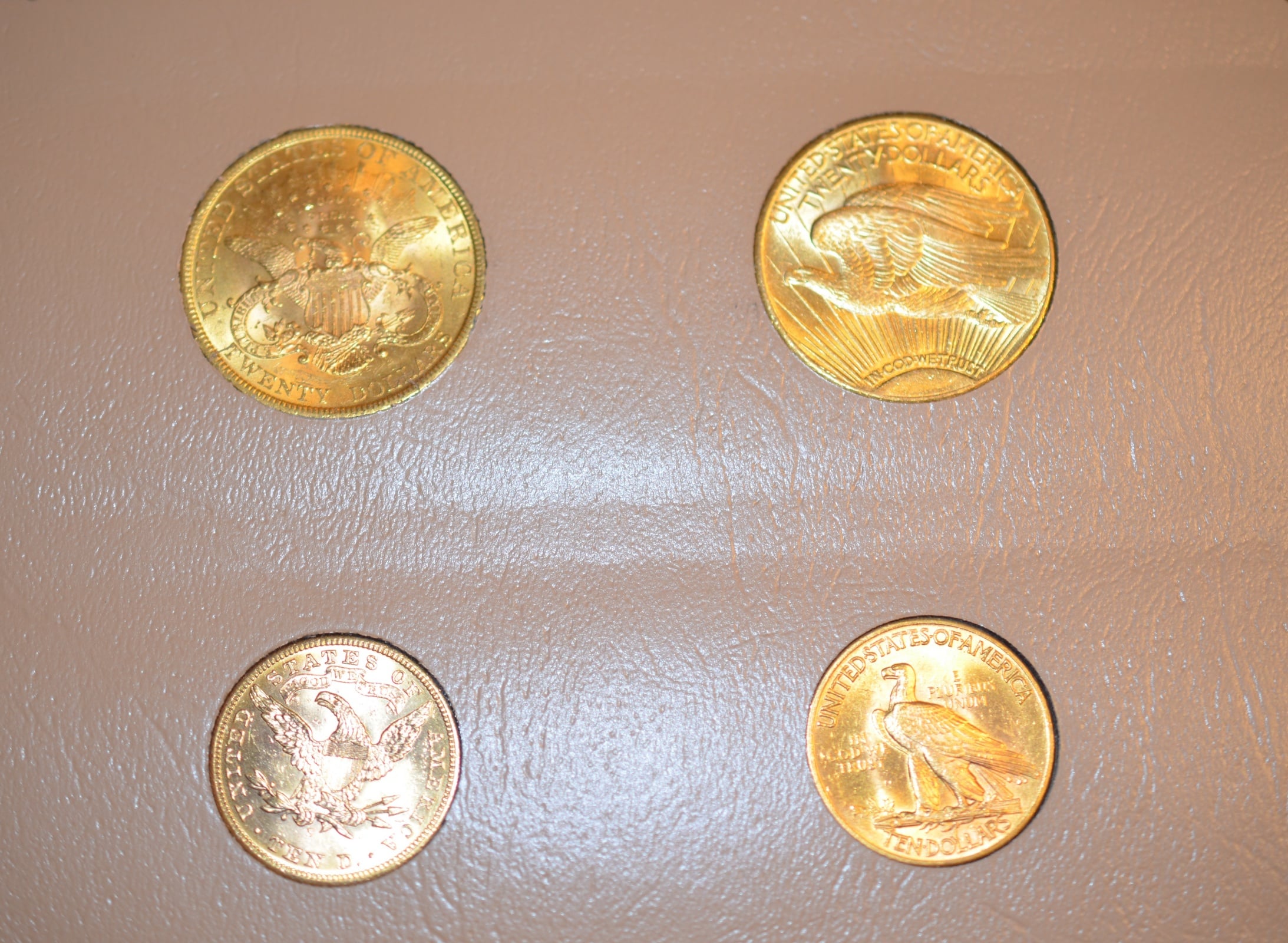

Re: Updates to PCGS CoinFacts Improve Set Registry Visibility
Proof positive that at least one coin is no longer in its PCGS holder
Plus the entire set is listed as CACG on the CAC Registry.
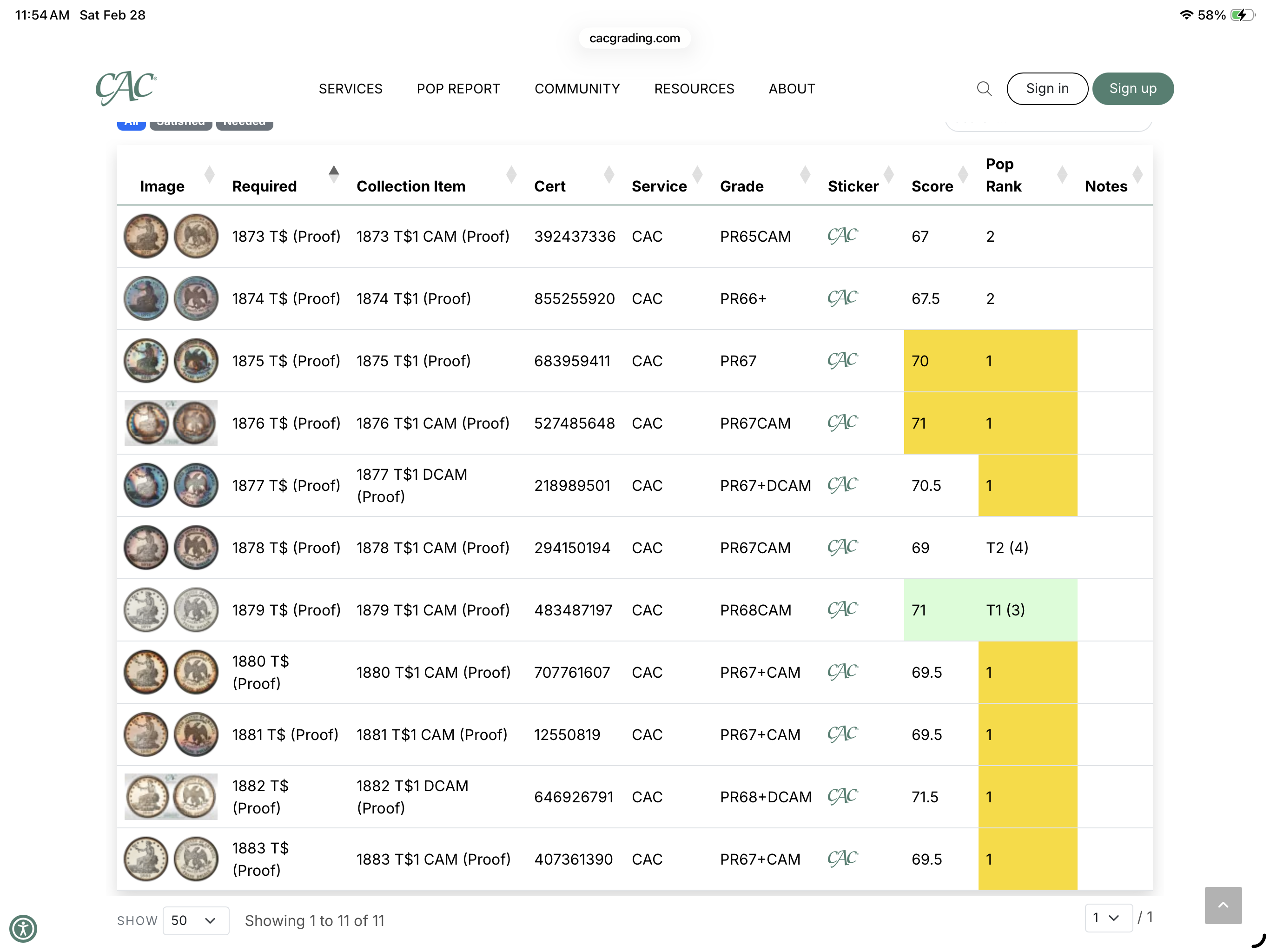
But with that said, as long as PCGS is aware and working on the issue, let’s give Charles some time to resolve it.

Re: "Dennis Tucker Will Speak on Semiquincentennial Coins at April 2026 NNP Symposium"
The "controversy" was that some people wanted to hijack the 250th anniversary program for a string of designs that celebrated things other than our nation's founding.
The other controversy is how the CCAC thought it could block some proposed designs by simply refusing to review them. (Their plan failed).
Somehow I suspect the speaker will be promoting a particular agenda.
 JBK
JBK