Options
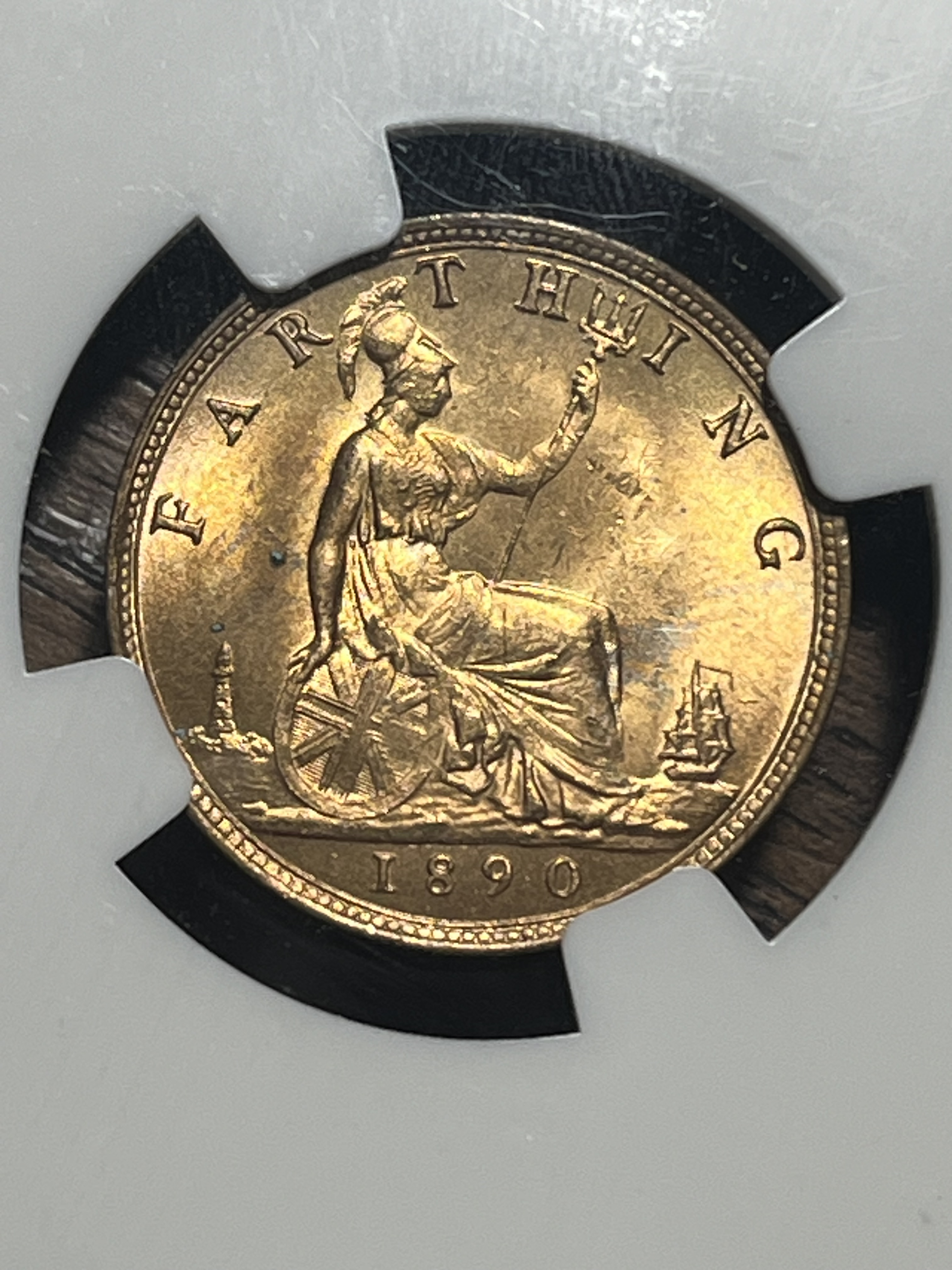
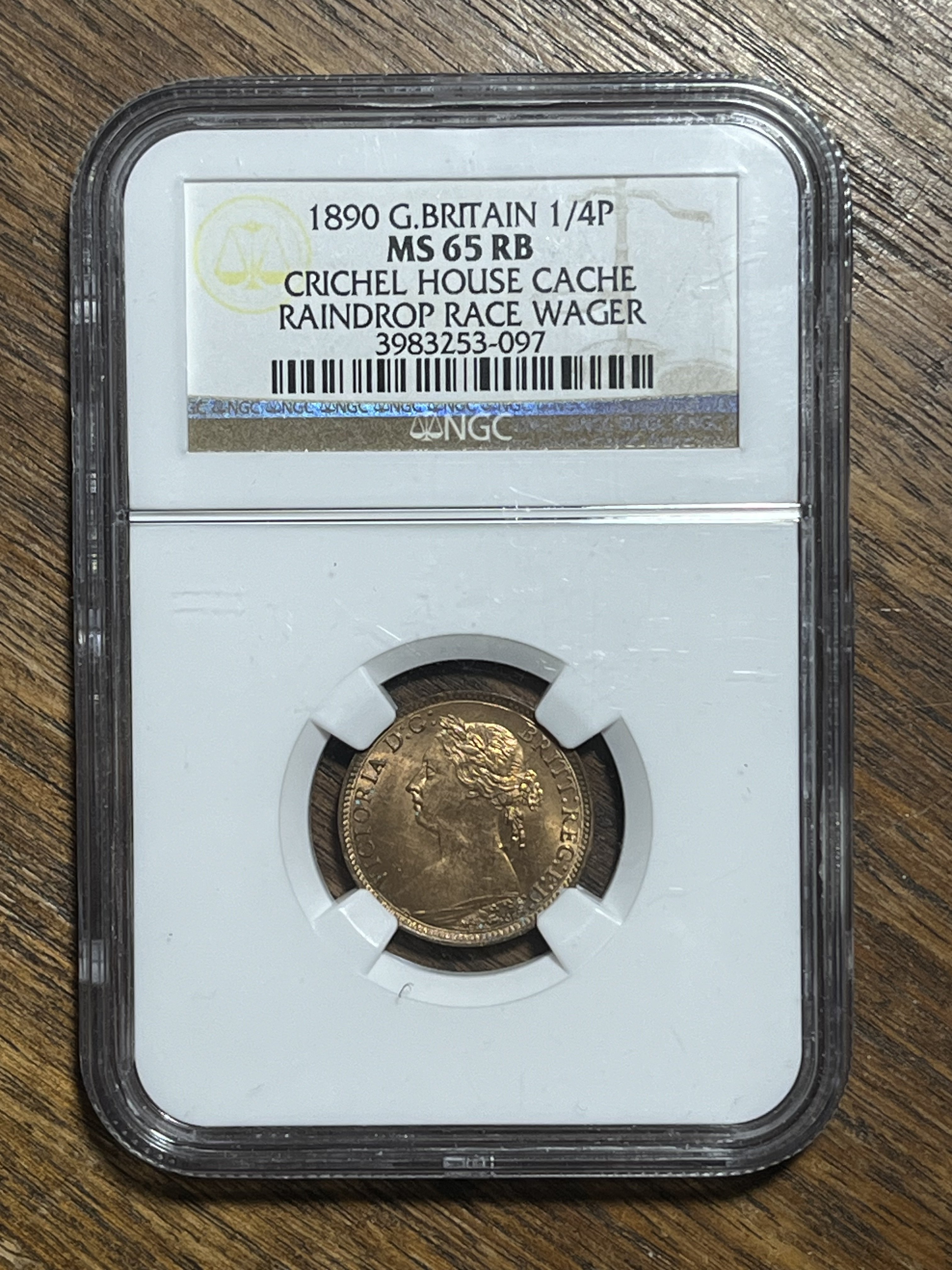
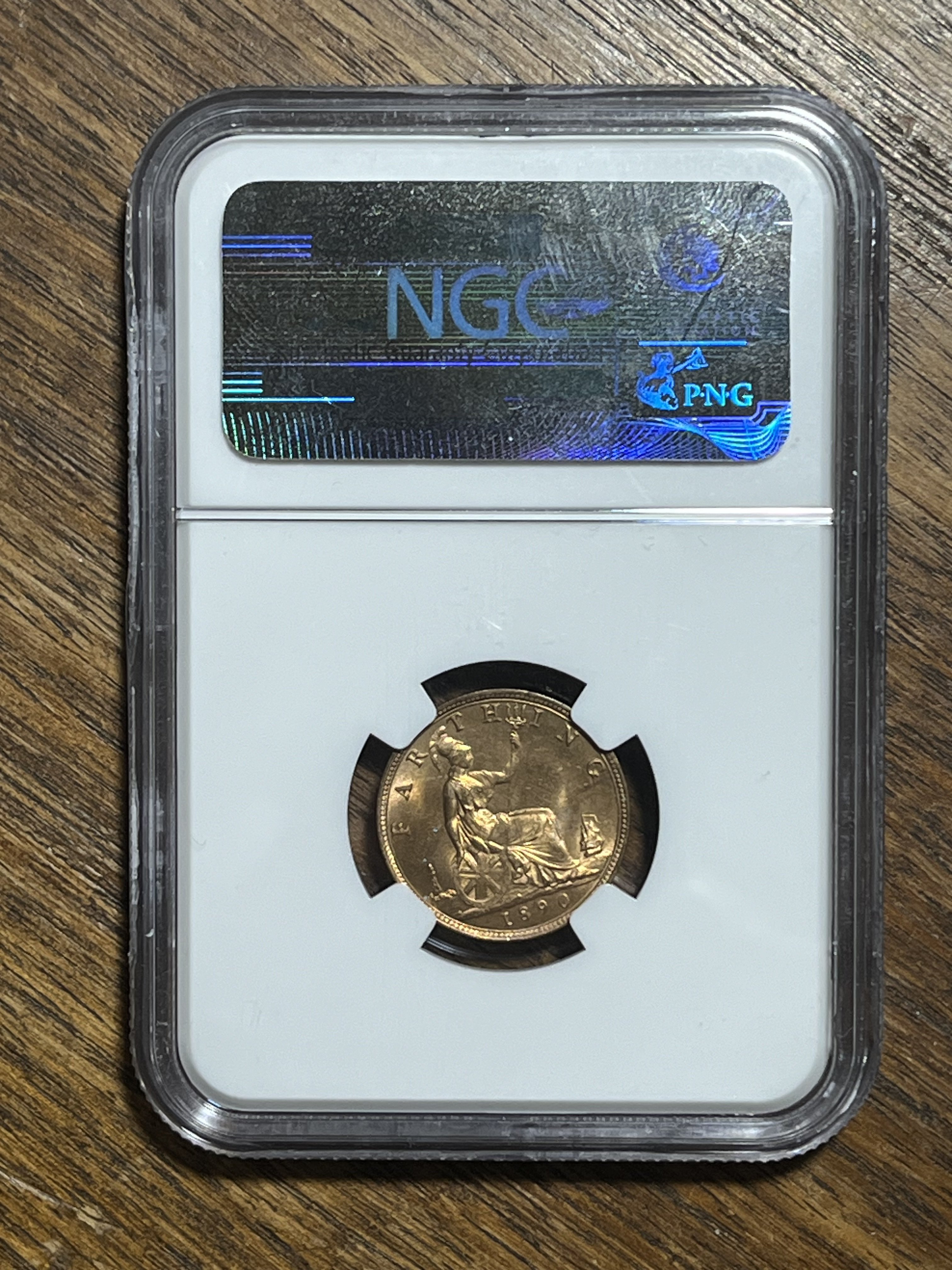
NEWP: 1890 Great Britain Farthing MS65
 DesertCoin
Posts: 479 ✭✭✭
DesertCoin
Posts: 479 ✭✭✭
Not a particularly rare coin, but still nice to see bronze from this era in this condition.
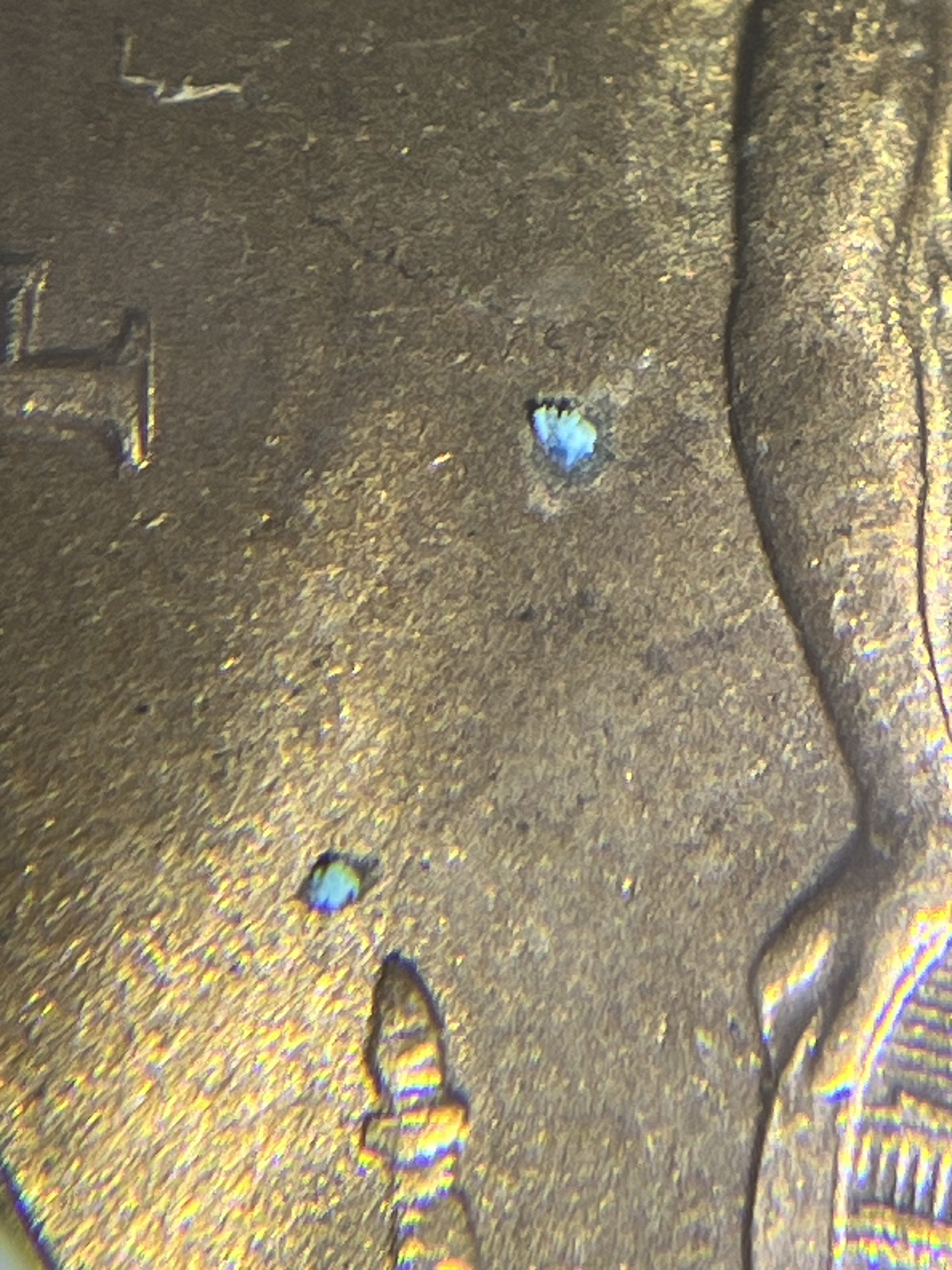
Any thoughts on the specks on the back? Do you think it's worth having NGC fix it or leave it as it is?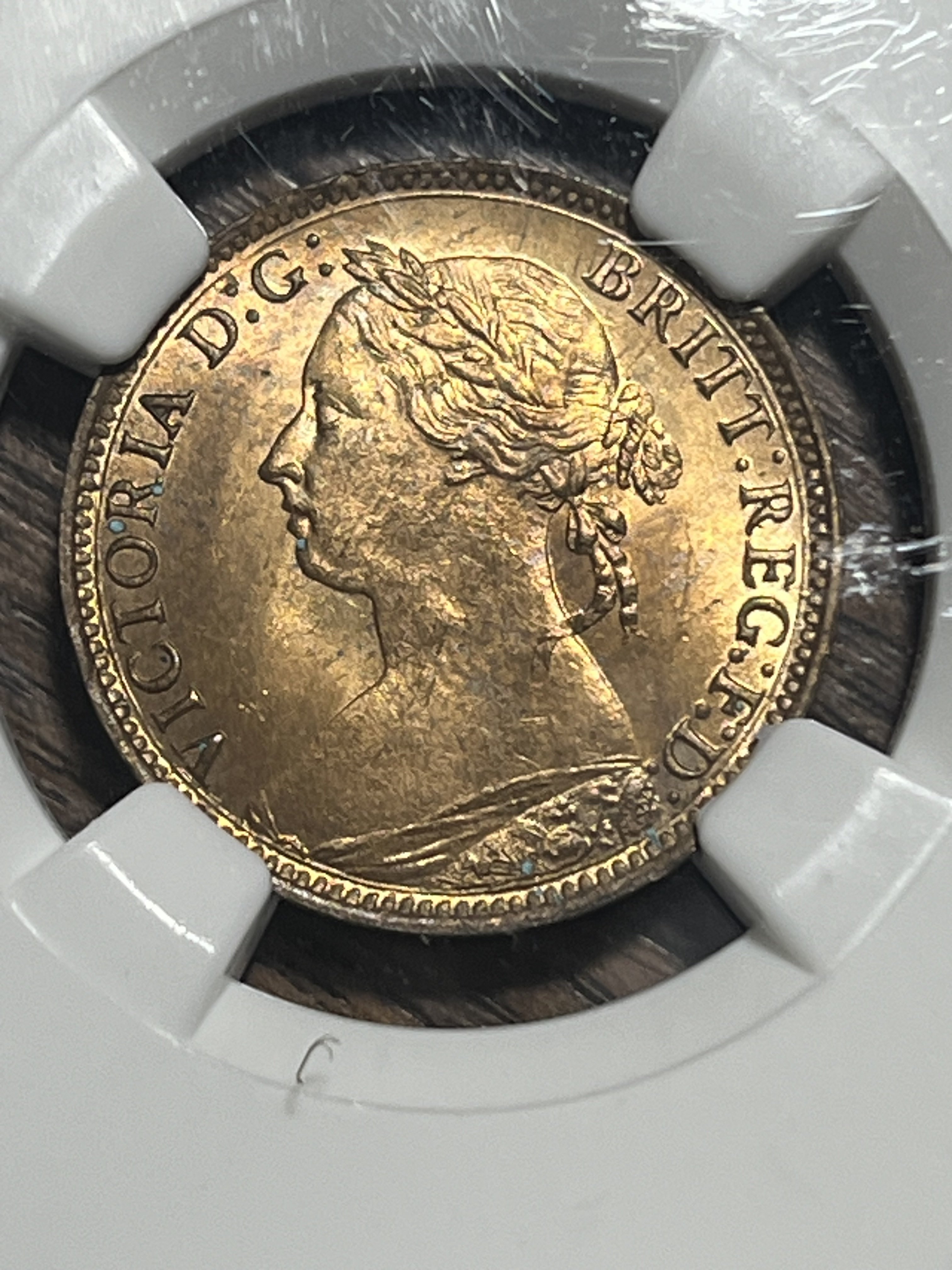
“Land of the free because of the brave”
“Saved by grace alone, through faith alone, in Christ alone”
In Deo solo confidimus
ΙΧΘΥΣ
ΙϹ ΧϹ ΝΙΚΑ (ΙΗΣΟΥΣ ΧΡΙΣΤΟΣ ΝΙΚΑ)
Member since 2026
Successful BST transactions with: Ted 1, JWP, bigjpst, Vetter, nickelsciolist, ajaan, USMarine6, ad4400, grote15, coinbuf, Gothat3rs, No Headlights, PROMETHIUS88, Harlequin, Coin Finder, Coins3675, CKcollectibles2
Tagged:
3
Comments
No offense, but if it isn't a particularly rare coin then this is an example I would have avoided. It appears that the spots have either etched into the surface or that they would leave shadows or stains behind if removed.
In honor of the memory of Cpl. Michael E. Thompson
Those aqua spots are verdigris: It will continue to grow and as mentioned it appears to have already violated the surface. It will leave discoloration.
I am surprised that it is a RB because in the pics it seems mostly red.
The backstory on this pedigree is quite interesting. I remember reading about it when somebody else posted one of these. As to the apparent verdigris spots, that's unfortunate. It makes me wonder why NGC straight graded-it, or if it in fact changed in the holder after encapsulation.
I sure hope it isn't bronze disease. I've had two Ancients succumb to terminal bronze disease. That's like coin cancer- it spreads. (Unfortunately both of my Ancients that it destroyed were pricey Caligula coins and not common Late-Roman bronzes.)
As to conservation by NGC, I guess it's up to you to decide whether that's worth the hassle and added expense. Otherwise you're left to live with the spots and hope they don't metastasize and spread (BD). The thought of BD makes me shudder.
Too bad- it's really quite an attractive coin otherwise. Perhaps you could find another with the same hoard pedigree and sell this one? Just a thought.
Collector since 1976. On the CU forums here since 2001.
Maybe this is not the original coinfrom the slab? Plastic looks damaged.
It might be worth a call or email to NGC to see if anything reasonable can be done,
Experience the World through Numismatics...it's more than you can imagine.
https://www.ngccoin.com/certlookup/3983253-097/65/
You can see the spots in the original NGC photos. At least the one nearest the elbow.
https://numismaticmuse.com/ My Web Gallery
The best collecting goals lie right on the border between the possible and the impossible. - Andy Lustig, "MrEureka"
People normally buy these coins for the provenance, for the story - not because the coin itself is anything to write home about.
The idea that coins wrapped in paper and stored in ambiguous conditions for over 100 years would develop bronze disease is not surprising. That NGC slabbed coins with either active or passive bronze disease is perhaps more concerning. It seems to have been somewhat of a "batch job", and perhaps rushed, given that from what I've read of the discussion of these coins both here and on other coin forums, the vast majority of NGC-graded coins with this provenance are all graded "MS65RB", whatever their actual appearance might justify.
The question remains: if one submitted this coin, raw, to NGC, would they slab it?
Roman emperor Marcus Aurelius, "Meditations"
Apparently I have been awarded the DPOTD twice.