What's driving the premium on modern gold Eagles?

Not sure if this is a precious metals or numismatic question, but here goes.
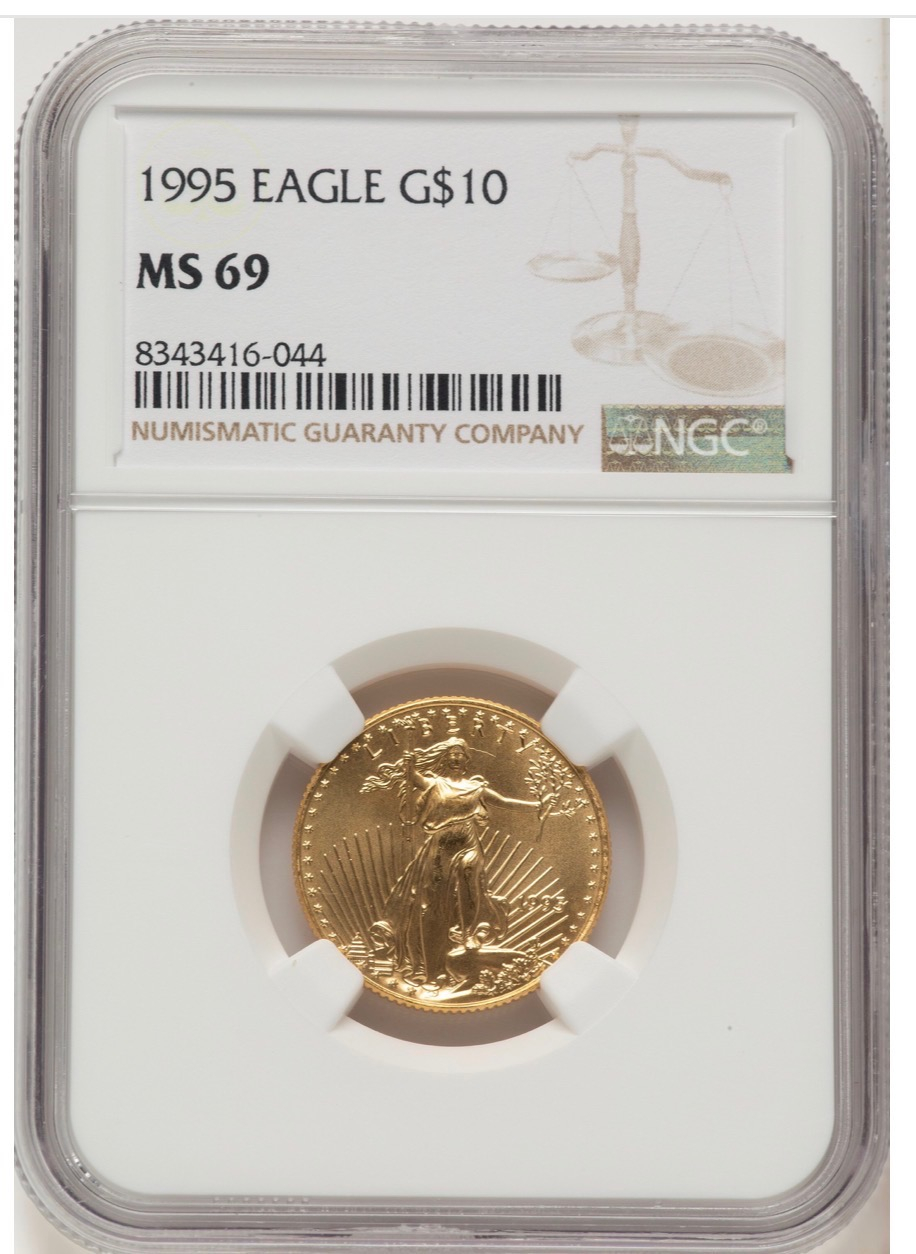
Last week a dealer near me was selling common date, quarter-ounce gold Eagles for $1175. He had both raw and slabbled (MS69) coins, and was selling both at the same price. In other words, there was no extra premium for a slabbed coin. Yet, on the Heritage auction site, I notice that individuals are bidding up common date MS69 quarter-ounce Eagles well above my dealer's price. Below is one example, where the current bid + buyer's fee is $1700. What am I missing here? Why would individuals bid up the price so much?
The reason I am asking is that I am helping a friend settle an estate. He has some slabbed quarter-ounce Eagles to sell. I know if I take them to my dealer, I'll get something close to spot. So maybe I am better off trying to auction them on GC or Heritage? Thx.
Comments
-
1995 is listed at a significant premium in the PCGS price guide for grades 69 and 70.
Edited to add: The 1995 is also listed at a significant premium in the NGC price guide.
Mark Feld* of Heritage Auctions*Unless otherwise noted, my posts here represent my personal opinions.
2 -
@MFeld said:
1995 is listed at a significant premium in the PCGS price guide for grades 69 and 70.I noticed that as well, but the guide values don’t drive the premium. What does?
0 -
@MFeld said:
1995 is listed at a significant premium in the PCGS price guide for grades 69 and 70.Thank you. But 1995 was just one example. The prices of MS69 quarter-ounce Eagles also are bidded up for 1989, 1991, 2001, etc.
0 -
@cinque1543 said:
@MFeld said:
1995 is listed at a significant premium in the PCGS price guide for grades 69 and 70.Thank you. But 1995 was just one example. The prices of MS69 quarter-ounce Eagles also are bidded up for 1989, 1991, 2001, etc.
Did you check the other dates that sold for strong prices to see if they were also listed higher in the price guides?
Mark Feld* of Heritage Auctions*Unless otherwise noted, my posts here represent my personal opinions.
1 -
I would suggest that the problem is that too many people are slaves to price guides.
There are some dates that carry a premium.
There are also dealers who can't realize the premium and just lump them all together. How do you know the problem isn't your dealer and not the auction prices?
All comments reflect the opinion of the author, even when irrefutably accurate.
1 -
As for your friend's estate, keep in mind that the net price to you matters and not the hammer price or total sale price.
Even at GC, you're going to pay over 10% in fees. If you don't net a sale price in excess of that cost, you're losing money. There is risk at auction. You will sometimes see pieces barely get to melt and then you are losing 10%.
All comments reflect the opinion of the author, even when irrefutably accurate.
2 -
Some of those 90's dates in quarter oz and half oz (BU only) are quite scarce in nice condition, and commands premiums, not as much as when gold was 2k, but still more.
Modern proof gold right now, based on calls to two wholesalers we deal with are under spot for buying price.
1 -
I have always had a particular fondness for the half ounce in Unc gold eagles, naples, Libertads or whatever I can find.
My lack of Premium was mostly due to loving these over a decade ago.Now riding the swell in PM's and surf.0 -
@jmlanzaf said:
As for your friend's estate, keep in mind that the net price to you matters and not the hammer price or total sale price.Even at GC, you're going to pay over 10% in fees. If you don't net a sale price in excess of that cost, you're losing money. There is risk at auction. You will sometimes see pieces barely get to melt and then you are losing 10%.
There is no seller's fee for coins that sell for more than $1,000 at GC, which the OP's quarter ounce gold Eagles will sell for. You pay just the $3 listing fee, and no minimum bid if the minimum bid is $99 or less. So the net proceeds to the seller would be the hammer fee less $3.
2 -
@bammbamm said:
There is no seller's fee for coins that sell for more than $1,000 at GC, which the OP's quarter ounce gold Eagles will sell for. You pay just the $3 listing fee, and no minimum bid if the minimum bid is $99 or less. So the net proceeds to the seller would be the hammer fee less $3.Why do people sell bullion on GC at all? If an ounce of gold sells for $4400, the seller is taking home $4k after backing out the 10%. They’d realize more taking to a local coin shop. What am I missing?
3 -
People are loading up on them for investment. Modern World Gold a super way to go.
For me would retail that material from my table at a show (if selling that material). For Mkt value I consult CDN CPG.
Investor1 -
@bammbamm said:
@jmlanzaf said:
As for your friend's estate, keep in mind that the net price to you matters and not the hammer price or total sale price.Even at GC, you're going to pay over 10% in fees. If you don't net a sale price in excess of that cost, you're losing money. There is risk at auction. You will sometimes see pieces barely get to melt and then you are losing 10%.
There is no seller's fee for coins that sell for more than $1,000 at GC, which the OP's quarter ounce gold Eagles will sell for. You pay just the $3 listing fee, and no minimum bid if the minimum bid is $99 or less. So the net proceeds to the seller would be the hammer fee less $3.
Yes and no. The buyer pays 10% and that will be figured into the bid. Only a moron doesn't reduce their bid by 10%. And you will note that the OP included the BP in the price they mentioned. Hammer prices on bullion are almost never full melt.
All comments reflect the opinion of the author, even when irrefutably accurate.
0 -
@P0CKETCHANGE said:
Why do people sell bullion on GC at all? If an ounce of gold sells for $4400, the seller is taking home $4k after backing out the 10%. They’d realize more taking to a local coin shop. What am I missing?Perhaps these sellers do not have a local coin/bullion shop, it's more convenient to add them to a pile of other more distinct coins they're already consigning, or they just don't want to deal with the hassle of doing the work of selling them themselves.
There are shops in my area but I don't want to deal with them in person. I have sold bullion through GC for the other two reasons. Yes, I might get some extra money by selling them myself, but I value my time and the simplicity of the process more.
1 -
For an auc house item I reduce my bids by the auc house juice. However individuals may put in a nuke bid.
Investor0 -
@Cougar1978 said:
For an auc house item I reduce my bids by the auc house juice. However individuals may put in a nuke bid.When I'm sleepy, I go to bed. However individuals may stay awake even when tired.
chopmarkedtradedollars.com
2 -
@lermish said:
@Cougar1978 said:
For an auc house item I reduce my bids by the auc house juice. However individuals may put in a nuke bid.When I'm sleepy, I go to bed. However individuals may stay awake even when tired.
You shouldn't bid when you're sleepy.
All comments reflect the opinion of the author, even when irrefutably accurate.
0 -
Let me summarize what I think has been said so far in this thread in response to my original question.
Individuals are willing to pay $1700 ($1400 hammer + $300 BF) on MS69 common date, quarter-ounce, AGEs because a price guide (PCGS, NGC or other) suggests they should, or because they think gold will move up higher. The fact that my LCS is selling slabbed MS69 common date quarter-ounce AGEs at $1175 (7% above spot) is likely a marketplace anomaly. Sound right?
0 -
@P0CKETCHANGE said:
@bammbamm said:
There is no seller's fee for coins that sell for more than $1,000 at GC, which the OP's quarter ounce gold Eagles will sell for. You pay just the $3 listing fee, and no minimum bid if the minimum bid is $99 or less. So the net proceeds to the seller would be the hammer fee less $3.Why do people sell bullion on GC at all? If an ounce of gold sells for $4400, the seller is taking home $4k after backing out the 10%. They’d realize more taking to a local coin shop. What am I missing?
Because dealers don't pay melt, they pay less than melt. And if bullion coins are certified with a grade of 69 or 70, then they are collectible and worth more than melt and collectors will pay over melt for them.
0 -
@jmlanzaf said:
@bammbamm said:
@jmlanzaf said:
As for your friend's estate, keep in mind that the net price to you matters and not the hammer price or total sale price.Even at GC, you're going to pay over 10% in fees. If you don't net a sale price in excess of that cost, you're losing money. There is risk at auction. You will sometimes see pieces barely get to melt and then you are losing 10%.
There is no seller's fee for coins that sell for more than $1,000 at GC, which the OP's quarter ounce gold Eagles will sell for. You pay just the $3 listing fee, and no minimum bid if the minimum bid is $99 or less. So the net proceeds to the seller would be the hammer fee less $3.
Yes and no. The buyer pays 10% and that will be figured into the bid. Only a moron doesn't reduce their bid by 10%. And you will note that the OP included the BP in the price they mentioned. Hammer prices on bullion are almost never full melt.
Have you seen what collectors pay for coins in online auctions? Take a look at past sales of similar coins at GC and Heritage. I've sent three consignments to GC this year, and each time I am astonished with what some of my coins have sold for. Far more than any dealer offered to me at coin shows.
2 -
@bammbamm said:
@jmlanzaf said:
@bammbamm said:
@jmlanzaf said:
As for your friend's estate, keep in mind that the net price to you matters and not the hammer price or total sale price.Even at GC, you're going to pay over 10% in fees. If you don't net a sale price in excess of that cost, you're losing money. There is risk at auction. You will sometimes see pieces barely get to melt and then you are losing 10%.
There is no seller's fee for coins that sell for more than $1,000 at GC, which the OP's quarter ounce gold Eagles will sell for. You pay just the $3 listing fee, and no minimum bid if the minimum bid is $99 or less. So the net proceeds to the seller would be the hammer fee less $3.
Yes and no. The buyer pays 10% and that will be figured into the bid. Only a moron doesn't reduce their bid by 10%. And you will note that the OP included the BP in the price they mentioned. Hammer prices on bullion are almost never full melt.
Have you seen what collectors pay for coins in online auctions? Take a look at past sales of similar coins at GC and Heritage. I've sent three consignments to GC this year, and each time I am astonished with what some of my coins have sold for. Far more than any dealer offered to me at coin shows.
Did you sell bullion? Because I've occassionally bought gold in auctions and scrapped it, although rarely eagles. If you look at auctions with a lot of bullion, you'll note everyone trying to get to the same number. That's the number that makes sense for the buyer but almost guarantees a consignor loses. A lot of bullion in auctions is owned by the house.
Bidders in auctions aren't generally dumb and prone to overpaying. Many bidders in auctions are, in fact, dealers.
All comments reflect the opinion of the author, even when irrefutably accurate.
0 -
@cinque1543 said:
Let me summarize what I think has been said so far in this thread in response to my original question.Individuals are willing to pay $1700 ($1400 hammer + $300 BF) on MS69 common date, quarter-ounce, AGEs because a price guide (PCGS, NGC or other) suggests they should, or because they think gold will move up higher. The fact that my LCS is selling slabbed MS69 common date quarter-ounce AGEs at $1175 (7% above spot) is likely a marketplace anomaly. Sound right?
FWIW, here are my take-aways from this thread:
~ not every high-grade, $10 AGE is "common";
~ select years of $10 AGEs carry a premium in higher grades due to relative scarcity;
~ and, you might want to search the estate coins for the years that carry a premium.0 -
@MetroD said:
FWIW, here are my take-aways from this thread:
~ not every high-grade, $10 AGE is "common";
~ select years of $10 AGEs carry a premium in higher grades due to relative scarcity;
~ and, you might want to search the estate coins for the years that carry a premium.Thank you for your response. What are “estate coins” please, and where do I see their premiums?
1 -
@cinque1543 said:
@MetroD said:
FWIW, here are my take-aways from this thread:
~ not every high-grade, $10 AGE is "common";
~ select years of $10 AGEs carry a premium in higher grades due to relative scarcity;
~ and, you might want to search the estate coins for the years that carry a premium.Thank you for your response. What are “estate coins” please, and where do I see their premiums?
In the OP, you stated you were helping a friend settle an estate that included some quarter-ounce gold Eagles. When I used the term "estate coins", I was referring to these coins.
1 -
@cinque1543 said:
Let me summarize what I think has been said so far in this thread in response to my original question.Individuals are willing to pay $1700 ($1400 hammer + $300 BF) on MS69 common date, quarter-ounce, AGEs because a price guide (PCGS, NGC or other) suggests they should, or because they think gold will move up higher. The fact that my LCS is selling slabbed MS69 common date quarter-ounce AGEs at $1175 (7% above spot) is likely a marketplace anomaly. Sound right?
I don’t see where any respondents said that buyers would pay large premiums for common date examples.
And the price guides don’t typically assign large premiums to common dates.Mark Feld* of Heritage Auctions*Unless otherwise noted, my posts here represent my personal opinions.
1 -
@MFeld said:
@cinque1543 said:
Let me summarize what I think has been said so far in this thread in response to my original question.Individuals are willing to pay $1700 ($1400 hammer + $300 BF) on MS69 common date, quarter-ounce, AGEs because a price guide (PCGS, NGC or other) suggests they should, or because they think gold will move up higher. The fact that my LCS is selling slabbed MS69 common date quarter-ounce AGEs at $1175 (7% above spot) is likely a marketplace anomaly. Sound right?
I don’t see where any respondents said that buyers would pay large premiums for common date examples.
And the price guides don’t typically assign large premiums to common dates.The OP may not be the best person to advise on the estate.
To the OP: Not all dates are "common" (1995, for example) and there are numerous actual common dates in MS69 that you won't find being sold on Heritage or any other auction site for much of a premium over gold.
Your local coin shop also isn't the only buyer in the country.
All comments reflect the opinion of the author, even when irrefutably accurate.
0 -
What is CDN Bid / CPG on the coin?
Investor0 -
What is the black looking stuff on the Obverse?
Investor0



Leave a Comment
Categories
- All Categories
- 520.1K Coins and Currency - PCGS
- 328.5K U.S. Coin Forum
- 14.8K PCGS Set Registry Forum
- 5.2K Q & A Forum
- 41.4K World & Ancient Coins Forum
- 3K U.S. & World Currency Forum
- 96.4K Buy, Sell, & Trade - U.S. Coins
- 7.3K Buy, Sell & Trade - World & Ancient Coins
- 1.5K Buy, Sell & Trade - Currency
- 60 Random
- 246.2K Trading Cards, Autographs and Memorabilia - PSA
- 90.3K Trading Cards & Memorabilia Forum
- 1.7K Autographs Forum
- 16.4K PSA Set Registry Forum
- 22K Sports Talk
- 115K Buy, Sell & Trade - Cards & Memorabilia
- 663 Buy, Sell & Trade - Autographs
- 2.2K Stamps
- 1.5K Stamps Forum
- 670 Buy, Sell & Trade - Stamps
- 83 Coin Shows
- 83 General Coin Show Information and Discussion
- 11.9K Misc
- 11.9K Testing Forum